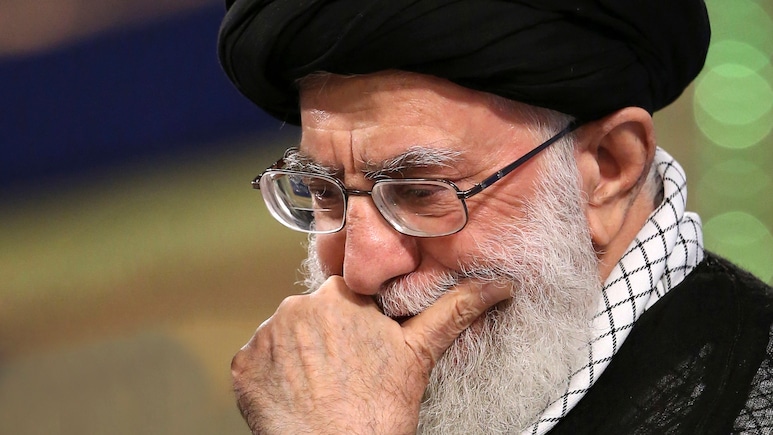
Iran's Supreme Leader Ayatollah Ali Khamenei was killed in a joint military operation by Israel and the United States. While Israel claims to be targeting sites “in the heart of Tehran,” Iran has resumed air strikes on Arab Gulf countries, with attacks reported in Dubai, Qatar's capital Doha, Bahrain and Kuwait.
US President Donald Trump called Khamenei “one of the most evil people in history” and urged Iranians to “take back their country.”
Amid this scenario, an almost four‑decade‑old comment by Khamenei has resurfaced, drawing renewed attention to remarks he made when he was appointed Iran's Supreme Leader.
“I Am Truly Not Worthy”
According to The New Yorker, when Khamenei's name was proposed to succeed Ruhollah Khomeini in 1989, he made a show of acknowledging his lack of theological expertise. He told the Assembly of Experts, “I am truly not worthy of this title. My nomination should make us all cry tears of blood.” Sceptics reportedly saw this as “taarof,” a Persian tradition of exaggerated politeness.
Despite his initial hesitation, the role gave Khamenei almost complete power over the government, the armed forces and the judiciary. He built parallel structures in key institutions and controlled large amounts of wealth, including funds made from property taken from the Shah's elite, worth hundreds of billions of dollars.
Hardline Rule Amid Domestic Unrest
Khamenei became the pillar of Iran's theocratic system, surviving decades of domestic unrest and international tension. He oversaw the suppression of major protests, including the 1999 student demonstrations, the 2009 post-election unrest, the 2019 nationwide protests, and, more recently, the “Woman, Life, Freedom” movement following the death of Mahsa Amini in custody.
Throughout his tenure, Khamenei maintained a hardline stance, working with six presidents, including some moderate figures, but consistently rejecting engagement with the United States. In 2025, he stated that negotiations with the US are neither “rational, nor intelligent, nor honourable.” Just last month, he warned that any attack on Iran would trigger a regional conflict.
Surviving Assassination
Eight years before becoming the Supreme Leader, Khamenei survived an assassination attempt in 1981. A bomb concealed in a tape recorder exploded. Khamenei took several months to recover from injuries to his right arm, vocal cords and lungs. His right arm was permanently paralysed.
Khamenei had been at the forefront of the Iranian Revolution, close to Khomeini, and later handled key responsibilities before his ascension. According to AFP, as Supreme Leader, Khamenei never travelled abroad, following Khomeini's precedent.
The confirmation of Khamenei's death following a coordinated US-Israeli strike marks the end of an era in Iran.


