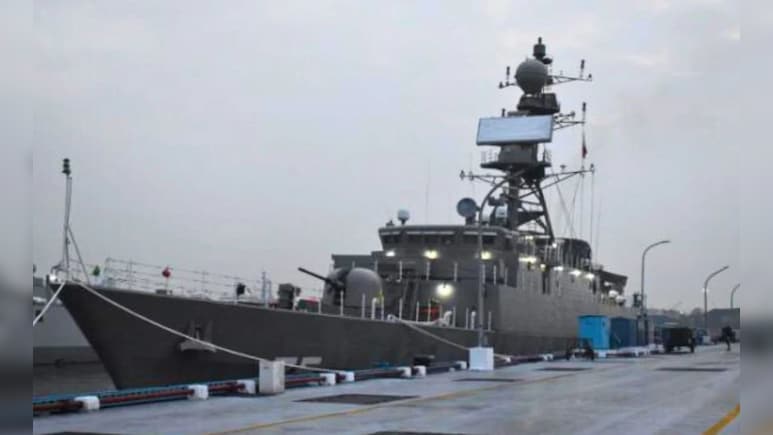
At least 87 people have died after a United States submarine sank an Iranian naval vessel in the Indian Ocean near Sri Lanka, according to Sri Lankan authorities.
The Iranian warship, the frigate IRIS Dena, was reportedly returning from a multinational naval exercise in the Bay of Bengal when it was hit by a torpedo fired from a US submarine. Sri Lankan officials say dozens of crew members remain missing as search operations continue. FOLLOW LIVE UPDATES
This is the first time since World War II that a submarine has sunk a warship in active combat, US War Secretary Pete Hegseth said in a press conference.
“An American submarine sank an Iranian warship that thought it was safe in international waters,” Hegseth said. “It was sunk by a torpedo, a quiet death – the first sinking of an enemy ship by a torpedo since World War II.”
The second World War was fought between the Allied Powers (including the US, UK, Soviet Union and China ) and the Axis Powers (mainly Germany, Italy and Japan.)
Submarine Warfare During World War II
Submarine warfare became a key part of naval strategy during World War II. Improvements in engines, torpedoes and detection systems made submarines faster, quieter and more effective than before. They could travel longer distances and actively hunt enemy ships.
Submarines operated in both the Atlantic and Pacific theatres, attacking warships, merchant vessels and supply routes throughout the war.
German U-boats In The Atlantic
One of the longest submarine campaigns of the war took place in the Atlantic. Germany deployed submarines, known as U-boats, to attack Allied merchant ships carrying supplies from North America to Britain and the Soviet Union.
U-boats began targeting shipping soon after the war started in 1939, sinking many cargo ships carrying food, fuel and weapons. In 1942, Germany launched Operation Drumbeat, sending submarines to attack ships along the US East Coast, where many vessels were not travelling in convoys.
The Allies responded by organising merchant ships into escorted convoys and increasing aircraft patrols. Technologies such as sonar, radar and code-breaking also helped track U-boats. By mid-1943, these measures had reduced the success of German submarine attacks.
American Submarines In The Pacific
American submarines mainly targeted Japanese merchant shipping during the war. Japan depended on ships to move oil, food, raw materials and troops across the Pacific. By attacking these supply routes, US submarines steadily reduced Japan's merchant fleet and weakened its economy.
They also struck major warships. In 1942, a US submarine torpedoed the Japanese cruiser Kako. Later, submarines sank the aircraft carriers Shokaku and Taiho during the Battle of the Philippine Sea. In November 1944, an American submarine sank Shinano, one of the largest aircraft carriers ever built by Japan.
By 1945, Japan had lost much of its merchant shipping, making it difficult to transport fuel and other supplies needed for the war. The United States operated long-range submarines such as the Gato and Balao classes across the Pacific, both equipped to carry large numbers of torpedoes.
Japanese Submarine Operations
Japan also used submarines widely during the war. During the attack on Pearl Harbor in December 1941, small midget submarines attempted to enter the harbour to strike American ships.
Japanese submarines later targeted US naval vessels across the Pacific. They sank or damaged several ships, including the aircraft carrier USS Yorktown after the Battle of Midway in 1942. They also sank the carriers USS Wasp and USS Hornet during the Pacific campaign.
In 1942, a Japanese submarine sank the cruiser USS Juneau. In 1945, they torpedoed the cruiser USS Indianapolis, shortly after it had delivered components of the atomic bomb.
As Japan began losing territory, submarines were increasingly used to transport supplies to isolated island garrisons that could no longer be reached by regular ships.
Submarine Rescue Missions
Submarines were also used for missions other than attacking ships. They transported troops, carried out reconnaissance and rescued pilots who had been shot down during air battles.
In 1942, American submarines USS Nautilus and USS Argonaut transported Marine Raiders to Makin Island in the Gilbert Islands. The Marines carried out raids against Japanese facilities and were later evacuated by the submarines.
Track Latest News Live on NDTV.com and get news updates from India and around the world


