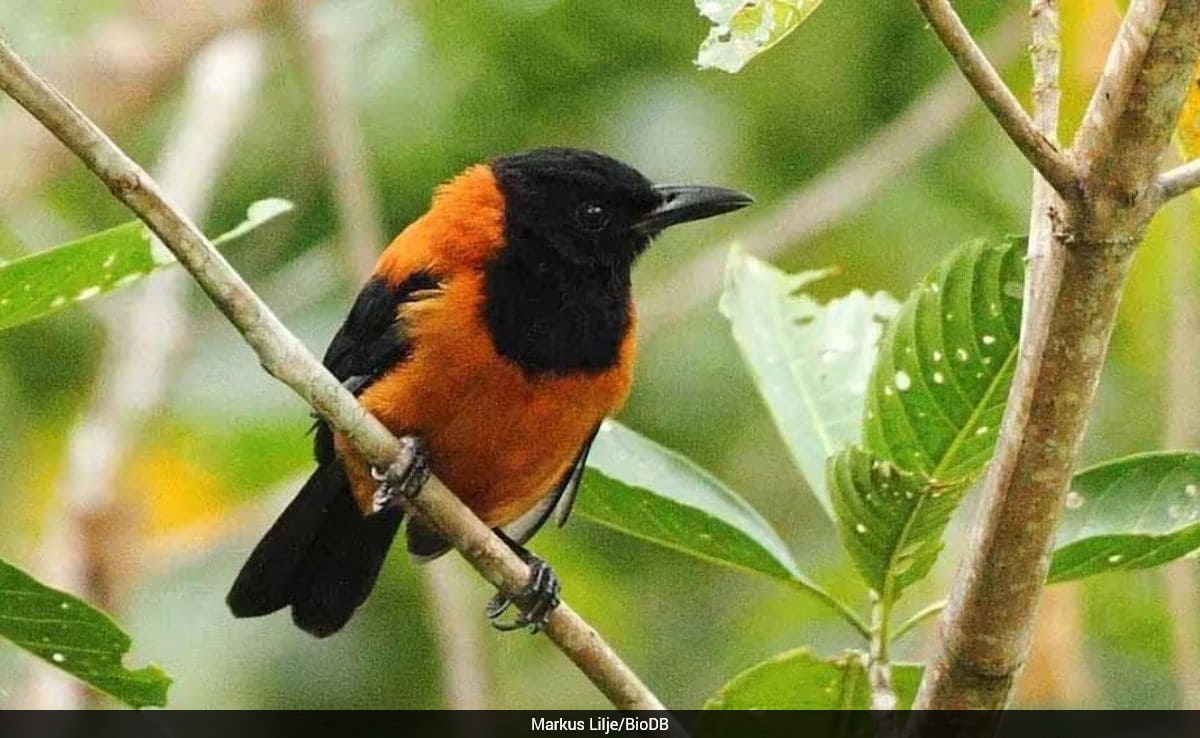
In the rainforests of New Guinea lives a bird unlike any other - the Hooded Pitohui, known as the world's only toxic bird. While most birds are harmless to humans, this orange-and-black species carries harmful toxins found in poison dart frogs.
Touching its feathers or ingesting its flesh can cause tingling, numbness, or even more severe neurological effects in humans, such as mild paralysis.
When was the toxic bird discovered?
Scientist Jack Dumbacher discovered the first-ever toxic bird in the late 1980s while doing fieldwork in New Guinea. When he handled the birds, he noticed that after touching his mouth or eyes, he felt tingling, numbness, and a burning sensation, according to Discover Wildlife.
Later, he realised the bird's feathers and skin were poisonous, and even a little contact caused these uncomfortable effects.
In 1992, Dumbacher and his team published a study showing that the Hooded Pitohui's skin and feathers contain a powerful poison called batrachotoxin, along with similar toxic compounds. This was the first confirmed case of a bird being poisonous to humans. These toxins help the bird protect itself from predators and parasites.
Pitohuis don't make their own poison
One of the most interesting aspects about Hooded Pitohuis is that they don't produce poison. Instead, they get it from their diet through a process called sequestration, which means they store the toxins from what they eat in their bodies.
Scientists, including Jack Dumbacher, discovered that the Hooded Pitohui gets its poison from melyrid beetles, which contain batrachotoxins. The birds eat these beetles regularly, and the toxins build up in their skin and feathers, according to Forbes.
Hooded Pitohui's striking colours
As part of a natural defense mechanism known as aposematism, its bright black and orange feathers alert predators that it is dangerous or unfit for consumption.
Because of its toxicity, New Guineans have traditionally avoided handling this bird, referring to it as a "rubbish bird."
Other birds that use chemical defences
Batrachotoxins are also found in smaller amounts in other New Guinea birds, like the blue-capped ifrit (Ifrita kowaldi). So while the Hooded Pitohui is the most toxic known bird, it's not the only one using poison as a defence.
Track Latest News Live on NDTV.com and get news updates from India and around the world


