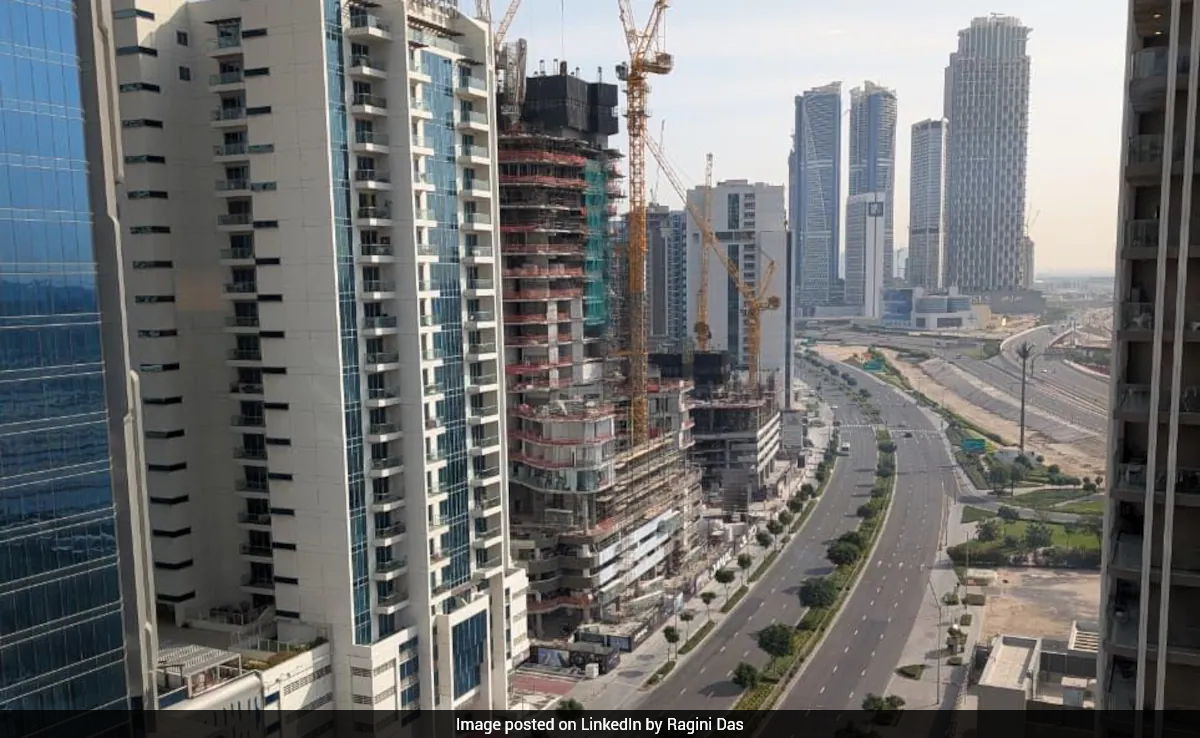
Ragini Das, the Head of Google for Startups, India, has shared a firsthand account of the ongoing tension in Dubai following a wave of Iranian missile and drone strikes. Despite the visible presence of missiles and suicide drones in the sky, Das noted that the city feels "calmer than you'd expect" and maintains a sense of order.
She reported that while the streets are uncharacteristically empty and some places remain shut, "life hasn't shut down completely." She even stepped out for dinner on Sunday night, noting things felt relatively normal.
"The streets are a lot less crowded - not the usual buzz you're used to seeing here. There's a heightened awareness in the air. Missiles and suicide drones continue to fly over the city, but most are being intercepted, and life hasn't shut down completely. Still, you can feel that people are watching, checking in and taking things seriously. Some places are open, some are shut. It's measured, but most importantly, people seem to trust the people running the city. There's a sense of calm and order, not chaos," she wrote in a post on LinkedIn.
See the post here:
Das, who is from Gurugram, is currently among many travellers hoping to return to India as scheduled on Wednesday, though widespread airspace closures and flight cancellations at Dubai International Airport (DXB) make this uncertain.
The strikes are part of a broader regional conflict involving the US, Israel, and Iran. Dubai, long considered a "safe haven," has seen its stability shaken by direct spillover for the first time in decades. Debris from interceptions and direct strikes have impacted high-profile sites, including the Fairmont The Palm hotel and the Burj Al Arab. Dubai International Airport sustained partial damage to a main terminal building during an aerial strike, resulting in four injuries.
Most incoming aerial threats are being successfully intercepted by the UAE's air defence systems, which has helped maintain public trust in the city's leadership.
The current surge began on February 28, with a US-Israeli strike that confirmed the killing of Iran's Supreme Leader, Ayatollah Ali Khamenei, and several high-ranking military officials. Tehran launched a massive counteroffensive involving hundreds of drones and hypersonic missiles.
Track Latest News Live on NDTV.com and get news updates from India and around the world


