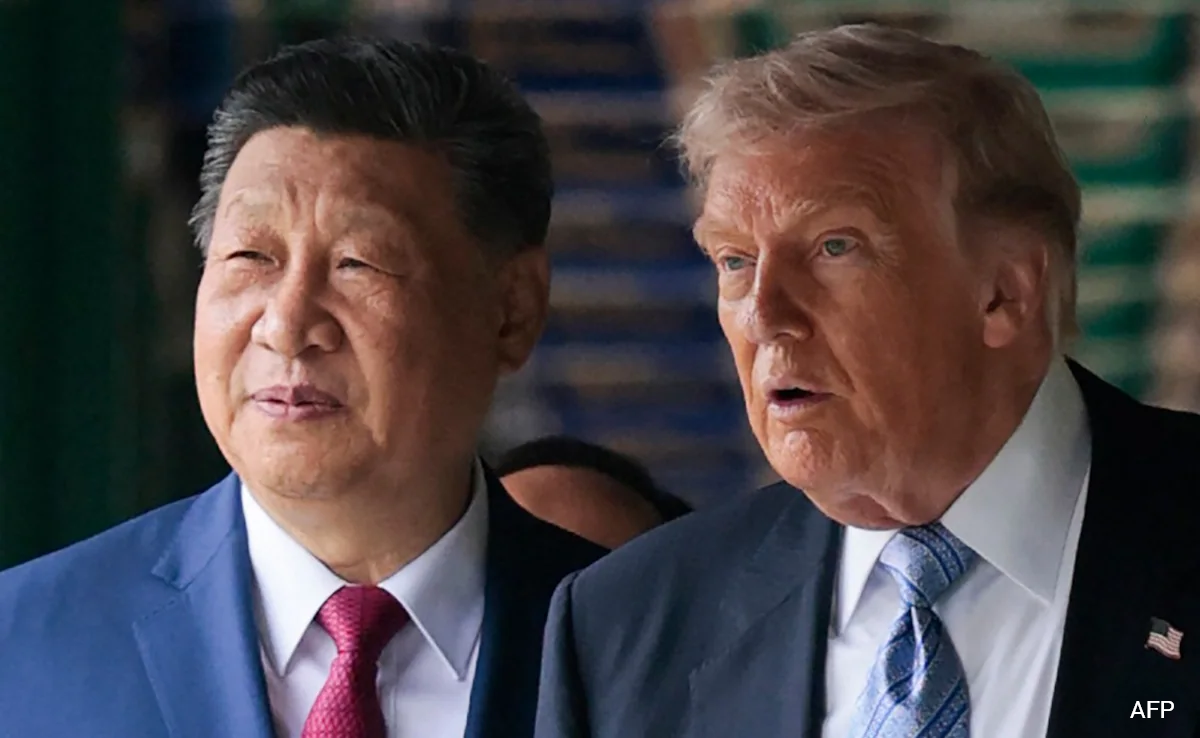
US President Donald Trump wrapped up his two-day visit to Beijing on Friday by declaring that his talks with Chinese President Xi Jinping had produced major economic gains for Washington, including large-scale purchases of American aircraft, agricultural goods and energy and medical products.
Speaking before departing China, Trump said the meetings had resulted in "fantastic trade deals" and settled "a lot of different problems" in his meetings with China's Xi Jinping this week. However, the details of the deals and problems Trump has spoken about have not come to light yet.
"We've made some fantastic trade deals, great for both countries," Trump said after taking a walk with Xi through the gardens of Zhongnanhai, the leadership compound adjacent to the Forbidden City.
"We've settled a lot of different problems that other people wouldn't have been able to solve," he added, though he did not specify which issues had been resolved.
According to Trump and senior US officials, Beijing agreed to purchase 200 Boeing aircraft, with the possibility of hundreds more in the future, along with billions of dollars worth of American soybeans, oil, medical equipment and agricultural exports.
However, despite the sweeping claims from the US side, Chinese officials offered little public confirmation. Beijing refrained from formally announcing any of the agreements, and the foreign ministry did not confirm or deny Trump's statements when questioned by reporters.
Trump Says Xi Offered Help On Hormuz Crisis
Beyond trade, Trump also claimed progress had been made on one of the most sensitive geopolitical flashpoints - the Strait of Hormuz.
After the summit's opening day, the US president said Xi had indicated a willingness to help keep the crucial shipping route open amid growing tensions linked to Iran.
"He'd like to see the Hormuz Strait open, and said 'if I can be of any help whatsoever, I would like to help'," Trump said during an interview with Fox News.
Read | Trump-Xi Have Made 'Fantastic Trade Deals, Great For Both Countries'
The remarks came as Iran's confrontation with the West continues to threaten maritime traffic through the strategic waterway, a vital route for global oil shipments.
While China's foreign ministry later issued a statement saying "shipping lanes should be reopened as soon as possible", a ministry spokesperson did not confirm whether Xi had directly offered assistance to Washington on the issue.
Trump said that Xi had reassured him China was not preparing to provide military assistance to Tehran, though Beijing again made no public reference to such assurances.
Beijing Stays Quiet As Trump Touts 'Victories'
The contrast between Trump's enthusiastic messaging and China's restrained response became one of the defining features of the summit.
Throughout the visit, Trump repeatedly praised Xi, referring to him as a "great leader" and a "friend", while projecting the meetings as a diplomatic and economic success for the United States.
In another interview following the summit, Trump said Xi had agreed to several items on Washington's economic wishlist, including purchases of Boeing aircraft and American farm goods.
"One business deal struck involved Xi agreeing to purchase '200 big' Boeing jets," Trump said.
Read | Trump's 'Great Leader' Praise For Xi, Calls For 'Fantastic' US-China Ties
Later, while travelling back aboard Air Force One, he expanded on the claim, saying the agreement could eventually involve "a promise of 750 planes... if they do a good job with the 200".
Trump further stated that China had "agreed it wanted to buy" US oil and would also be "buying billions of dollars of soybeans".
Yet Chinese authorities continued to maintain silence on the specifics, neither confirming nor denying the reported deals.
Stephen Olson, a former US trade negotiator, told The New York Times that the summit was less about dramatic breakthroughs and more about stabilising ties between the world's two largest economies.
"No major breakthroughs were expected and none were achieved, but both countries got what they needed from this summit, a bit of additional stability," Olson said.
According to Olson, both leaders walked away with political advantages. Trump gained economic announcements he could present as victories at home, while Xi used the meeting to reinforce China's standing on the global stage.
Mr Xi presented China "as a full peer competitor to the United States, a country that does not need to bend the knee to US demands", Olson said.
Track Latest News Live on NDTV.com and get news updates from India and around the world


