The images from the war in the Middle East are being watched carefully in Beijing not with alarm, but with calculation. They are seeing the precision strikes, carrier groups, and the sheer scale of American firepower deployed halfway across the world.
This assessment of China's place in the world today amid the US-Iran war, explained by journalist Fareed Zakaria to NDTV, concludes that China's military and policy establishment is drawing two distinct lessons from what it is seeing.
The first is respect. Chinese President Xi Jinping has spent years trying to modernise a People's Liberation Army that many within China's own strategic community believe is not yet adequate to the tasks assigned to it, principally Taiwan and the South China Sea.
Watching the US project devastating, accurate force from thousands of kilometres away has only sharpened that anxiety. "The Chinese are surely looking at that," Zakaria, the longtime foreign affairs analyst, told NDTV.
The second conclusion is something closer to quiet satisfaction for China.
Xi Jinping's long-standing thesis is that the US keeps overextending itself by committing massive military resources to theatres where its core strategic interests are not at stake, Zakaria said.
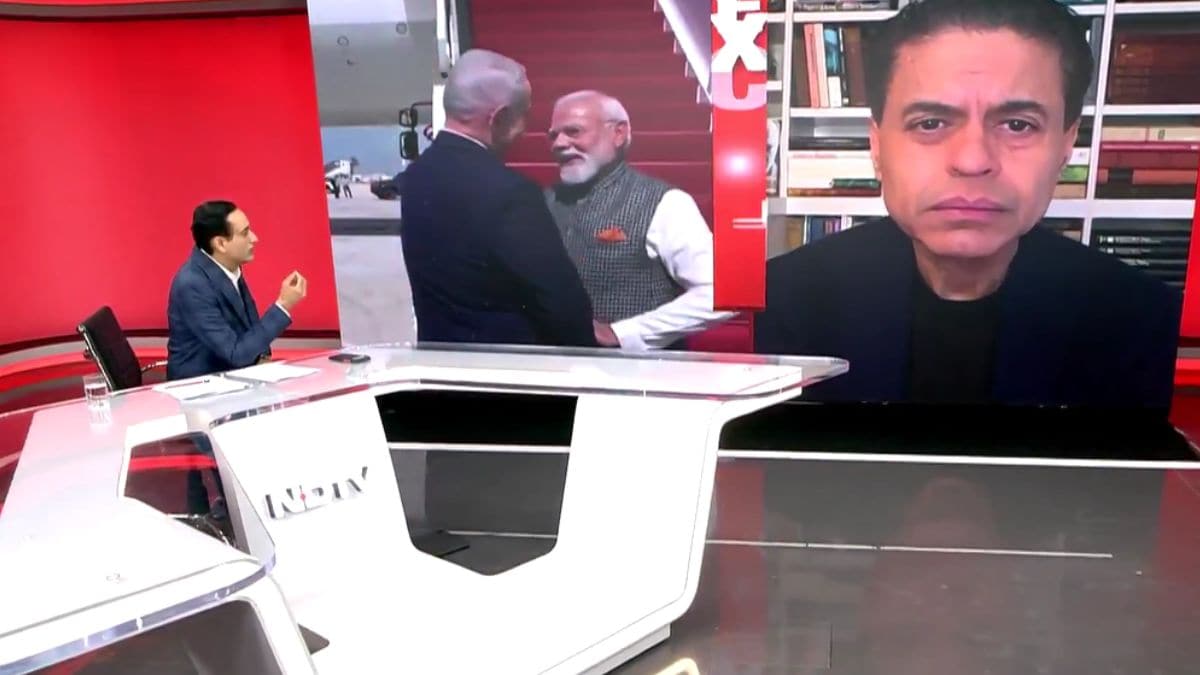
NDTV Editor-in-Chief Rahul Kanwal and Fareed Zakaria
The latest war in the Middle East fits that thesis. Washington is now deeply engaged in the fate of one country, trying to shape who rules it, in a region from which it no longer even imports significant quantities of oil.
The US is today an energy exporter. The logic of the intervention is harder to defend on strategic grounds, he said.
"It seems to have fallen prey to a kind of imperial temptation," he said, indicating a compulsion to intervene wherever instability exists, regardless of whether the outcome materially affects America's own trajectory.
While Washington is drawn back into the Middle East, Beijing is focused on semiconductors, artificial intelligence, quantum computing, electric vehicles, batteries, solar, and high-speed rail. China does not merely compete; it dominates in many of those sectors.
The historical parallel Zakaria reached for was the US in the early 20th century, watching European powers exhaust themselves in wars and imperial maintenance, while quietly building the greatest industrial economy the world had seen.
China is attempting something analogous by seeing each fresh American military adventure as time it can use, he said.
Track Latest News Live on NDTV.com and get news updates from India and around the world


