Bangladesh is preparing for another general election born out of a massive student-led uprising that overthrew the Sheikh Hasina-led government. Scheduled for February 12, the polls come nearly a year and a half after Hasina, the former prime minister, was forced to resign and flee the country.
The country's largest party, the Awami League, has been barred from contesting after its leader, Hasina, now in exile in India, authorised the use of lethal force against protesters.
Bangladesh has repeatedly seen mass demonstrations and deadly unrest. Among the most infamous episodes in recent memory is the Siege of Dhaka, a protest that not only claimed nearly 100 lives but also deepened fractures in Bangladesh's democratic landscape.
The Siege of Dhaka: May 2013
AFP
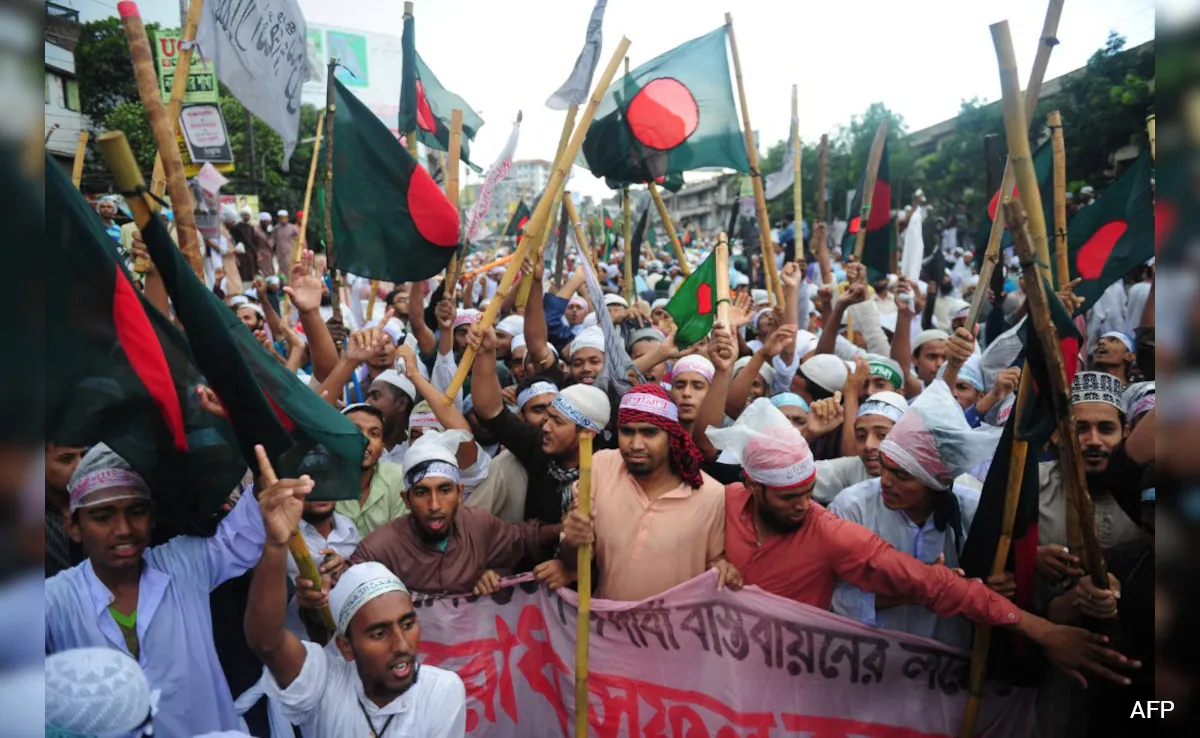
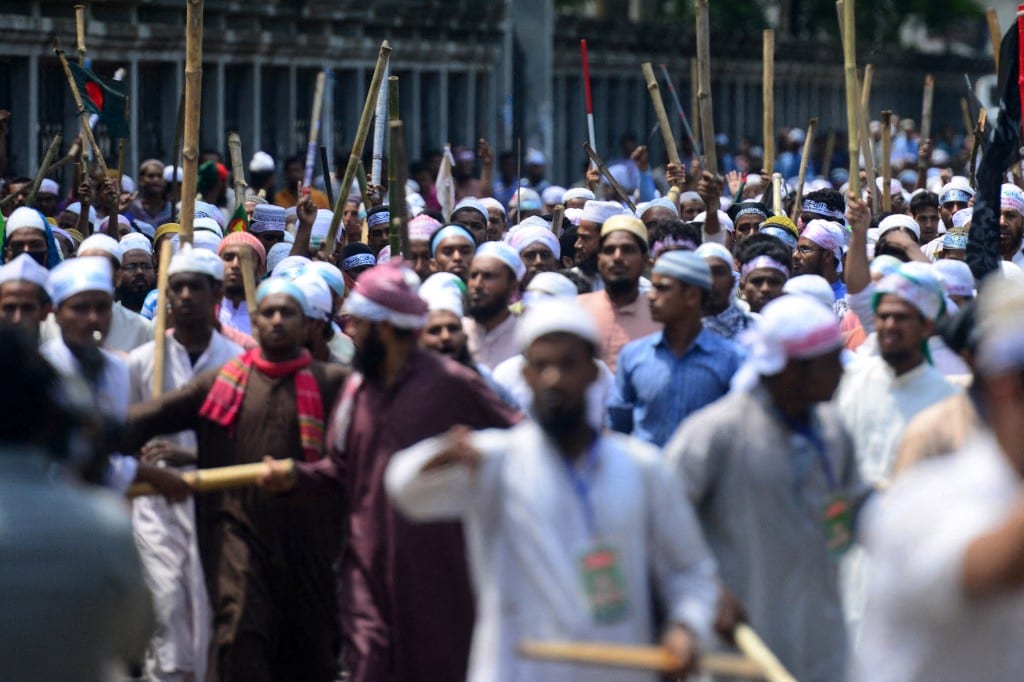
Violence erupted in Dhaka on May 5 and 6, 2013, during a rally organised by thousands of supporters of Hefazat-e-Islam (Protectors of Islam), according to Human Rights Watch.
Hefazat described itself as a non-political coalition of religious groups. Its demands included a ban on public mixing of males and females, criminal prosecution of atheists and the imposition of the death penalty for blasphemy.
The organisation called for a national march in Dhaka, drawing thousands of religious students and teachers. As the crowds entered the city on May 5, tensions escalated into violent clashes with security forces. Shops, office buildings and a bus were set on fire, while confrontations near the city's central mosque left both police and protesters injured. Some casualties were bystanders caught in the chaos, though most were Hefazat supporters, as per reports.
Security Crackdown And Casualties
By the night of May 5, while some demonstrators had dispersed, an estimated 50,000 had gathered at Shapla Chattar, a central business intersection in Dhaka. At 2:30 a.m. on May 6, security forces launched a major operation to clear the area, according to Human Rights Watch. While many fled, others hid in side streets and buildings, which were then swept by the forces.
The confrontation resulted in a high number of deaths, with estimates ranging from dozens to nearly a hundred. The government's use of force drew strong criticism from human rights organisations. Amnesty International and Human Rights Watch condemned the excessive measures and called for transparent investigations into the violence.
As the nation approaches the 2026 elections on February 12, the Siege of Dhaka reminds us how fragile transitions can be in Bangladesh. Maintaining peace and ensuring credible elections is, for now, one of the biggest tests for Bangladesh's evolving democracy.
Track Latest News Live on NDTV.com and get news updates from India and around the world


