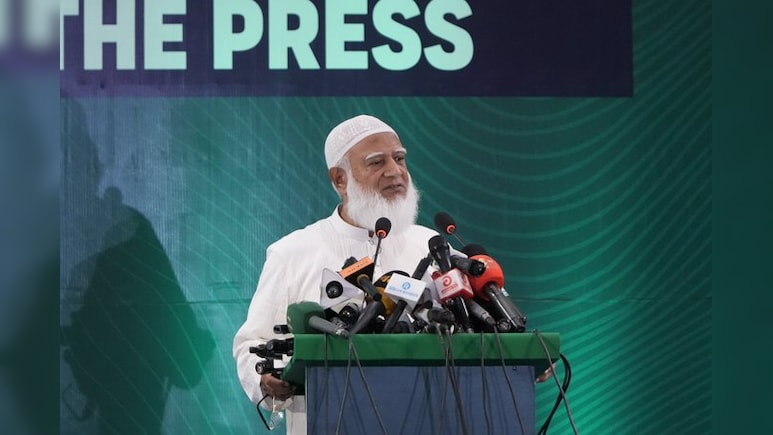
- Shafiqur Rahman leads Bangladesh Jamaat-e-Islami since 2019 and faces controversy on women
- Rahman said women cannot lead his party, citing religious reasons in a recent interview
- Jamaat-e-Islami has not nominated any female candidates for the upcoming general election
Shafiqur Rahman, the Ameer (chief) of Bangladesh Jamaat‑e‑Islami (JI), is at the centre of a national controversy ahead of the country's general election on February 12. The reason? A series of remarks against women.
Rahman received widespread criticism for saying that women couldn't lead his party, confirming that the JI had not nominated a single female to contest in the forthcoming polls.
Who is Shafiqur Rahman?
Born in 1958 in East Pakistan, now Bangladesh, he has been serving as the leader of Jamaat-e-Islami since 2019. He completed his SSC from Baramachal High School in 1974 and passed his HSC from Murari Chand College in Sylhet in 1976. He earned his MBBS degree from Sylhet MAG Osmani Medical College in 1983.
Rahman's political career began in 1973 when he joined the student wing of Jatiya Samajtantrik Dal (JaSaD) and later Islami Chhatra Shibir, a student body affiliated with Jamaat-e-Islami.
In 1984, he formally joined Jamaat-e-Islami and went on to hold several key leadership positions within the party, including assistant secretary-general in 2010, acting secretary-general in 2011, and secretary-general in 2016.
Rahman's controversial statements
During an interview with Al Jazeera, he said, "We do not think women should come into leadership. In Jamaat, it is impossible. Allah did not permit this."
A few days earlier, Rahman also took to the social media platform X and claimed that modern society was forcing women to leave their homes. He added that this exposed them to exploitation, moral decline and insecurity, and he went as far as calling it "another form of prostitution."
Rahman's personal life
He is married to Ameena Begum, who served as an MP following her election in 2001. The couple has two daughters and a son.
Women in Bangladesh politics
Considering Bangladesh's political history, the country has a strong record of women in leadership. Since gaining independence in 1971, Bangladesh has often been cited as a country where women have held real power.
Since 1991, national politics have been dominated by two women, Begum Khaleda Zia and Sheikh Hasina Wajed, who have taken turns serving as Prime Minister for more than three decades.
Track Latest News Live on NDTV.com and get news updates from India and around the world


