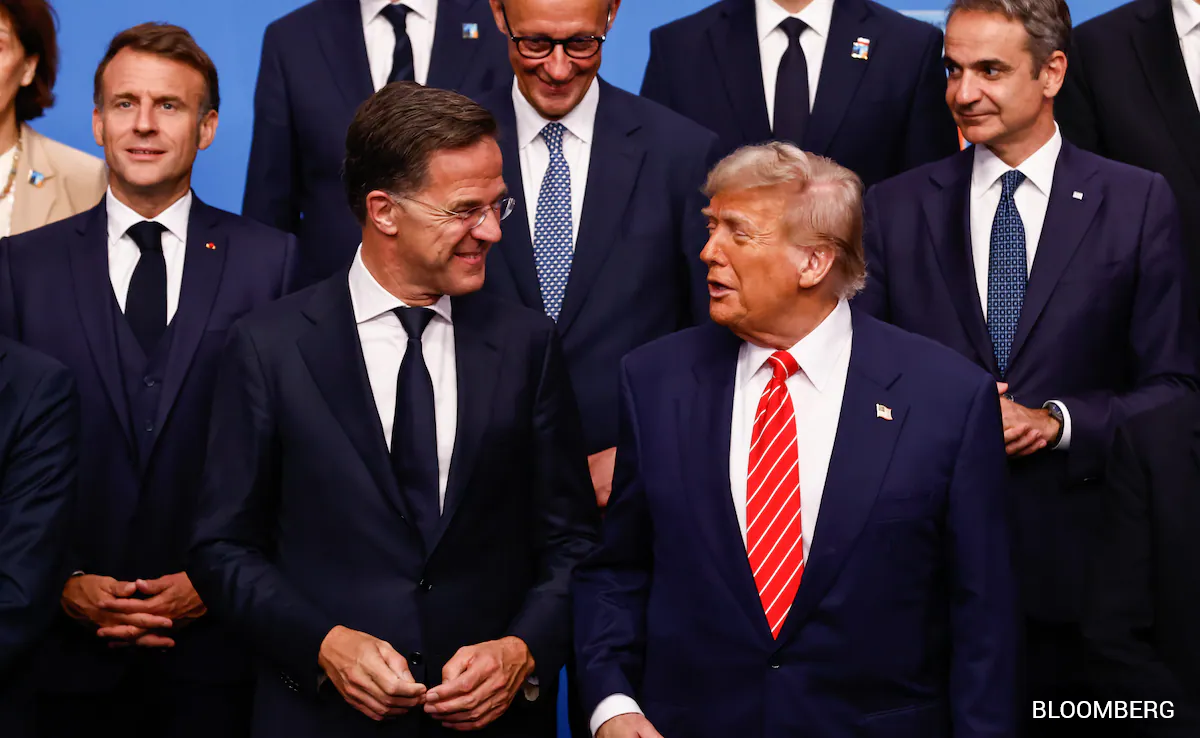
In NATO's glass and steel corridors, calls and texts were coming in from European governments: Mark Rutte needs to tone it down. This isn't our war.
Less than 48 hours earlier, on Feb. 28, European leaders had watched in shock as the US and Israel pummeled Iran without consulting their allies. Across the continent, leaders anxiously braced for chaos and economic calamity.
Yet there was the NATO chief on TV, championing Trump's decision and saying that Europe was "extremely glad."
It wasn't. In fact, European allies are starting to question whether Rutte's deferential approach to Trump - which at times turns into political cheerleading - is appropriate or even working, according to people familiar with the matter who spoke anonymously to describe private conversations.
Despite Rutte's unique ability to connect with Trump, the US president has cut aid to Ukraine, boosted Russia's finances and sent the global economy reeling with his war in Iran. There is also concern that Rutte's Iran war bullishness may have caused Trump to expect NATO would back him, one of the people said.
Meanwhile, the North Atlantic Treaty Organization, the world's largest military alliance, has never been on such shaky ground, with Trump repeatedly questioning its relevance, menacing its members and threatening to withdraw just last week.
On Wednesday, Rutte will be at the White House on yet another NATO rescue mission, arriving just moments after US President Donald Trump announced a tentative, two-week ceasefire with Iran to allow for negotiations.
Rutte will try to temper Trump's anger that NATO allies refused to help him protect commercial ships in the Strait of Hormuz or let the US use their bases to attack Iran. Trump also revived his grievance on Monday that NATO countries wouldn't give him Greenland, a Danish territory.
At stake is not just NATO but Europe's position in the world. With doubts growing about US commitment to NATO, Europe is trying to prepare for a military and economic reality it hasn't confronted since before World War II: A US that refuses to defend its allies.
"It's exactly what enemies of the US and Europe want to see," said Oana Lungescu, NATO's former spokesperson who's now with the Royal United Services Institute, a defense think tank. "It's a dream come true for Russia and China."
Rutte's Approach
Mark Rutte is trying to be a NATO leader for the Donald Trump age.
The NATO chief eschews typical bureaucratic channels - the US doesn't use them anyway - and instead speaks directly to Trump, sometimes by phone, sometimes by giving interviews to TV channels he knows Trump and his inner circle will be watching. In public, Rutte mirrors Trump's talking points, lavishes the president with praise and even repeats Trumpian phrases.
The approach has won Rutte privileged access to Trump among European leaders, according to the people, although others such as Italy's Giorgia Meloni and Finland's Alexander Stubb are also friendly with the president. Rutte and Trump text and call each other frequently, the people said.
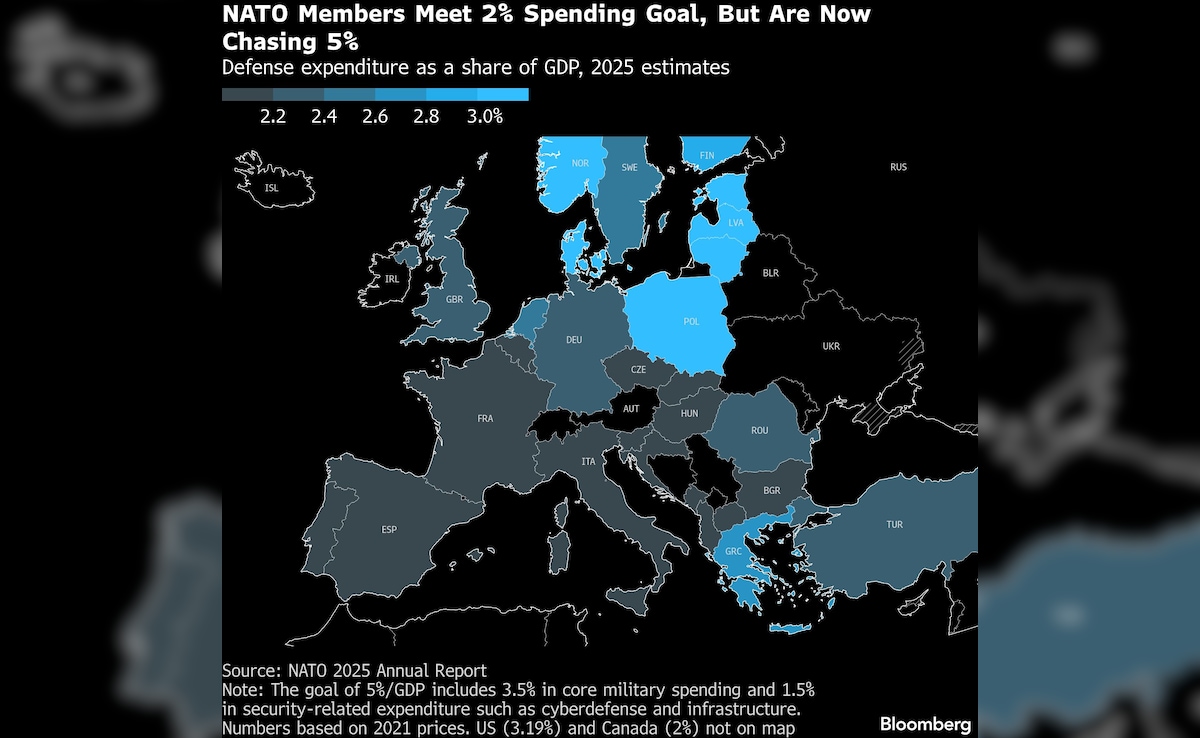
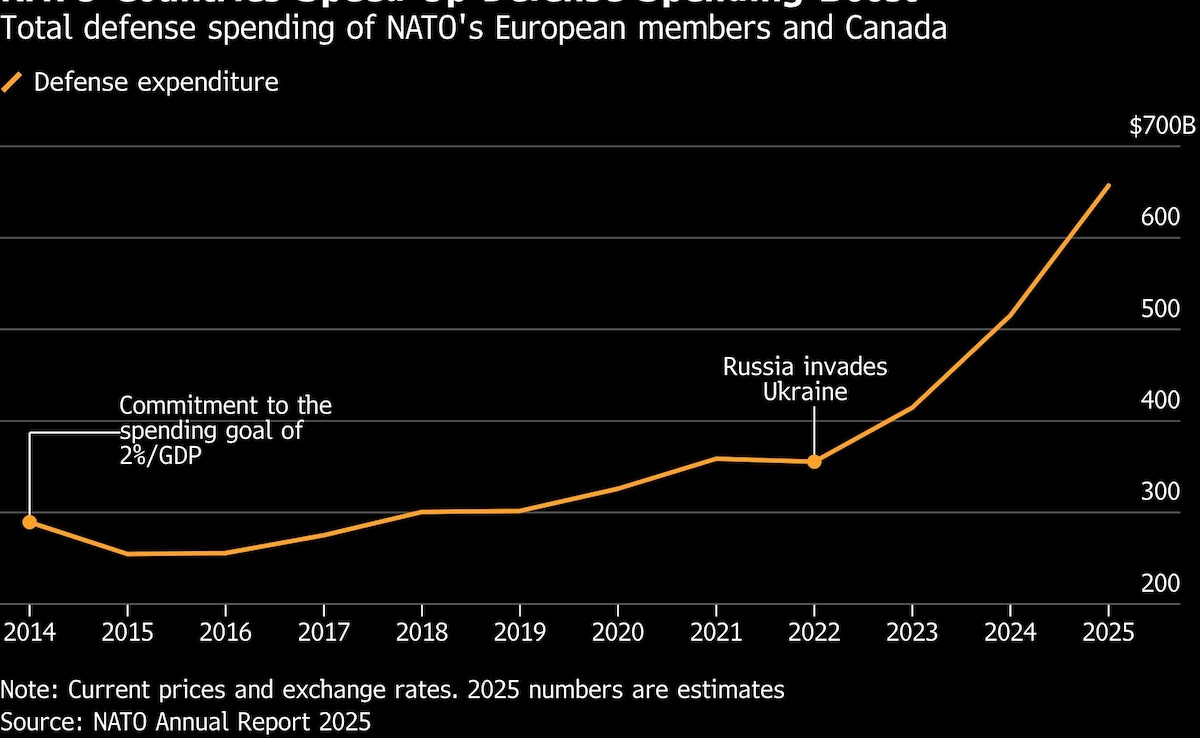
This backchannel has given Rutte a way to privately nudge Trump. Rutte may have helped talk Trump down from his push to acquire Greenland, the people said. And he crafted a more realistic way for allies to meet Trump's demanded funding boost, allowing them to combine core military spending with "defense-related" expenditures.
In return, European leaders have given Rutte considerable leeway to operate. One eastern European official described the flattery as a price worth paying to keep NATO together in a tense global moment. The tactic, the official said, recognizes that Trump often changes his mind and buys Europe time to build up its own militaries.
Eastern European countries in particular are keen to keep the US engaged as a counterweight to Russia, and applaud Rutte's strategy. Even the NATO leader's critics say the approach may be the best of several bad options.
"The way he operates is to keep the dialog channel open, absorb some of the shocks from DC and use that as a platform that all allies can meet from," Lungescu said.
But red lines are being drawn. Europeans - especially in the west - have in recent months started to sour on the Trump appeasement strategy more broadly, seeing benefits from simply saying "no." And some officials have not appreciated moments when they felt Rutte was almost taking Trump's side against Europe.
The concern, the people said, is that Rutte's approach may undermine Europe's own position toward the US.
Spain, for instance, sees Rutte as occasionally too aligned with Washington, with some senior officials privately describing him as Trump's lackey - a perception Rutte fueled by branding Trump NATO's "daddy." Madrid was the lone dissenting voice on Rutte's Trump-pleasing push to jump NATO members' defense spending.
NATO didn't reply to a request for comment for this piece.
War Erupts
The war in Iran has yanked these back-room tensions into the spotlight.
Rutte's overt boosterism for the US-Israeli attacks has been particularly at odds with the sentiment among most NATO members, the people said. Even the UK, which largely supports Rutte's conciliatory tactics, thought the secretary general went too far, according to one of the people.
Rutte wasn't just supporting the war, he was encouraging Americans to do so, essentially straying into domestic politics - historically off-limits for NATO leaders.
"I've seen the polling, but I really hope the American people will be with him," Rutte offered, unprompted, during a CBS interview in late March as most Americans turned against Trump's campaign. "He is doing this to make the whole world safer."
Europeans, however, could have played the situation better, according to a European diplomat stationed at NATO. Instead of outright rejecting Trump's war-time demands, they could have expressed a willingness to negotiate.
In the end, that's essentially what happened, partly due to Rutte's help, the people said.
A coalition of over 30 countries is now discussing how they can help secure shipping through the Strait of Hormuz, a vital waterway for fuel exports. Notably, though, the countries only want to do that once the war has ceased. And there's no certainty that the just-declared pause in fighting will hold.
Meanwhile, the NATO chief has also dialed down his public Iran war support.
Longer term, Rutte's goal is to ensure the annual NATO summit still takes place this June in Ankara, the European diplomat said - that alone would be a win, given the tense atmosphere.
Ultimately, another European diplomat said, everyone realizes Rutte can't stop Trump from making dramatic decisions, whether the NATO chief compliments or condemns.
"It's a tough, thankless job," said Lungescu, the former NATO spokesperson.
(This story has not been edited by NDTV staff and is auto-generated from a syndicated feed.)
Track Latest News Live on NDTV.com and get news updates from India and around the world


