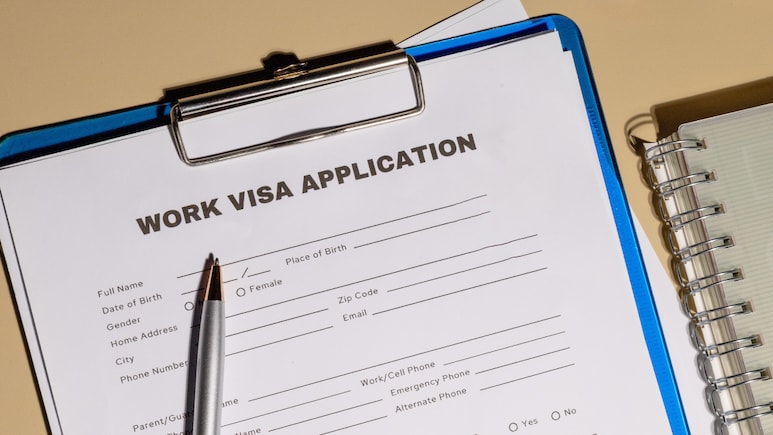
- There are multiple US work visas based on job type, qualifications, and stay duration
- Temporary visas cover fixed-term work; permanent visas can lead to Green Card status
- Most temporary visas require employer sponsorship and USCIS petition approval
If you're planning to work in the United States, the first thing to know is that there isn't just one US work visa. The visa you need depends on your job, qualifications, and how long you plan to stay. Some visas are meant for temporary work, while others can eventually lead to permanent residency.
Temporary Work Visa Vs. Permanent Work Visa
A temporary work visa is for people who want to work in the US for a fixed period. Once your authorised stay ends, you are expected to leave the country unless you receive an extension or change your immigration status.
A permanent work visa, on the other hand, is for people who plan to live and work in the US permanently. If approved, it can eventually lead to a Green Card, allowing you to become a permanent resident.
Who Qualifies For A Temporary Us Work Visa?
The US has 11 temporary work visa categories, each meant for a different type of worker.
Some of the most common include:
- H-1B: For professionals working in specialised jobs. Applicants generally need at least a bachelor's degree or equivalent experience.
- H-2A: For temporary or seasonal agricultural workers.
- H-2B: For temporary or seasonal non-agricultural workers.
- H-3: For trainees receiving practical training that is unavailable in their home country.
- L Visa: For employees being transferred by the same company to a US office in a managerial, executive or specialised knowledge role. Applicants must have worked for the employer abroad for at least one year during the previous three years.
- O Visa: For people with extraordinary achievements in fields such as science, arts, education, business or sports.
- P Visas: For athletes, entertainers and artists travelling to the US for performances, competitions or cultural programmes.
- Q-1 Visa: For participants in international cultural exchange programmes.
Do You Need A Job Offer?
Photo: Canva
Most temporary work visas require a US employer to sponsor you by filing a petition with the US Citizenship and Immigration Services (USCIS). Only after USCIS approves the petition can you apply for the visa. Some visa categories also require the employer to first obtain a labour certification from the US Department of Labor.
Also Read: US Bill Could Halt H-1B Visas For 3 Years. What It Means For Indian Professionals
Documents You'll Need
Before your visa interview, keep these documents ready:
- A passport valid for at least six months beyond your planned stay.
- DS-160 visa application confirmation page.
- Visa application fee receipt, if applicable.
- A passport-size photograph if the online upload does not work.
- Petition receipt number from Form I-129 or the USCIS approval notice (Form I-797).
- Form I-129S if you are applying under an L blanket petition.
The embassy or consulate may ask for additional documents depending on your case.
How To Apply
The process is fairly straightforward:
- Your employer files the required petition with USCIS.
- USCIS approves the petition.
- Complete the online DS-160 application.
- Pay the visa fee, if required.
- Schedule your visa interview.
- Carry all required documents.
- Attend the interview and biometric fingerprint collection, if applicable.
- Wait for the final decision
The standard nonimmigrant work visa application fee is US$205 (Rs 19,600 approx.), although some applicants may also need to pay additional visa issuance or other applicable fees.
Can Your Family Come With You?
Your spouse and unmarried minor children can generally apply under the same visa category to accompany or join you in the US. The Q-1 Cultural Exchange Visa is the main exception. You must show that you can financially support your family during your stay.
Even if your visa is approved, the final decision is made when you arrive in the United States. US Customs and Border Protection officers at the airport or other port of entry decide whether you can enter the country.
Also Read: China To Introduce New Visa-Free Entry Measures For More International Travellers
How Is A Permanent Work Visa Different?
Permanent work visas are meant for people who want to settle in the US. There are five employment-based immigrant visa categories, including EB-2 and EB-3, for professionals with advanced degrees, skilled workers and other eligible employees.
Unlike temporary work visas, these can eventually lead to a Green Card. Depending on the category, applicants may need:
- A US employer to sponsor them.
- Labour certification from the Department of Labor.
- An immigrant petition filed with USCIS.
Can Your Visa Be Refused?
A USCIS petition approval does not guarantee that you will receive a visa. Applications may be refused if required documents are missing, you do not qualify for the visa category, fail to meet US immigration rules, or are found ineligible under US immigration law.
Track Latest News Live on NDTV.com and get news updates from India and around the world


