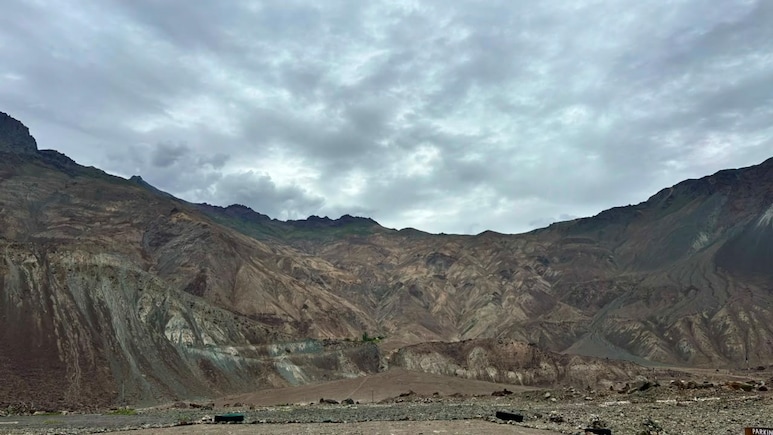
- A first-time Ladakh trip turned into an unforgettable journey through Leh, Nubra Valley and Pangong Lake.
- From rafting in icy rivers to spotting the Milky Way at Pangong, every stop offered a different side of Ladakh
- Beyond the landscapes, the trip gave a deeper appreciation of life, culture and resilience in the Himalayas
Landings have never really scared me. But as our flight started descending towards Leh, I could feel my heartbeat. I was holding on to my seat and looking out of the window, and all I could see were mountains. The aircraft was surrounded by them, and for someone who had never been to Ladakh before, it was a slightly terrifying introduction. Even after we touched the airstrip, the aircraft seemed to take a little too long to stop. My mind, of course, had already imagined a few worst-case scenarios.
Then I stepped out of the aircraft.
And I forgot all about it.
Leh was my first introduction to Ladakh, and it was also my first time in the region. I had seen these mountains in photographs, Instagram reels and travel videos, but seeing them from the aircraft window was different. The mountains seemed endless, the sky looked unusually clear and there was a lot more open space than I was used to seeing in Delhi.
We had travelled with my family, and since the first day was meant for acclimatisation, we took it easy after checking into our hotel. By evening, I was ready to step out.
Leh Market Was My First Introduction To The City
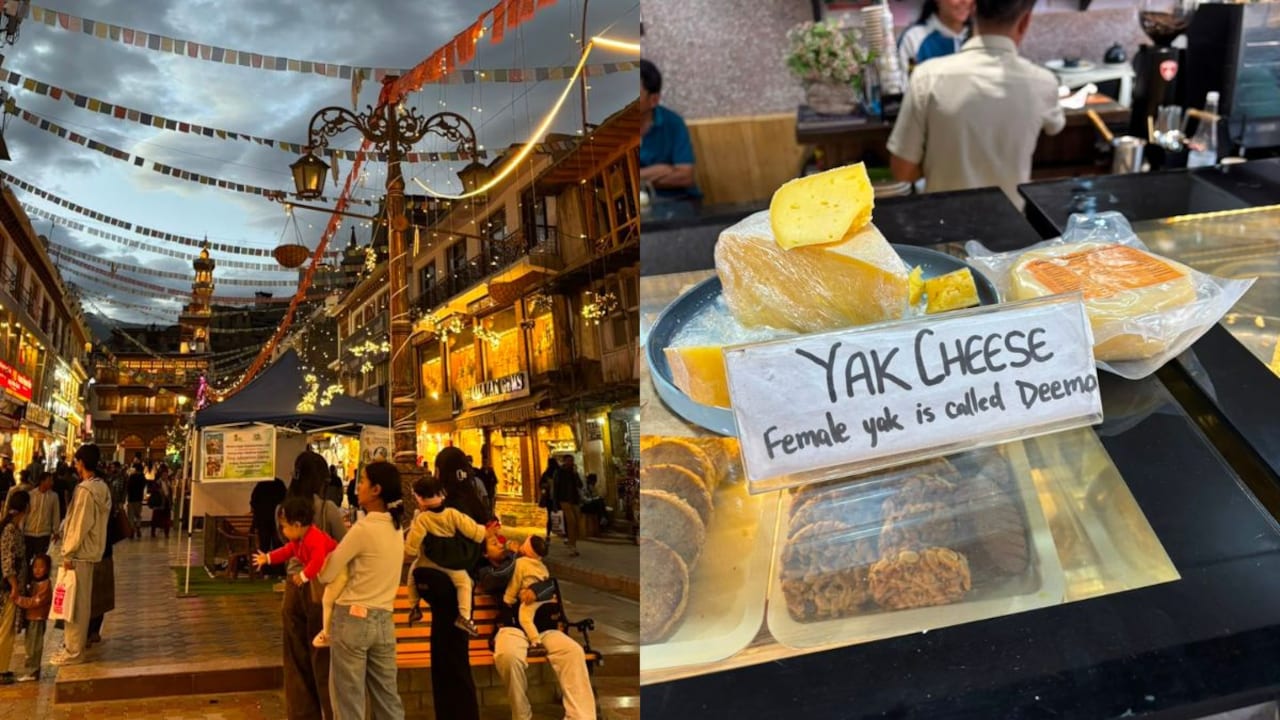
Leh Market; Deemo Cheese (Yak Cheese) (Photo: Author)
Leh Market is a long, busy stretch with shops and cafes on both sides. There are souvenir stores, Pashmina shops, Tibetan refugee shops, cafes and restaurants selling everything from Maggi to thukpa. There was a little bit of everything and everyone. Local residents, Indian tourists, foreign travellers, bikers and families were all walking around.
We went in the evening, when the market was lit up and particularly lively. I also spotted the Jama Masjid in the middle of the market, which was a nice reminder of the mix of cultures and communities you see in Leh. And, naturally, I had to try something I hadn't eaten before.
I tried what is commonly called yak cheese, although what I actually had was Dremo, a cheese made from female yak milk. It was one of the first of many new food experiences I had during the trip. For me, exploring a new place always involves eating my way through it, and Ladakh gave me plenty to work with.
The Hall of Fame made me think about the people who protect this region. The next day, we went to the Hall of Fame, an Indian Army museum in Leh that documents the military history of the region and honours soldiers who lost their lives in different conflicts. There are sections on the Kargil War, Siachen and the difficult conditions in which soldiers serve.
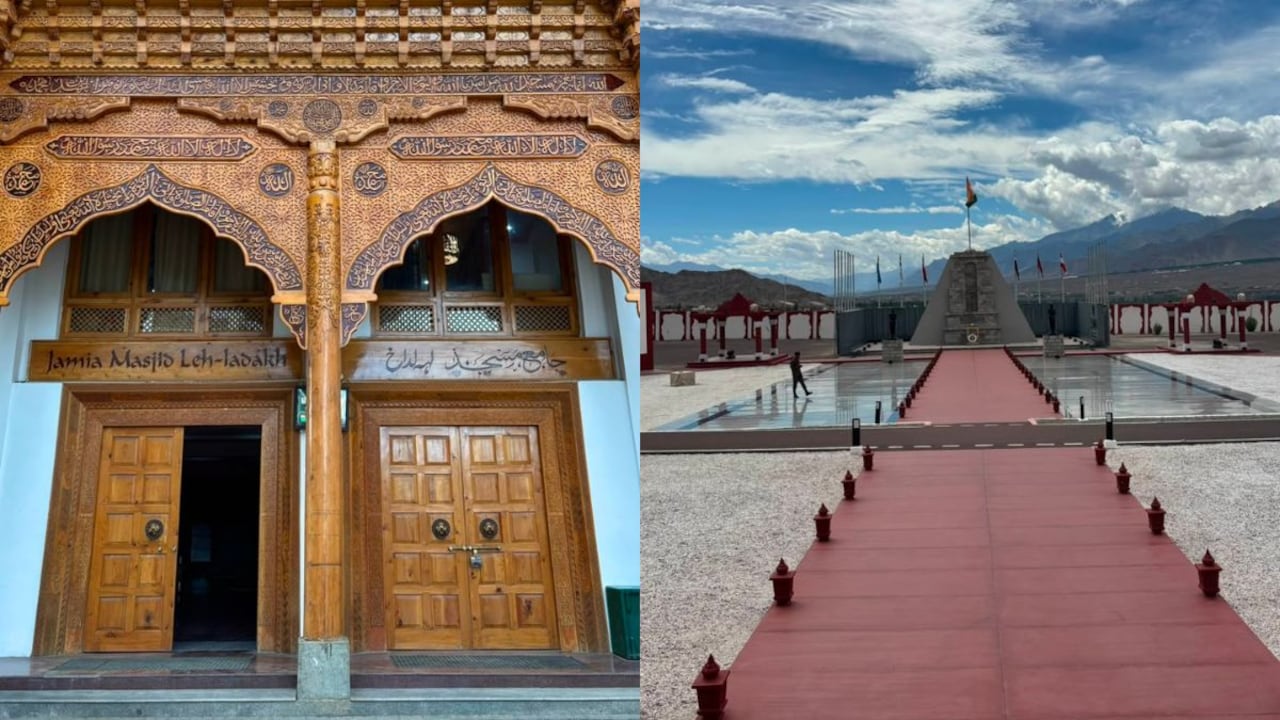
Masjid, Leh Market; Military Hall of Fame (Photo: Author)
Our guide spoke to us about what life is like for soldiers posted in these high-altitude areas. It is difficult to listen to those stories and not think about how different their lives are from ours. There is also a memorial with the names of soldiers who never returned. Standing there made me think about how easily we take everyday comforts for granted - electricity, heating, food, a comfortable bed and simply being able to go home at the end of the day.
I left the Hall of Fame with a lot more respect for the Army.
The setting also makes the visit quite striking. Outside the museum are the wide, open landscapes of Ladakh, with mountains and a huge sky around you. It is a very peaceful view after walking through exhibits about war and loss.
From There, We Went To Gurudwara Shri Pathar Sahib
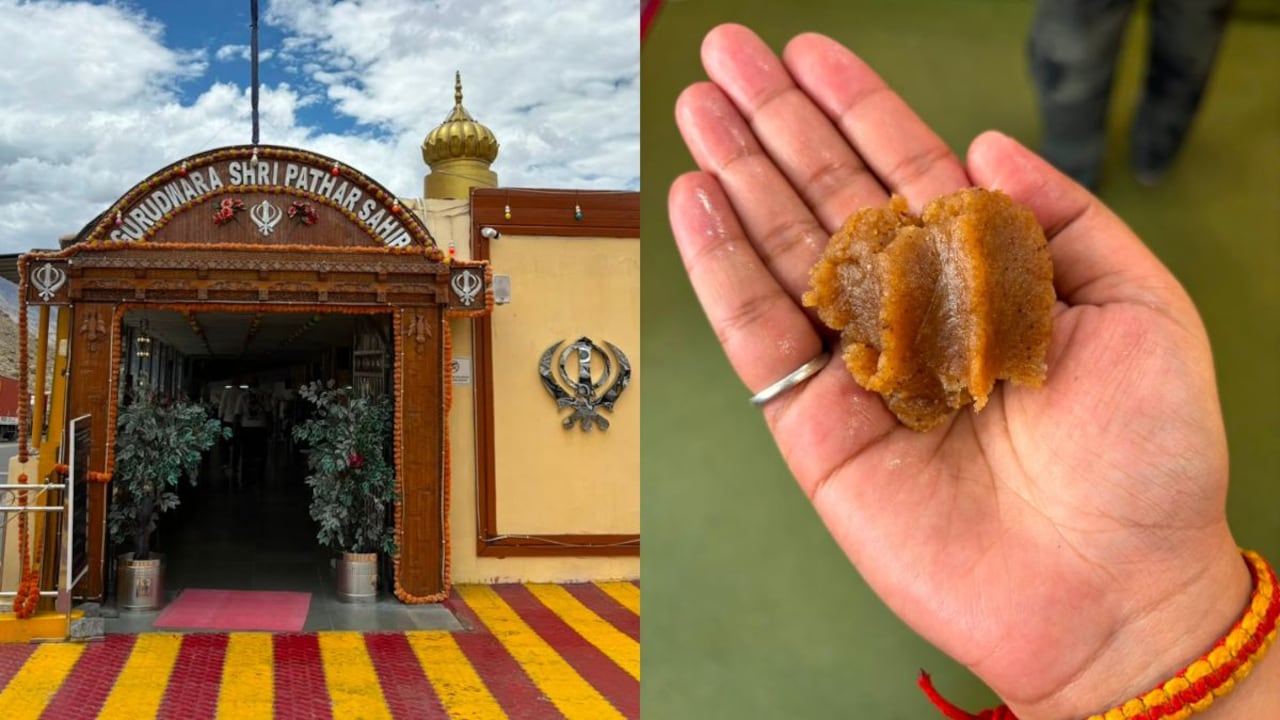
Gurudwara Pathar Sahib (Photo: Author)
Pathar Sahib was one of the places I wanted to sit and stay
Gurudwara Shri Pathar Sahib is associated with Guru Nanak Dev Ji's visit to Ladakh. According to the traditional account, a demon living in the area tried to harm Guru Nanak Dev Ji by rolling a large boulder towards him. The boulder is believed to have softened when it touched him, and the sacred rock is still preserved at the shrine.
But what stayed with me most was the atmosphere inside the gurdwara. It was quiet and peaceful, and I immediately felt like sitting down for a while rather than rushing through the visit. And then came the kadha prasad.
Ghee, atta and sugar. That's it. But it was so good that I could have happily eaten another bowl. We spent some time there before heading to our next stop.
Magnetic Hill, Sangam And My Experience At The World's Highest Rafting Point
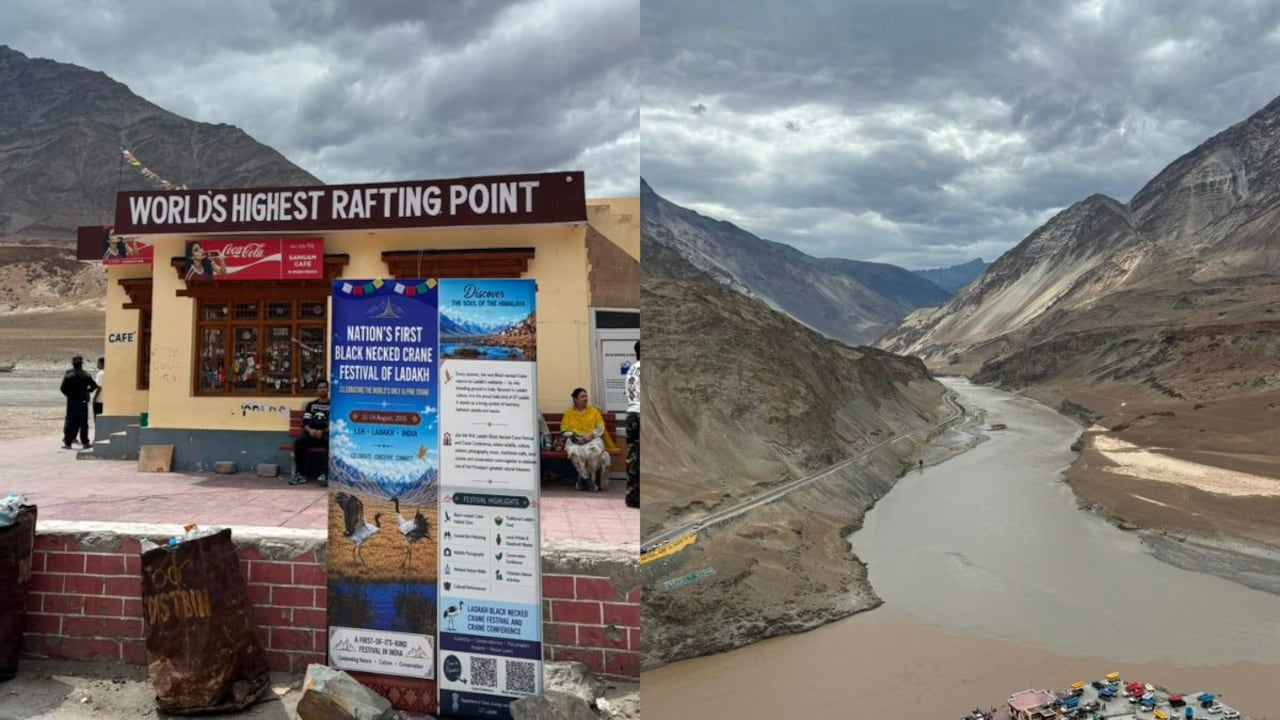
Photo: Sangam Point (Photo: Author)
Magnetic Hill is one of those places you have probably seen in videos before visiting Ladakh. At the spot, cars appear to roll uphill even when the engine is switched off. The effect is generally explained as an optical illusion created by the surrounding landscape rather than an actual magnetic force. Obviously, we had to try it ourselves. From there, we headed to Sangam, where the Indus and Zanskar rivers meet. The two rivers have visibly different colours, so you can actually see the point where they come together.
This was also where I went rafting. The water was freezing, the wind was strong and I had a fantastic time. We were surrounded by mountains while the two rivers flowed alongside us, and for those few minutes I was completely focused on what was happening around me. Our guide was great, and rafting turned out to be one of the most fun parts of the trip.
We also stopped at Shanti Stupa, the white Buddhist stupa overlooking Leh. By then, I had started getting a sense of just how much there is to see around the city.
Crossing Khardung La Into Nubra Valley
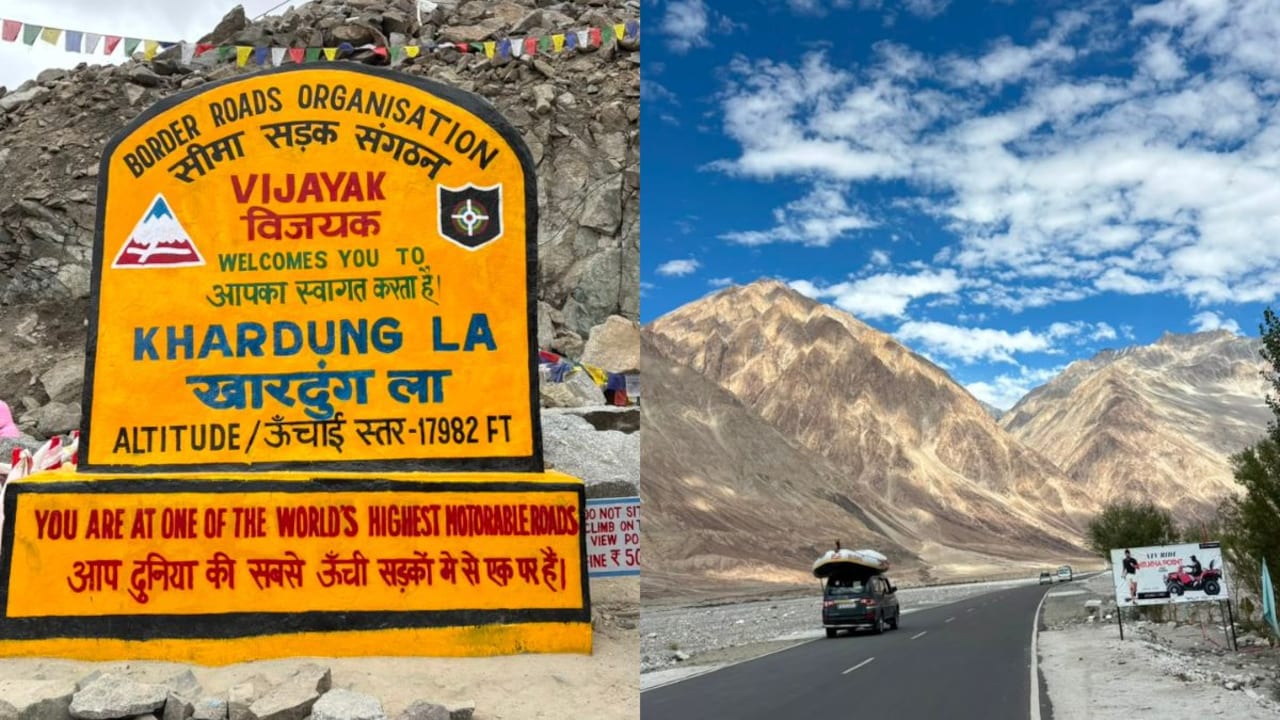
Khardung La; Nubra Valley (Photo: Author)
The next morning, we left Leh for Nubra Valley via Khardung La. At about 17,982 feet, Khardung La is one of the world's highest motorable mountain passes. As we climbed higher, the temperature dropped and the air became noticeably thinner. There are warnings at the top advising visitors not to stay for long because of the low oxygen levels.
So I took in the view, clicked a few pictures, looked at the snow-covered peaks around us and got back into the car. The landscape changed quite dramatically as we descended towards Nubra.
Nubra Valley showed me a very different side of Ladakh. Nubra Valley is known as a cold desert, and I understood why almost immediately. There were huge, brown mountains everywhere, with patches of green and villages scattered between them. The sunlight fell differently across the mountains, so some parts looked bright while others were covered in shadows.
At times, it genuinely felt like I was in a desert. We stayed in Hundar, a village in Nubra Valley, and this is also where I experienced something I hadn't really expected from the trip: not having access to electricity and the internet all the time.
At our property, electricity was available only during certain hours. Solar power was used when possible, but there were limits to how much could be generated and used. Back in Delhi, if the electricity goes out for an hour, I start looking for my phone.
Here, I eventually stopped checking it altogether. There was nothing much to do online anyway, and I realised I was perfectly happy sitting outside and looking at the mountains.
It was probably the most accidental digital detox I have ever had. Bactrian camels, sand dunes and a trip to India's northernmost village. Hundar is also known for its sand dunes and Bactrian camels - the double-humped camels found in this part of Ladakh. I'd never seen one before, so a camel ride through the sand dunes was an easy yes.
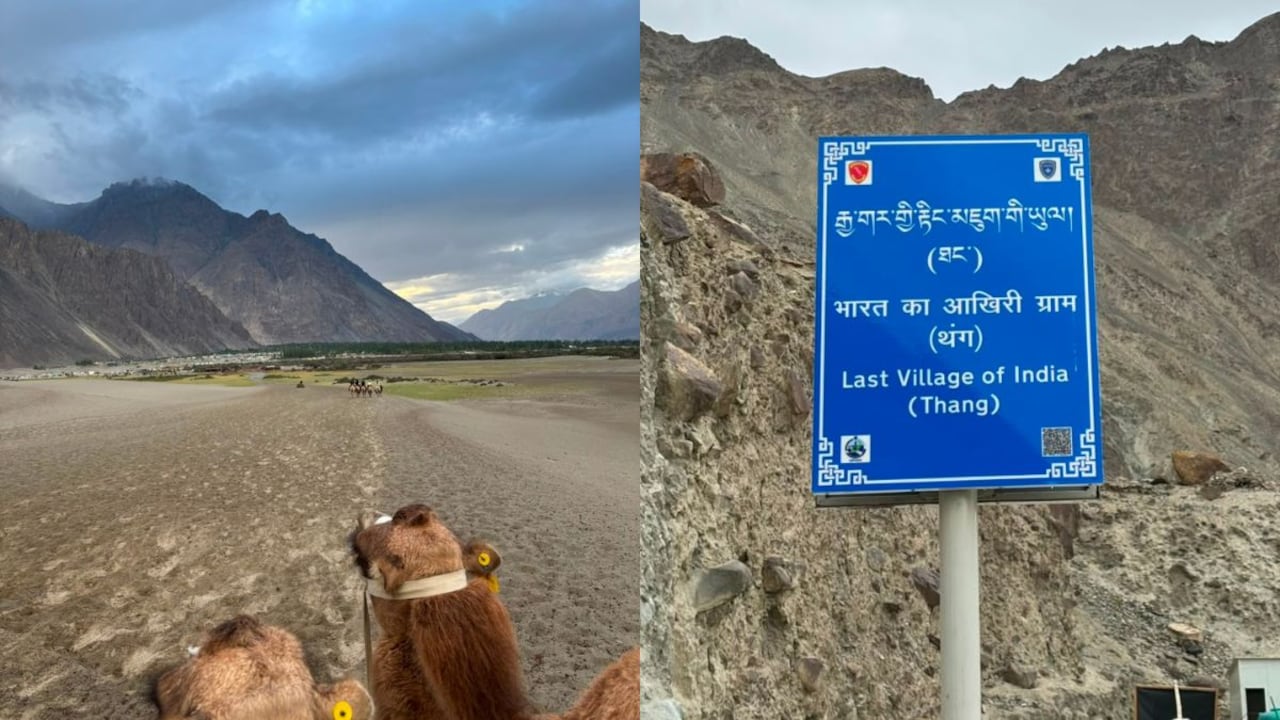
Hunder Sand Dunes; Thang Village (Photo: Author)
It had just rained when we went, which made the landscape look even better. There were mountains in the background, sand under our feet and groups of Bactrian camels moving around us. And because apparently Ladakh has something for everyone, we also went go-karting in Hundar.
We later visited Diskit Monastery, which is the largest and oldest monastery in Nubra Valley. The monastery is known for its enormous Maitreya Buddha statue overlooking the valley.
We also drove to Thang, considered India's northernmost village, close to the Line of Control.
There were Indian Army bunkers around us, and knowing that we were so close to the Pakistan border made the visit feel different from the usual sightseeing stops. It was one of those moments when something you normally read about on a map suddenly feels very real.
The rough road to Pangong was part of the adventure. The drive from Nubra to Pangong Lake via the Shyok route was quite an experience. There were stretches where we were driving through a riverbed, over pebbles and rough patches, with construction happening along parts of the route. It was not the kind of road where you could simply sit back and forget about the journey.
But I enjoyed it.
We were surrounded by mountains for most of the drive, and we kept passing bikers who were doing their own Ladakh road trips. Then, after all that driving, we finally reached Pangong Lake. And I immediately understood why it is one of Ladakh's most famous sights.
Pangong Lake Looked Almost Unreal
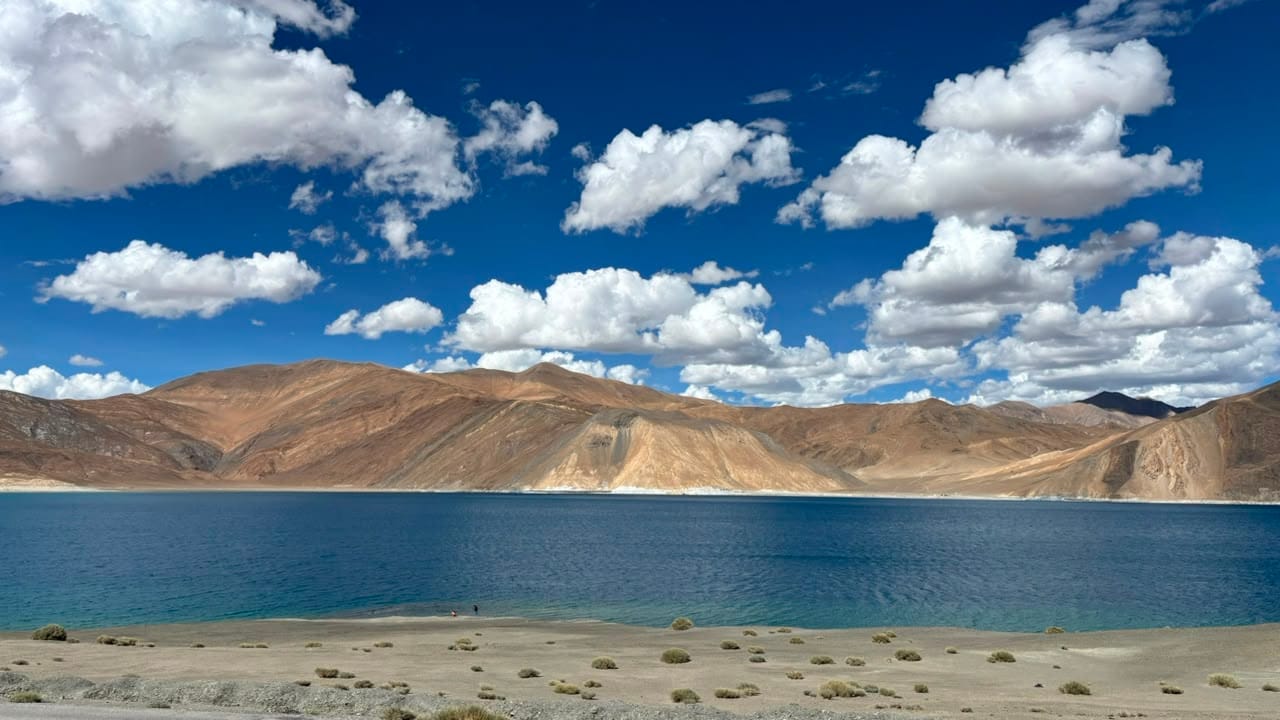
Pangong Lake (Photo: Author)
Pangong Lake was exactly the kind of place I had seen in photographs but never expected to look quite as striking in real life. The water was a deep blue, the mountains stretched around it and the sky seemed enormous. The lake is also famous for its connection with 3 Idiots, whose climax was filmed here.
We stayed overnight near the lake, which gave me more time to simply sit by the water. Swimming isn't allowed, but I did dip my feet in. The water was absolutely freezing, and it was clear enough to see the pebbles underneath. What I liked most was that despite Pangong being one of Ladakh's most popular attractions, I could still find quiet spots along the lake.
I sat there for a while, looking at the mountains and thinking about how different this was from the concrete, traffic-filled life I was used to in Delhi. At midnight, I stepped outside and looked at the sky. Our accommodation was right opposite Pangong Lake.
At night, the temperature dropped considerably and the lake disappeared into the darkness. I stepped outside around midnight and realised I couldn't really see the water anymore. But the sky was impossible to miss. There were stars everywhere.
I could see the Milky Way with my naked eyes and make out several constellations. I don't think I've ever seen so many stars at once. Everyone else had gone to sleep, so I stood there alone for a while. I had wanted to see a sky like that for years. And yes, I did tear up a little. Not because I was sad. I was just very happy that I was finally standing somewhere I had imagined being for so long.
Thiksey Monastery Was Another Highlight
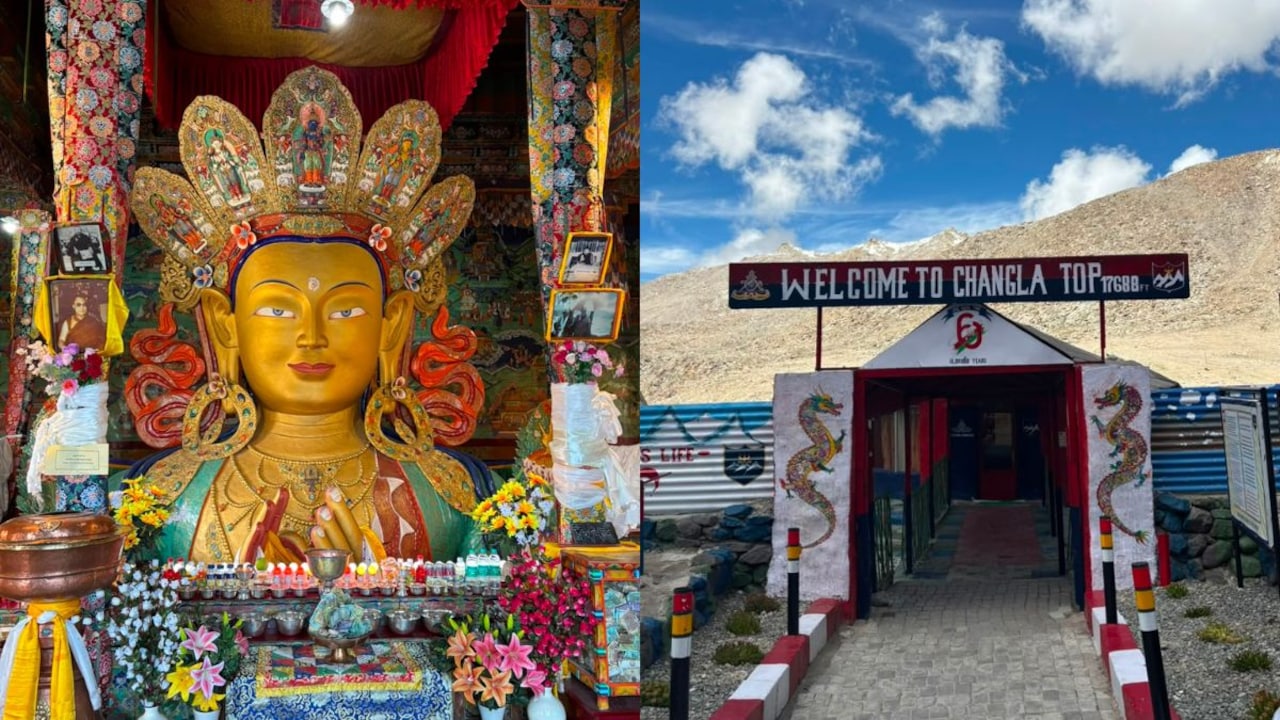
Thiksey Monastery; Chang La (Photo: Author)
The next morning, we started our journey back towards Leh and crossed Chang La, another high-altitude mountain pass. Later, we visited Thiksey Monastery, one of the largest monasteries in central Ladakh. The monastery dates back to the 15th century and is known for its hilltop architecture, Buddhist paintings and statues, including a 15-metre-high Maitreya Buddha.
But the part I remember most is walking into the prayer hall. There were monks sitting together, chanting and going about their routine. I sat there too. And I stayed for almost an hour. There was something very calming about simply sitting inside the monastery and listening to the chants. I could have stayed longer, but we had to leave.
We also stopped at Druk Padma Karpo School, popularly known as the 3 Idiots school because of its appearance in the film. Naturally, I had to see the famous spots from the movie.
Six days in Ladakh gave me a lot to take back. My Ladakh trip lasted around six days, but I managed to pack a lot into those days - from trying new food and riding a Bactrian camel to rafting, crossing high-altitude passes and standing beside Pangong Lake at midnight. More than anything, I liked how different each part of the trip felt.
Leh had its market, cafes and monasteries. Nubra had its cold desert, sand dunes and remote villages. Pangong was all about the lake, mountains and that incredible night sky. I also came back with a better understanding of how people live in some of the more remote parts of the region, where electricity, connectivity and other everyday conveniences cannot simply be taken for granted.
And yes, I am still a beach person.
But after Ladakh, I am no longer sure I can say that with the same confidence. I went there expecting a holiday. I came back with a new favourite place to photograph, a ridiculous number of stories to tell and a strong urge to go back.
Track Latest News Live on NDTV.com and get news updates from India and around the world


