



Solar Mission
-
{
- All
- News
- Videos
- Web Stories
-

Why India's Solar Mission Aditya-L1 Is Important For The World
NASA and space agencies of other countries have also been watching the Sun for decades. But the coronagraph on Aditya-L1 has a slight advantage over other missions' equipment.
-
NASA’s Parker Solar Probe Makes Final Venus Flyby Before Historic Sun Encounter
NASA’s Parker Solar Probe, launched in 2018, will make its final Venus flyby on Nov. 6. This manoeuvre will bring the spacecraft into a new orbit, allowing it to approach within 3.8 million miles of the sun, closer than any human-made object has been. While the probe’s primary mission is to study the sun, its instruments have captured rare data...
-
Aditya-L1 Solar Mission Reveals First Significant Findings on Solar Eruptions
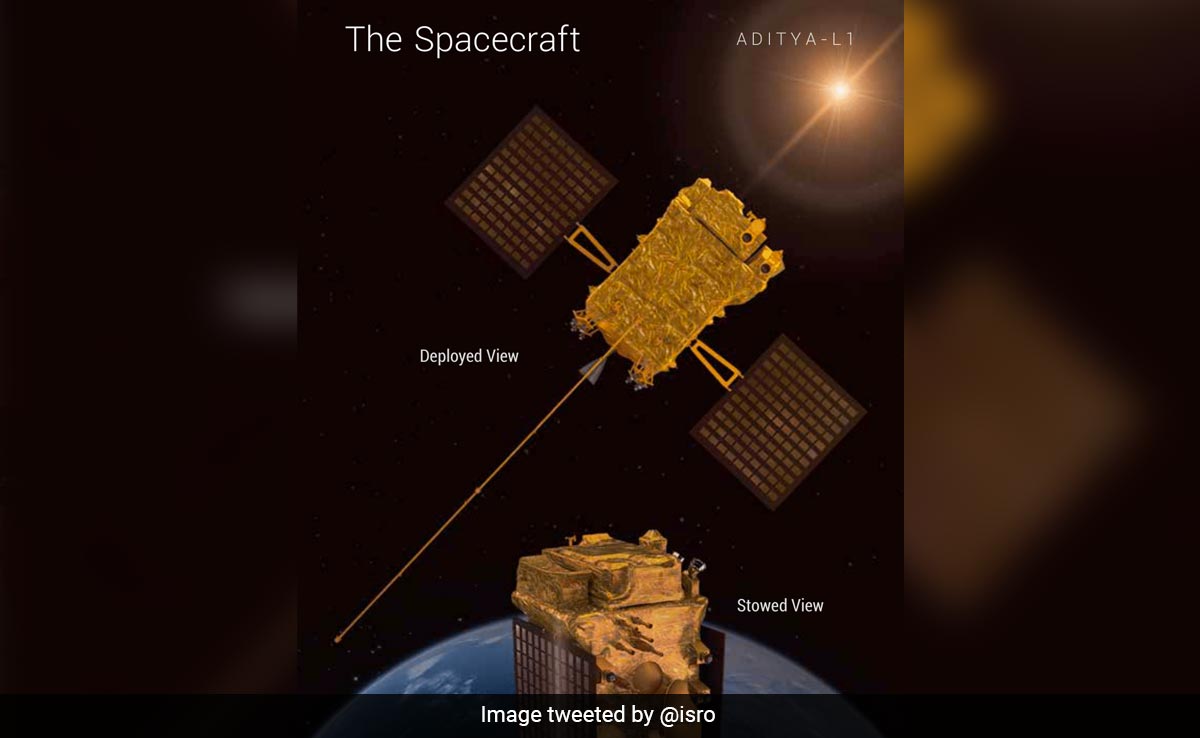
The Aditya-L1 mission, India's first solar observation project, has achieved a significant breakthrough with the Visible Emission Line Coronagraph (VELC) reporting its first major findings. Scientists from the Indian Institute of Astrophysics successfully observed the onset of a Coronal Mass Ejection (CME), marking an important milestone in solar r...
-
India's Solar Observatory Aditya-L1 Completes Halo Orbit: ISRO
Aditya-L1 spacecraft, known as India's solar observatory, has completed its first halo orbit around the Sun-Earth Lagrange Point 1 (L1), announced mission officials at the Indian Space Research Organisation (ISRO).
-
ISRO's Aditya-L1 Completes First Halo Orbit Around Sun-Earth L1 Point
India's first solar mission Aditya-L1 spacecraft completed its first halo orbit around the Sun-Earth L1 point on Tuesday, ISRO said.
-
Will India's Aditya L-1 Mission Throw Light On Solar Eclipse? ISRO Chief Says...
ISRO chief S Somnath on Sunday said that the Aditya L1 solar mission of the premier space research agency is continuously sending data about the Sun.
-
"Aditya-L1 Mission For Whole World, Not For India Alone": ISRO Chief
Soon after the Indian Space Research Organisation (ISRO) placed the Aditya-L1 spacecraft into its final destination orbit, ISRO chief S Somanath said that the crucial mission was not just for India alone but for the entire world.
-
India's Solar Mission "Destined To Look At The Sun Forever". 1 Week To Go
Aditya L1, the Indian Space Research Organisation's solar mission, will reach the Lagrange point 1 (L1) of the Sun-Earth system on January 6, which will enable the spacecraft to view the sun without any eclipses.
-
India's Solar Mission Aditya-L1 To Reach Its Destination In Space On January 6: ISRO
India's maiden solar mission Aditya-L1 will reach its destination, the Lagrangian point (L1) which is located 1.5 million km from the Earth, on January 6, Indian Space Research Organisation (ISRO) chairman S Somanath has said.
-
Solar Mission Aditya L1 To Reach Destination On January 6: ISRO Chairman
India's maiden solar mission Aditya L1' will reach its destination, the Lagrangian point (L1) which is located 1.5 million km from Earth, on January 6, Indian Space Research Organisation (ISRO) chairman S Somanath said here on Friday.
-
ISRO's Aditya L-1 Solar Mission Spacecraft Performs Key Move To Stay On Intended Path
Aditya-L1 spacecraft which is carrying out India's first solar mission last Friday performed a trajectory correction manoeuvre (TCM), for about 16 seconds, ISRO said on Sunday.
-
Solar Mission Aditya-L1 Starts Studying Energetic Particles
The study was carried out with the help of a device named Supra Thermal & Energetic Particle Spectrometer (STEPS)
-
ISRO’s Aditya-L1 Solar Mission Begins Collecting Scientific Data in Earth’s Orbit
India's Aditya-L1 solar mission spacecraft has commenced collecting scientific data to help scientists analyse particles surrounding Earth, ISRO said on Monday. The sensors on board India's first solar observatory have begun measuring ions and electrons at distances greater than 50,000 km from Earth, ISRO announced in a post on X.
-
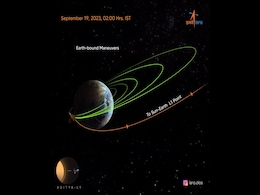
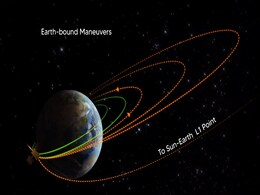
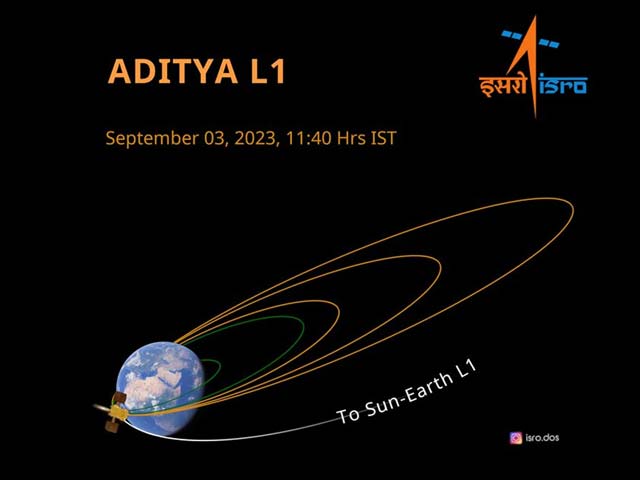
Aditya L1 Successfully Completes Second Earth-Bound Manoeuvre, Third One Scheduled for September 10: ISRO
Aditya L1, the first space-based Indian mission to study the Sun underwent the second earth-bound manoeuvre successfully, during the early hours on Tuesday, ISRO said. ISRO's Telemetry, Tracking and Command Network (ISTRAC) carried out the operation.
-
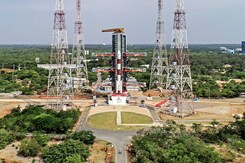
"ISRO Ka SunMaan": Amul Celebrates India's First Sun Mission Aditya L1
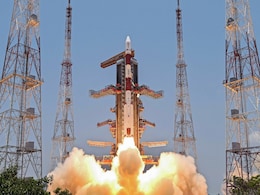
Aditya L1 launched recently, and an Amul illustration showed the Amul girl sitting near to what looked like ISRO's launching station. Take a look at it below.









-
Why India's Solar Mission Aditya-L1 Is Important For The World
NASA and space agencies of other countries have also been watching the Sun for decades. But the coronagraph on Aditya-L1 has a slight advantage over other missions' equipment.
-
NASA’s Parker Solar Probe Makes Final Venus Flyby Before Historic Sun Encounter
NASA’s Parker Solar Probe, launched in 2018, will make its final Venus flyby on Nov. 6. This manoeuvre will bring the spacecraft into a new orbit, allowing it to approach within 3.8 million miles of the sun, closer than any human-made object has been. While the probe’s primary mission is to study the sun, its instruments have captured rare data...
-
Aditya-L1 Solar Mission Reveals First Significant Findings on Solar Eruptions
The Aditya-L1 mission, India's first solar observation project, has achieved a significant breakthrough with the Visible Emission Line Coronagraph (VELC) reporting its first major findings. Scientists from the Indian Institute of Astrophysics successfully observed the onset of a Coronal Mass Ejection (CME), marking an important milestone in solar r...
-
India's Solar Observatory Aditya-L1 Completes Halo Orbit: ISRO
Aditya-L1 spacecraft, known as India's solar observatory, has completed its first halo orbit around the Sun-Earth Lagrange Point 1 (L1), announced mission officials at the Indian Space Research Organisation (ISRO).
-
ISRO's Aditya-L1 Completes First Halo Orbit Around Sun-Earth L1 Point
India's first solar mission Aditya-L1 spacecraft completed its first halo orbit around the Sun-Earth L1 point on Tuesday, ISRO said.
-
Will India's Aditya L-1 Mission Throw Light On Solar Eclipse? ISRO Chief Says...
ISRO chief S Somnath on Sunday said that the Aditya L1 solar mission of the premier space research agency is continuously sending data about the Sun.
-
"Aditya-L1 Mission For Whole World, Not For India Alone": ISRO Chief
Soon after the Indian Space Research Organisation (ISRO) placed the Aditya-L1 spacecraft into its final destination orbit, ISRO chief S Somanath said that the crucial mission was not just for India alone but for the entire world.
-
India's Solar Mission "Destined To Look At The Sun Forever". 1 Week To Go
Aditya L1, the Indian Space Research Organisation's solar mission, will reach the Lagrange point 1 (L1) of the Sun-Earth system on January 6, which will enable the spacecraft to view the sun without any eclipses.
-
India's Solar Mission Aditya-L1 To Reach Its Destination In Space On January 6: ISRO
India's maiden solar mission Aditya-L1 will reach its destination, the Lagrangian point (L1) which is located 1.5 million km from the Earth, on January 6, Indian Space Research Organisation (ISRO) chairman S Somanath has said.
-
Solar Mission Aditya L1 To Reach Destination On January 6: ISRO Chairman
India's maiden solar mission Aditya L1' will reach its destination, the Lagrangian point (L1) which is located 1.5 million km from Earth, on January 6, Indian Space Research Organisation (ISRO) chairman S Somanath said here on Friday.
-
ISRO's Aditya L-1 Solar Mission Spacecraft Performs Key Move To Stay On Intended Path
Aditya-L1 spacecraft which is carrying out India's first solar mission last Friday performed a trajectory correction manoeuvre (TCM), for about 16 seconds, ISRO said on Sunday.
-
Solar Mission Aditya-L1 Starts Studying Energetic Particles
The study was carried out with the help of a device named Supra Thermal & Energetic Particle Spectrometer (STEPS)
-
ISRO’s Aditya-L1 Solar Mission Begins Collecting Scientific Data in Earth’s Orbit
India's Aditya-L1 solar mission spacecraft has commenced collecting scientific data to help scientists analyse particles surrounding Earth, ISRO said on Monday. The sensors on board India's first solar observatory have begun measuring ions and electrons at distances greater than 50,000 km from Earth, ISRO announced in a post on X.
-
Aditya L1 Successfully Completes Second Earth-Bound Manoeuvre, Third One Scheduled for September 10: ISRO
Aditya L1, the first space-based Indian mission to study the Sun underwent the second earth-bound manoeuvre successfully, during the early hours on Tuesday, ISRO said. ISRO's Telemetry, Tracking and Command Network (ISTRAC) carried out the operation.
-
"ISRO Ka SunMaan": Amul Celebrates India's First Sun Mission Aditya L1
Aditya L1 launched recently, and an Amul illustration showed the Amul girl sitting near to what looked like ISRO's launching station. Take a look at it below.

