Planet Kepler
- All
- News
- Web Stories
-
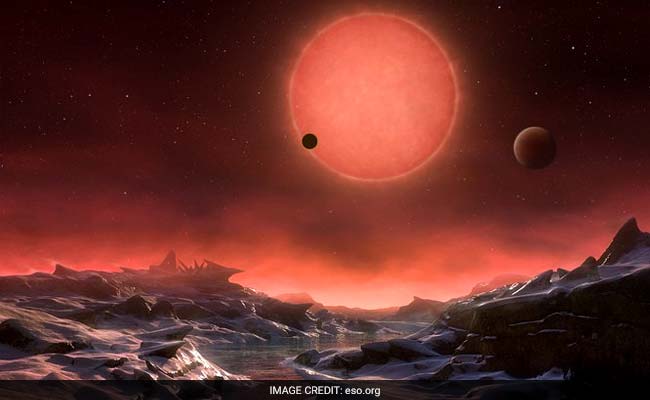
Scientists Discover 'Potentially Habitable' Earth-Like Planet Candidate
- Wednesday January 28, 2026
- Science | Edited by Srishti Singh Sisodia
If confirmed, this exoplanet would be the only known rocky world in the habitable zone of a Sun-like star.
-
www.ndtv.com
-
Kepler Data Reveals Earth-Size Exoplanet on the Edge of Its Star’s Habitable Zone
- Wednesday January 28, 2026
- Written by Gadgets 360 Staff
Scientists studying Kepler telescope data have identified HD 137010 b, a possible Earth-sized planet orbiting a Sun-like star. While the planet follows a year-long orbit and may sit near the habitable zone, limited starlight could leave it colder than Mars. Future observations will determine whether this icy world truly exists.
-
www.gadgets360.com
-
Kepler and TESS Discoveries Help Astronomers Confirm Over 6,000 Exoplanets Orbiting Other Stars
- Saturday December 13, 2025
- Written by Gadgets 360 Staff
More than 6,000 exoplanets (planets orbiting other stars), one of the most rapidly expanding frontiers in science, have now been confirmed by astronomers. Their search of other worlds has been transformed within a span of thirty years, which started as a form of speculation, to accurate detection. However, in the midst of this wave of discoveries, ...
-
www.gadgets360.com
-
Exoplanets Explained: How Astronomers Find Worlds Orbiting Stars Beyond the Sun
- Monday September 8, 2025
- Written by Gadgets 360 Staff
Exoplanets are planets orbiting stars outside our solar system, hidden by stellar glare and detected indirectly. Astronomers identify them by tracking star wobbles or dips in brightness during planetary transits. NASA’s Kepler mission revealed thousands, with TESS now expanding the search. These discoveries confirm that planetary systems are abun...
-
www.gadgets360.com
-
NASA Missions Uncover a Diverse Galaxy of Super-Earths, Raising New Questions About Planetary Evolution
- Thursday August 14, 2025
- Written by Gadgets 360 Staff
Super-Earths are among the most common planets in the galaxy, yet none exist in our solar system. Larger than Earth but smaller than Neptune, they range from ocean-covered worlds to scorched, atmosphere-less rocks. Some orbit within habitable zones, making them prime candidates for life. NASA’s Kepler and TESS missions, along with upcoming telesc...
-
www.gadgets360.com
-
Tentative Evidence of Life Found On Faraway Planet, Says NASA
- Tuesday September 12, 2023
- Science | Edited by Nikhil Pandey
The space agency announced that its examination of the planet's atmospheric composition indicated the potential existence of an oceanic world.
-
www.ndtv.com
-
A Third of Milky Way’s Planets Orbiting Most Common Stars Could Hold Water, Harbour Life: Study
- Tuesday May 30, 2023
- Press Trust of India
One-third of the planets orbiting the most common stars across the Milky Way galaxy may hold onto liquid water and possibly harbour life, according to a study based on latest telescope data.
-
www.gadgets360.com
-
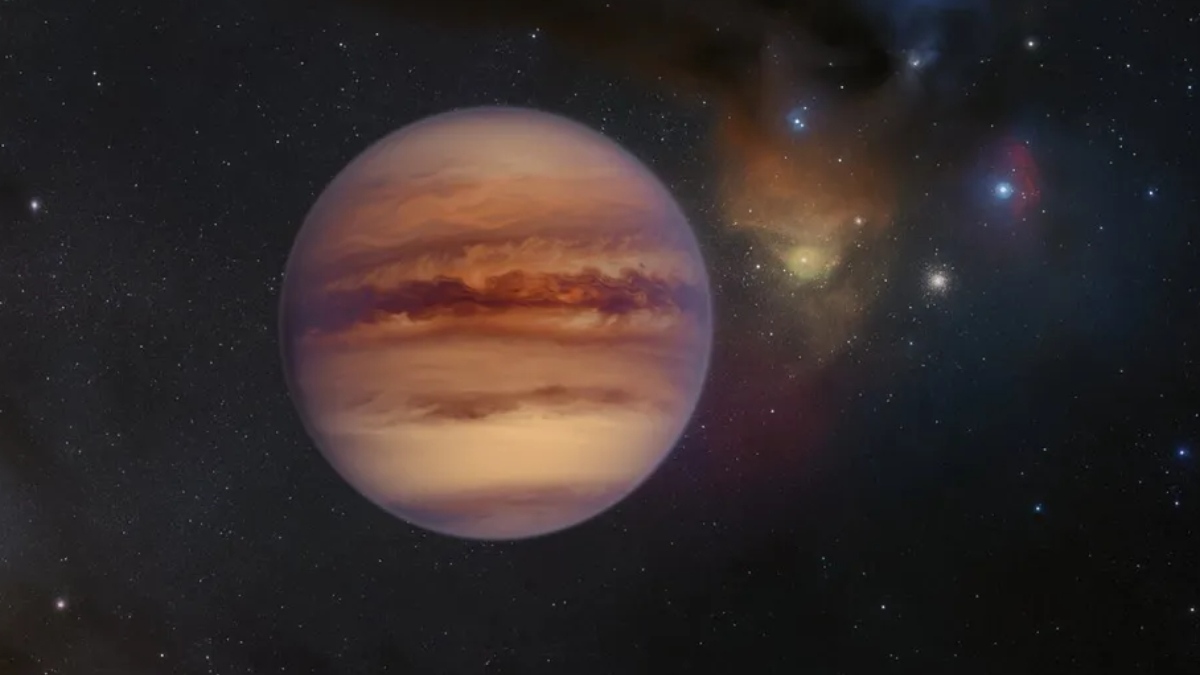
Scientists Find 'Largest Cluster' of Nearly 100 Free-Floating Planets in a Single Star-Forming Region
- Monday December 27, 2021
- Edited by Gadgets 360 Newsdesk
Rogue planets have baffled astronomers for ages. Unlike regular planets which revolve around stars, these free-floating planets (FFPs) get ejected from star systems to move about in the galaxy on their own. In the latest discovery, astronomers found the largest cluster of rogue planets in a single star-forming region.
-
www.gadgets360.com
-
After NASA Adds 301 New Planets, New UCLA Algorithm Helps Find Another 366 Exoplanets
- Thursday November 25, 2021
- Edited by Gadgets 360 Newsdesk
Just a day after NASA scientists said that they have found 301 new exoplanets, astronomers at the University of California, Los Angeles (UCLA) have stated that they identified 366 new exoplanets using data from the Kepler space telescope.
-
www.gadgets360.com
-
NASA's Kepler Data Adds 301 Planets, Thanks to Machine Learning
- Wednesday November 24, 2021
- Edited by Gadgets 360 Newsdesk
A new deep learning method has added a whopping 301 exoplanets to the total tally. These planets were added to the already validated 4,569 planets which are orbiting several distant stars. The additions were made with the help of a deep neural method called ExoMiner.
-
www.gadgets360.com
-
Scientists Discover 'Potentially Habitable' Earth-Like Planet Candidate
- Wednesday January 28, 2026
- Science | Edited by Srishti Singh Sisodia
If confirmed, this exoplanet would be the only known rocky world in the habitable zone of a Sun-like star.
-
www.ndtv.com
-
Kepler Data Reveals Earth-Size Exoplanet on the Edge of Its Star’s Habitable Zone
- Wednesday January 28, 2026
- Written by Gadgets 360 Staff
Scientists studying Kepler telescope data have identified HD 137010 b, a possible Earth-sized planet orbiting a Sun-like star. While the planet follows a year-long orbit and may sit near the habitable zone, limited starlight could leave it colder than Mars. Future observations will determine whether this icy world truly exists.
-
www.gadgets360.com
-
Kepler and TESS Discoveries Help Astronomers Confirm Over 6,000 Exoplanets Orbiting Other Stars
- Saturday December 13, 2025
- Written by Gadgets 360 Staff
More than 6,000 exoplanets (planets orbiting other stars), one of the most rapidly expanding frontiers in science, have now been confirmed by astronomers. Their search of other worlds has been transformed within a span of thirty years, which started as a form of speculation, to accurate detection. However, in the midst of this wave of discoveries, ...
-
www.gadgets360.com
-
Exoplanets Explained: How Astronomers Find Worlds Orbiting Stars Beyond the Sun
- Monday September 8, 2025
- Written by Gadgets 360 Staff
Exoplanets are planets orbiting stars outside our solar system, hidden by stellar glare and detected indirectly. Astronomers identify them by tracking star wobbles or dips in brightness during planetary transits. NASA’s Kepler mission revealed thousands, with TESS now expanding the search. These discoveries confirm that planetary systems are abun...
-
www.gadgets360.com
-
NASA Missions Uncover a Diverse Galaxy of Super-Earths, Raising New Questions About Planetary Evolution
- Thursday August 14, 2025
- Written by Gadgets 360 Staff
Super-Earths are among the most common planets in the galaxy, yet none exist in our solar system. Larger than Earth but smaller than Neptune, they range from ocean-covered worlds to scorched, atmosphere-less rocks. Some orbit within habitable zones, making them prime candidates for life. NASA’s Kepler and TESS missions, along with upcoming telesc...
-
www.gadgets360.com
-
Tentative Evidence of Life Found On Faraway Planet, Says NASA
- Tuesday September 12, 2023
- Science | Edited by Nikhil Pandey
The space agency announced that its examination of the planet's atmospheric composition indicated the potential existence of an oceanic world.
-
www.ndtv.com
-
A Third of Milky Way’s Planets Orbiting Most Common Stars Could Hold Water, Harbour Life: Study
- Tuesday May 30, 2023
- Press Trust of India
One-third of the planets orbiting the most common stars across the Milky Way galaxy may hold onto liquid water and possibly harbour life, according to a study based on latest telescope data.
-
www.gadgets360.com
-
Scientists Find 'Largest Cluster' of Nearly 100 Free-Floating Planets in a Single Star-Forming Region
- Monday December 27, 2021
- Edited by Gadgets 360 Newsdesk
Rogue planets have baffled astronomers for ages. Unlike regular planets which revolve around stars, these free-floating planets (FFPs) get ejected from star systems to move about in the galaxy on their own. In the latest discovery, astronomers found the largest cluster of rogue planets in a single star-forming region.
-
www.gadgets360.com
-
After NASA Adds 301 New Planets, New UCLA Algorithm Helps Find Another 366 Exoplanets
- Thursday November 25, 2021
- Edited by Gadgets 360 Newsdesk
Just a day after NASA scientists said that they have found 301 new exoplanets, astronomers at the University of California, Los Angeles (UCLA) have stated that they identified 366 new exoplanets using data from the Kepler space telescope.
-
www.gadgets360.com
-
NASA's Kepler Data Adds 301 Planets, Thanks to Machine Learning
- Wednesday November 24, 2021
- Edited by Gadgets 360 Newsdesk
A new deep learning method has added a whopping 301 exoplanets to the total tally. These planets were added to the already validated 4,569 planets which are orbiting several distant stars. The additions were made with the help of a deep neural method called ExoMiner.
-
www.gadgets360.com