



Neutron Star
-
{
- All
- News
-

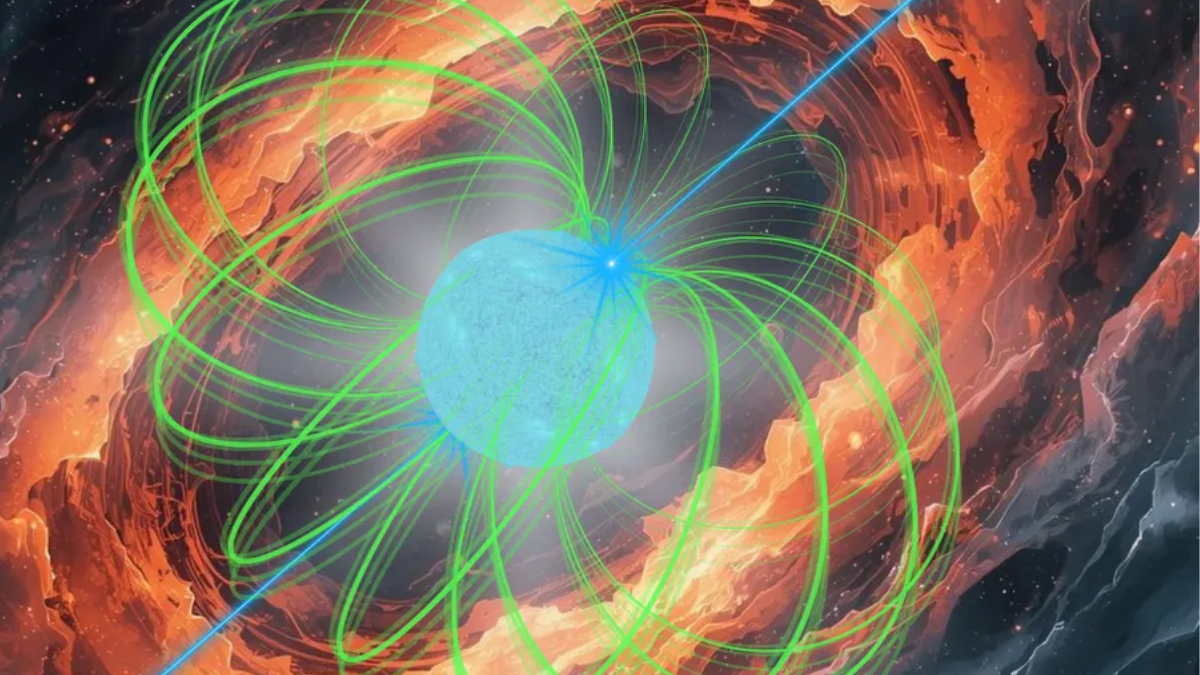
New Study Claims There Might Be Way More Pulsars in Space Than We Previously Thought
Astronomers have discovered that fast-spinning pulsars emit radio waves far beyond their magnetic poles, reaching the edges of their magnetic fields. The finding challenges long-held theories and could help scientists discover more pulsars and improve gravitational wave detection.
-
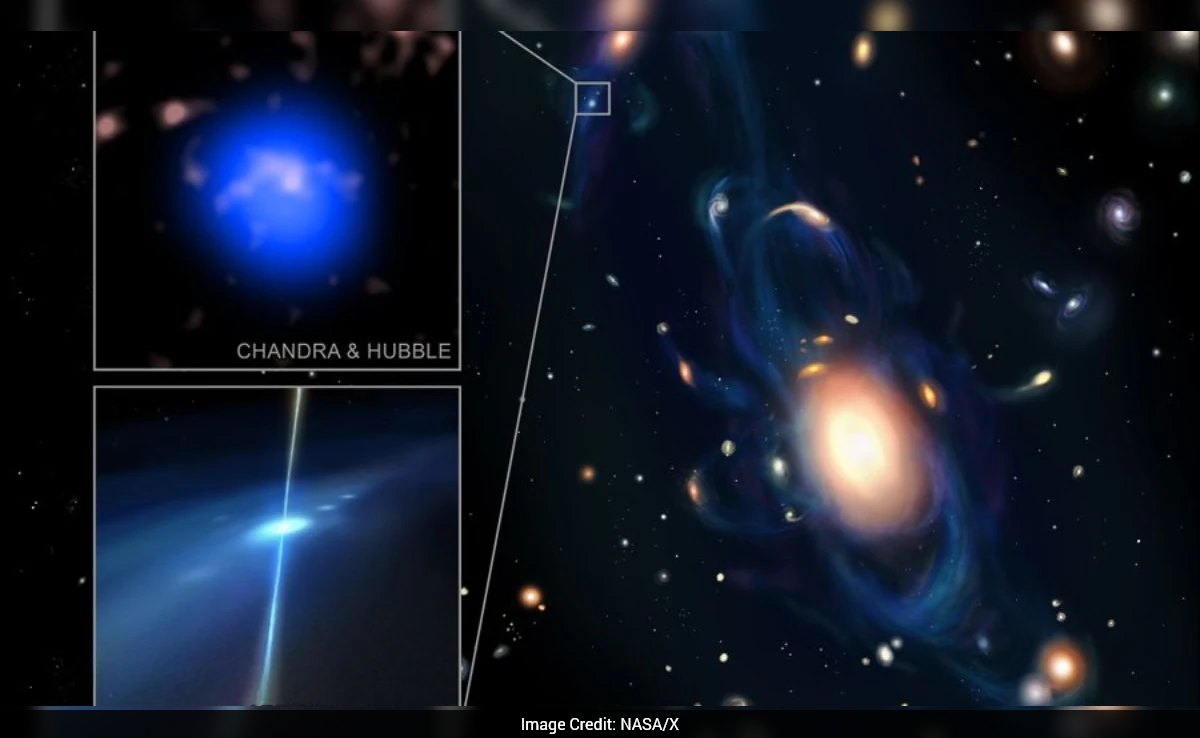
NASA Captures Rare Neutron Star Collision In Tiny Distant Galaxy
Scientists believe this long stream of gas may have formed when several galaxies collided millions of years ago.
-
Astronomers Watch a Dormant Neutron Star Reignite After a Decade of Silence
Astronomers observed a neutron star known as P13 suddenly brighten after years of inactivity. The decade-long study shows how changes in accretion can drive extreme X-ray power, offering new insight into ultraluminous X-ray sources and neutron star physics.
-
PSR J0922+0638 Pulsar Keeps Glitching Every 550 Days, Scientists Are Intrigued
PSR J0922+0638, an ultradense neutron star, shows puzzling rotational glitches every 550 days. Using 22 years of radio data, scientists detected both abrupt and slow changes in its spin. These may be linked to magnetic field cycles or superfluid dynamics deep inside the star. However, the exact cause remains a mystery, demanding continued long-term...
-
New Study Confirms TeV Halos Are Common in Middle-Aged Pulsars
A recent study by researchers from the U.S. and Mexico using data from the HAWC Observatory has confirmed that TeV halos are a universal feature of middle-aged pulsars. These extended regions of gamma-ray emission are significantly larger than pulsar wind nebulae and may help identify otherwise undetectable pulsars. The findings challenge existing ...
-
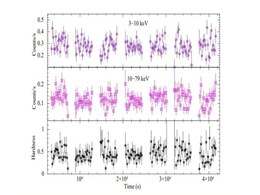
NASA Telescopes Reveal Hidden Properties of X-Ray Pulsar RX J0032.9-7348
A joint study using NASA’s NuSTAR and NICER telescopes has shed new light on RX J0032.9-7348, an X-ray pulsar in the Small Magellanic Cloud first identified 30 years ago. The pulsar exhibited a 7.02-second pulse period and underwent a significant X-ray brightening event in October 2024. Researchers noted a double-peaked pulse profile and measured...
-
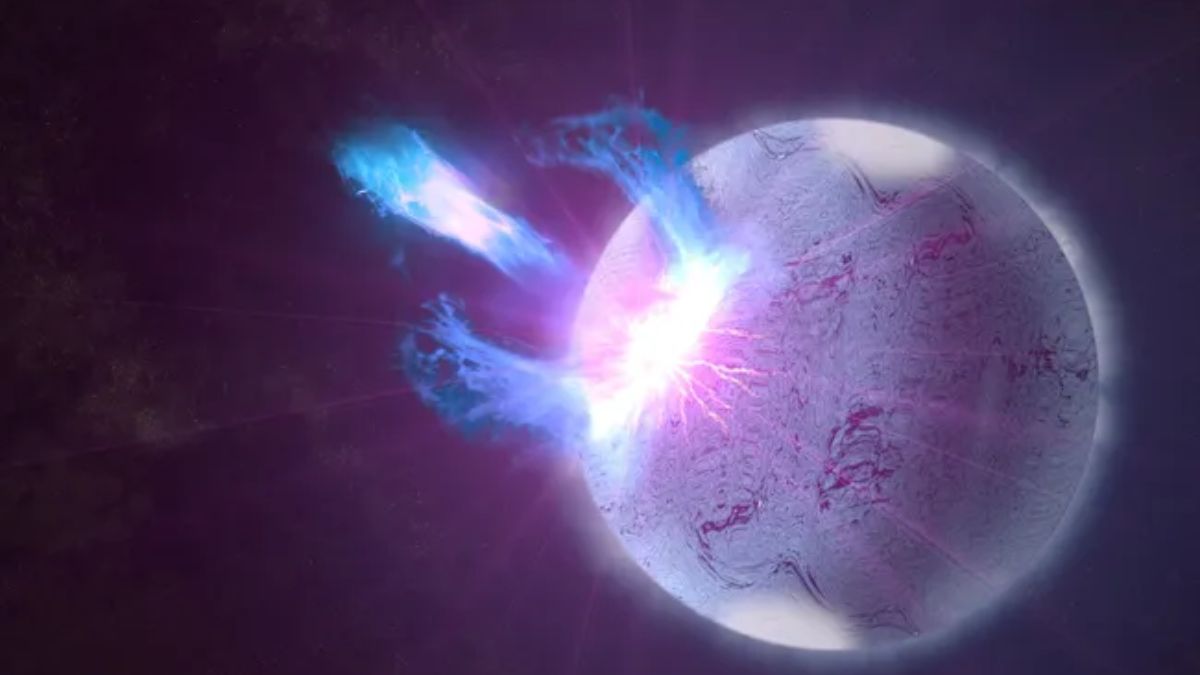
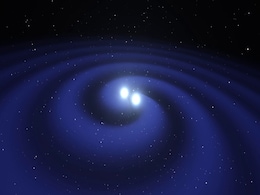
Magnetic Fields Could Significantly Influence Oscillations in Merging Neutron Stars, Study Finds
Magnetic fields may play a bigger role in neutron star mergers than previously thought. A new study using advanced simulations shows that these fields can shift or suppress oscillation frequencies, altering gravitational wave signatures. This discovery could change how astronomers decode post-merger signals and refine models of neutron star interio...
-
Supernova Remnants Found in Oceanic Samples, Scientists Look to Moon
Scientists have identified supernova debris in deep-sea sediments, including a rare plutonium isotope linked to a kilonova. Researchers believe a neutron star collision occurred nearly 10 million years ago, scattering radioactive material across space. To validate this theory, they plan to analyze lunar soil, which remains undisturbed by Earth's ge...
-
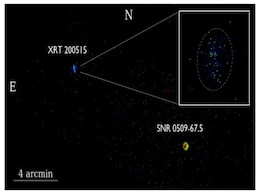
Unusual X-ray Flash in Large Magellanic Cloud Puzzles Astronomers
A brief yet intense X-ray flash, XRT 200515, was detected in NASA's Chandra telescope data from 2000. The signal, originating from the Large Magellanic Cloud, has left scientists debating its cause. Possible explanations include a neutron star pulling in gas from a companion star or a powerful flare from a distant magnetar. Researchers also specula...
-
FAST Telescope Reveals Emission Properties of Three Long-Period Pulsars in New Study
The FAST telescope has observed emission behaviours in three long-period pulsars, revealing null phases, asymmetric pulses, and microstructures. The study highlights variations in pulsar emissions and their periodicity, contributing to a deeper understanding of neutron star radio emissions. Researchers noted different nulling fractions and microstr...
-
Scientists Investigate Hypernuclei To Understand Subatomic Forces and Neutron Stars
A groundbreaking study on hypernuclei, led by Ulf-G. Meißner from the Institute for Advanced Simulation, uses nuclear lattice effective field theory to explore the interactions of Λ-hyperons within atomic nuclei. The research, published in The European Physical Journal A, provides key insights into the forces that shape hypernuclei and their pote...
-
Asteroids Impacting Neutron Stars May Be the Cause of Fast Radio Bursts
Research suggests asteroid impacts on neutron stars may be the cause of mysterious fast radio bursts (FRBs). These collisions release enormous energy and match observed FRB frequency. Scientists believe interstellar objects colliding with neutron stars could account for their rate and occurrence, while repeating FRBs may stem from asteroid belts. O...
-
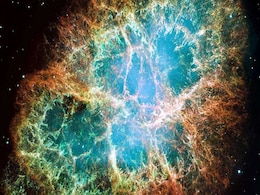
New Research Explains Zebra Pattern in Radio Waves from Crab Nebula
A new model by Mikhail Medvedev from the University of Kansas offers an explanation for the zebra-like pattern in high-frequency radio waves emitted by the Crab Pulsar. The pattern, first discovered in 2007, is likely caused by diffraction and interference of waves in the pulsar's plasma-rich environment. Medvedev’s model could also provide a met...
-
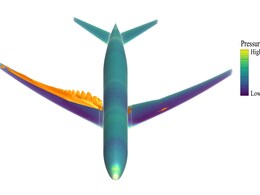
NASA Utilises Supercomputing to Drive Space Exploration and Earth Research
NASA continues to push the boundaries of science by using supercomputing to advance space exploration and climate research. From refining the Artemis II launch pad to leveraging AI for weather forecasting, NASA’s technology is revolutionising space missions and Earth science. Supercomputing helps simulate complex cosmic phenomena, including solar...
-
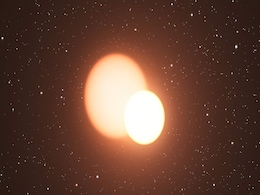
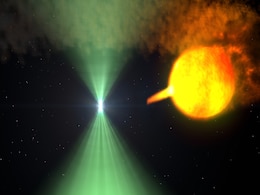
Neutron Star in 4U 1820-30 Spins at Record-Breaking 716 Rotations Per Second
Astronomers have detected a neutron star in the binary system 4U 1820-30 spinning at 716 times per second, breaking records for speed. Located 26,000 light-years from Earth, the star's surface releases explosive thermonuclear bursts that make it shine up to 100,000 times brighter than the Sun. This discovery offers new insights into the extreme pro...



-
New Study Claims There Might Be Way More Pulsars in Space Than We Previously Thought
Astronomers have discovered that fast-spinning pulsars emit radio waves far beyond their magnetic poles, reaching the edges of their magnetic fields. The finding challenges long-held theories and could help scientists discover more pulsars and improve gravitational wave detection.
-
NASA Captures Rare Neutron Star Collision In Tiny Distant Galaxy
Scientists believe this long stream of gas may have formed when several galaxies collided millions of years ago.
-
Astronomers Watch a Dormant Neutron Star Reignite After a Decade of Silence
Astronomers observed a neutron star known as P13 suddenly brighten after years of inactivity. The decade-long study shows how changes in accretion can drive extreme X-ray power, offering new insight into ultraluminous X-ray sources and neutron star physics.
-
PSR J0922+0638 Pulsar Keeps Glitching Every 550 Days, Scientists Are Intrigued
PSR J0922+0638, an ultradense neutron star, shows puzzling rotational glitches every 550 days. Using 22 years of radio data, scientists detected both abrupt and slow changes in its spin. These may be linked to magnetic field cycles or superfluid dynamics deep inside the star. However, the exact cause remains a mystery, demanding continued long-term...
-
New Study Confirms TeV Halos Are Common in Middle-Aged Pulsars
A recent study by researchers from the U.S. and Mexico using data from the HAWC Observatory has confirmed that TeV halos are a universal feature of middle-aged pulsars. These extended regions of gamma-ray emission are significantly larger than pulsar wind nebulae and may help identify otherwise undetectable pulsars. The findings challenge existing ...
-
NASA Telescopes Reveal Hidden Properties of X-Ray Pulsar RX J0032.9-7348
A joint study using NASA’s NuSTAR and NICER telescopes has shed new light on RX J0032.9-7348, an X-ray pulsar in the Small Magellanic Cloud first identified 30 years ago. The pulsar exhibited a 7.02-second pulse period and underwent a significant X-ray brightening event in October 2024. Researchers noted a double-peaked pulse profile and measured...
-
Magnetic Fields Could Significantly Influence Oscillations in Merging Neutron Stars, Study Finds
Magnetic fields may play a bigger role in neutron star mergers than previously thought. A new study using advanced simulations shows that these fields can shift or suppress oscillation frequencies, altering gravitational wave signatures. This discovery could change how astronomers decode post-merger signals and refine models of neutron star interio...
-
Supernova Remnants Found in Oceanic Samples, Scientists Look to Moon
Scientists have identified supernova debris in deep-sea sediments, including a rare plutonium isotope linked to a kilonova. Researchers believe a neutron star collision occurred nearly 10 million years ago, scattering radioactive material across space. To validate this theory, they plan to analyze lunar soil, which remains undisturbed by Earth's ge...
-
Unusual X-ray Flash in Large Magellanic Cloud Puzzles Astronomers
A brief yet intense X-ray flash, XRT 200515, was detected in NASA's Chandra telescope data from 2000. The signal, originating from the Large Magellanic Cloud, has left scientists debating its cause. Possible explanations include a neutron star pulling in gas from a companion star or a powerful flare from a distant magnetar. Researchers also specula...
-
FAST Telescope Reveals Emission Properties of Three Long-Period Pulsars in New Study
The FAST telescope has observed emission behaviours in three long-period pulsars, revealing null phases, asymmetric pulses, and microstructures. The study highlights variations in pulsar emissions and their periodicity, contributing to a deeper understanding of neutron star radio emissions. Researchers noted different nulling fractions and microstr...
-
Scientists Investigate Hypernuclei To Understand Subatomic Forces and Neutron Stars
A groundbreaking study on hypernuclei, led by Ulf-G. Meißner from the Institute for Advanced Simulation, uses nuclear lattice effective field theory to explore the interactions of Λ-hyperons within atomic nuclei. The research, published in The European Physical Journal A, provides key insights into the forces that shape hypernuclei and their pote...
-
Asteroids Impacting Neutron Stars May Be the Cause of Fast Radio Bursts
Research suggests asteroid impacts on neutron stars may be the cause of mysterious fast radio bursts (FRBs). These collisions release enormous energy and match observed FRB frequency. Scientists believe interstellar objects colliding with neutron stars could account for their rate and occurrence, while repeating FRBs may stem from asteroid belts. O...
-
New Research Explains Zebra Pattern in Radio Waves from Crab Nebula
A new model by Mikhail Medvedev from the University of Kansas offers an explanation for the zebra-like pattern in high-frequency radio waves emitted by the Crab Pulsar. The pattern, first discovered in 2007, is likely caused by diffraction and interference of waves in the pulsar's plasma-rich environment. Medvedev’s model could also provide a met...
-
NASA Utilises Supercomputing to Drive Space Exploration and Earth Research
NASA continues to push the boundaries of science by using supercomputing to advance space exploration and climate research. From refining the Artemis II launch pad to leveraging AI for weather forecasting, NASA’s technology is revolutionising space missions and Earth science. Supercomputing helps simulate complex cosmic phenomena, including solar...
-
Neutron Star in 4U 1820-30 Spins at Record-Breaking 716 Rotations Per Second
Astronomers have detected a neutron star in the binary system 4U 1820-30 spinning at 716 times per second, breaking records for speed. Located 26,000 light-years from Earth, the star's surface releases explosive thermonuclear bursts that make it shine up to 100,000 times brighter than the Sun. This discovery offers new insights into the extreme pro...

