Nasa Earth Observatory
- All
- News
- Videos
-
NASA Spots Giant Antarctic Iceberg Turning Blue as It Nears Breakup
- Sunday January 11, 2026
- Written by Gadgets 360 Staff
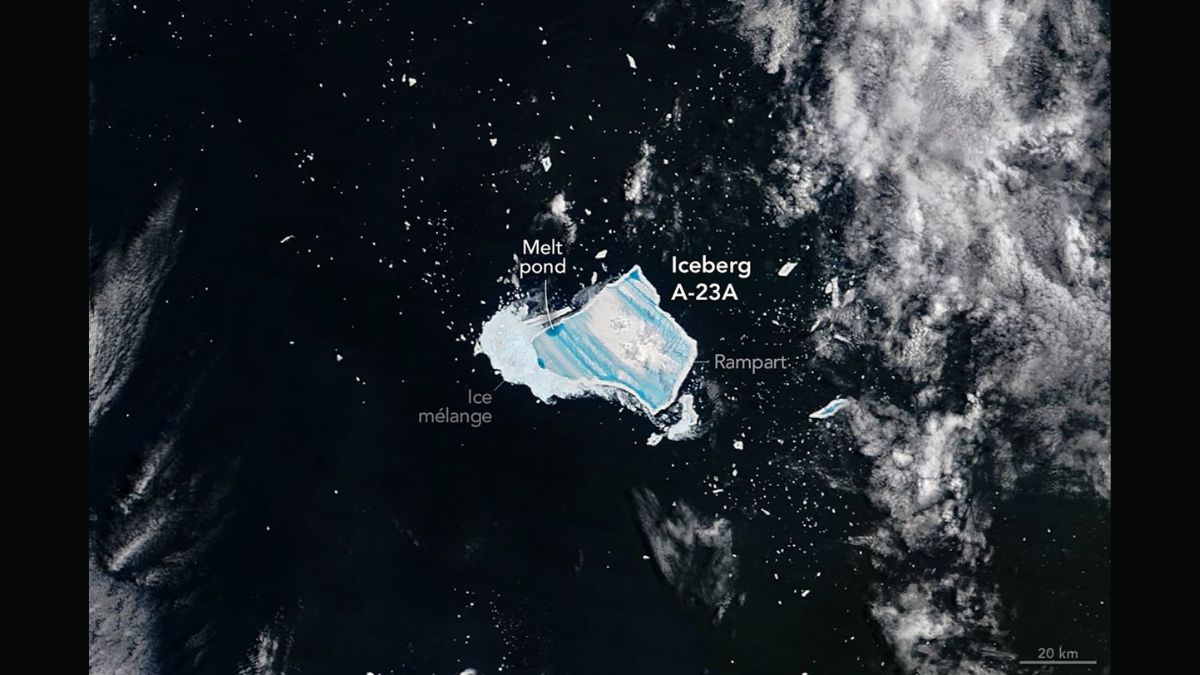
NASA scientists are closely tracking iceberg A-23A as vivid blue meltwater pools spread across its surface, signalling rapid decay. Once covering nearly 4,000 square kilometres, the Antarctic megaberg has shrunk to about 1,180 square kilometres and is fragmenting in warmer South Atlantic waters, offering valuable insight into how rising temperature...
-
www.gadgets360.com
-
NASA Confirms Brightening Comet SWAN Could Be Visible With Binoculars: When and Where to See It
- Monday October 20, 2025
- Written by Gadgets 360 Staff
Comet SWAN (C/2025 R2), discovered via NASA’s SOHO spacecraft, is rapidly brightening as it nears its October 20–21 Earth flyby. Skywatchers should look to the western horizon after sunset to spot its vivid green coma and tail — possibly visible to the naked eye in dark conditions.
-
www.gadgets360.com
-
NASA Prepares 2025 Carruthers Mission to Explore Earth’s Hidden Hydrogen Halo
- Friday September 26, 2025
- Written by Gadgets 360 Staff
NASA’s Carruthers Geocorona Observatory, launching in 2025, will capture ultraviolet light from hydrogen atoms to map Earth’s faint geocorona. Operating a million miles sunward, it will study how solar activity drives atmospheric loss, improves satellite protection, and reveals clues to planetary habitability, providing critical insight for fut...
-
www.gadgets360.com
-
NASA and NOAA Set to Launch Solar Probes for Space Weather Forecasting
- Friday September 5, 2025
- Written by Gadgets 360 Staff
In Sept. 2025, NASA and NOAA will launch three spacecraft aboard a Falcon 9 to the Sun–Earth L1 point. IMAP will map the heliosphere’s edge, the Carruthers Geocorona Observatory will study Earth’s exosphere, and SWFO-L1 will deliver real-time solar storm warnings. Together, they aim to improve space-weather science and safeguard technology on...
-
www.gadgets360.com
-
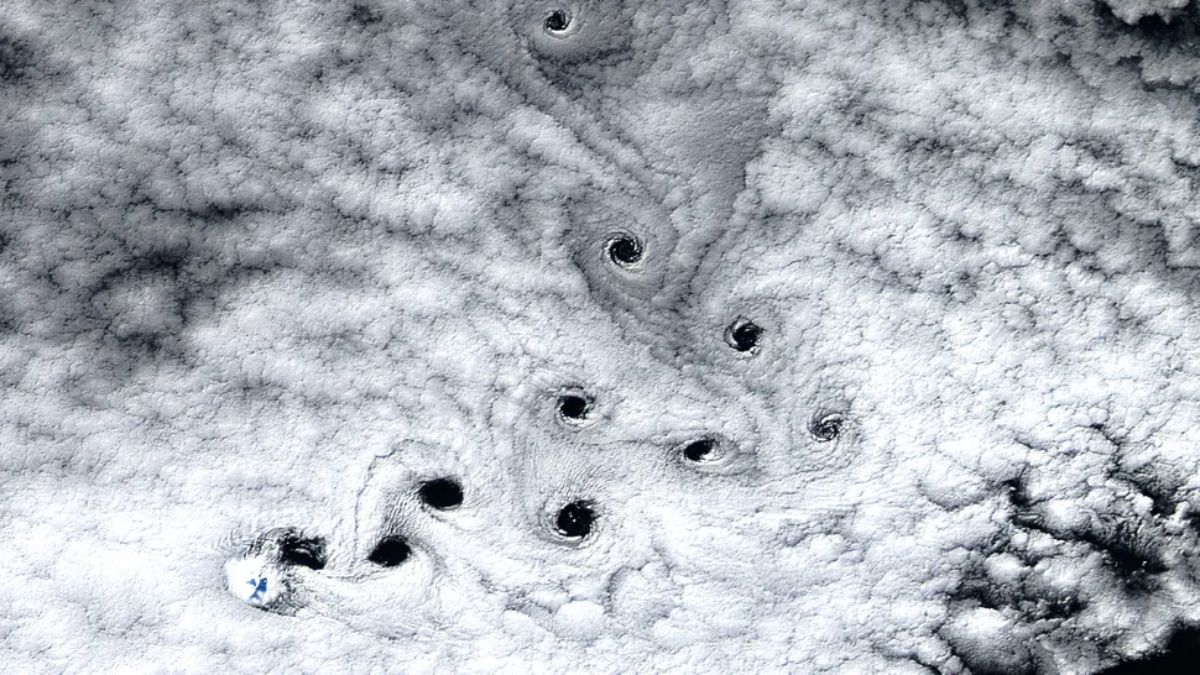
10 Strange 'Dark Voids' Appear Over Remote Island Near Antarctica in Rare Satellite View
- Sunday August 17, 2025
- Written by Gadgets 360 Staff
A rare NASA satellite image shows 10 sharply defined “dark voids” above Heard Island, a volcanic peak in the southern Indian Ocean. Formed by von Kármán vortices bent nearly 90 degrees by fierce westerly winds, the striking gaps pierce thick cloud cover, offering a vivid glimpse of nature’s intricate atmospheric patterns from space.
-
www.gadgets360.com
-
NASA’s Solar Observatory Sees Two Eclipses in One Day
- Tuesday July 29, 2025
- Written by Gadgets 360 Staff
In a rare celestial event, NASA’s Solar Dynamics Observatory (SDO) captured two eclipses on July 25, 2025. First, at 2:45 UTC, the Moon passed between SDO and the Sun, covering about 62% of the solar disk. Just hours later, around 6:30 UTC, Earth itself blocked the Sun entirely from SDO’s perspective. These dual eclipses occurred during SDO’s...
-
www.gadgets360.com
-
Chandra Spots Distant Baby Planet Losing Its Atmosphere Under Intense X-ray Assault
- Saturday July 19, 2025
- Written by Gadgets 360 Staff
NASA’s Chandra X-ray Observatory has captured a rare glimpse of TOI 1227 b, a young, Jupiter-sized exoplanet losing its atmosphere under intense stellar radiation. Just 8 million years old, the planet is shrinking rapidly as X-rays strip away its mass. Scientists warn it may become a barren rocky core in about a billion years.
-
www.gadgets360.com
-
Young Exoplanet Spotted Shedding Atmosphere Under Stellar Radiation
- Thursday July 17, 2025
- Written by Gadgets 360 Staff
NASA’s Chandra X-ray Observatory and Hubble Space Telescope have captured a dramatic cosmic event: a baby exoplanet, TOI 1227 b, is being stripped of its atmosphere by powerful X-rays from its host star. Only 8 million years old and orbiting a red dwarf, this Jupiter-sized planet is losing gas at a rate equal to Earth’s entire atmosphere every ...
-
www.gadgets360.com
-
NASA TEMPO Satellite to Continue Tracking Pollution Hourly from Space Until 2026
- Saturday July 5, 2025
- Written by Gadgets 360 Staff
TEMPO, a collaborative space mission by NASA, NOAA, and the Smithsonian Astrophysical Observatory, is transforming air quality tracking across North America. Since 2023, it has delivered hourly, high-resolution pollution data from space, aiding researchers, health officials, and the public.
-
www.gadgets360.com
-
NASA Satellite Shows World's Largest Iceberg Breaking Into Thousands Of Pieces. What Happens Next
- Wednesday May 21, 2025
- Science | Edited by Ritu Singh
The A23a iceberg, deemed the largest in the world since 2023, was seen losing large chunks of ice after drifting toward the island of South Georgia.
-
www.ndtv.com
-
NASA’s Hubble Space Telescope Tracks a Neutron Star With Mysterious Origin
- Wednesday April 16, 2025
- Written by Gadgets 360 Staff
NASA’s Hubble Space Telescope spotted a rogue magnetar, dubbed SGR 0501+4516, traversing our galaxy for a significantly long time. As per claims by scientists, it was first discovered in the year 2008 by NASA's Swift Observatory as intense flashes of gamma rays in the outer area of the Milky Way
-
www.gadgets360.com
-
NASA Captures Ghost Islands Emergence And Disappearance In Caspian Sea
- Thursday January 16, 2025
- World News | Edited by NDTV News Desk
Azerbaijan is home to more than 300 mud volcanoes, both on land and offshore in the Caspian Sea, NASA's Earth Observatory stated.
-
www.ndtv.com
-
James Webb and Chandra Capture Images of Star Clusters in Distant Galaxies
- Thursday December 19, 2024
- Written by Gadgets 360 Staff
NASA’s James Webb Space Telescope and Chandra X-ray Observatory have unveiled stunning new images of two star clusters in the Small Magellanic Cloud. NGC 602, located approximately 200,000 light-years from Earth, showcases active star formation, with dust clouds and ionised gas revealing unique stellar birth conditions. Meanwhile, NGC 2264 featur...
-
www.gadgets360.com
-
Can We Defend Earth from Asteroids? Here's What You Need to Know
- Monday December 2, 2024
- Written by Gadgets 360 Staff
Efforts to protect Earth from asteroid impacts have made significant strides, notably with NASA’s DART mission, which successfully altered the orbit of the asteroid moonlet Dimorphos in 2022. This achievement marked a key advancement in planetary defence, demonstrating that asteroid deflection is a viable strategy. However, the success of DART al...
-
www.gadgets360.com
-
NASA Spots Giant Antarctic Iceberg Turning Blue as It Nears Breakup
- Sunday January 11, 2026
- Written by Gadgets 360 Staff
NASA scientists are closely tracking iceberg A-23A as vivid blue meltwater pools spread across its surface, signalling rapid decay. Once covering nearly 4,000 square kilometres, the Antarctic megaberg has shrunk to about 1,180 square kilometres and is fragmenting in warmer South Atlantic waters, offering valuable insight into how rising temperature...
-
www.gadgets360.com
-
NASA Confirms Brightening Comet SWAN Could Be Visible With Binoculars: When and Where to See It
- Monday October 20, 2025
- Written by Gadgets 360 Staff
Comet SWAN (C/2025 R2), discovered via NASA’s SOHO spacecraft, is rapidly brightening as it nears its October 20–21 Earth flyby. Skywatchers should look to the western horizon after sunset to spot its vivid green coma and tail — possibly visible to the naked eye in dark conditions.
-
www.gadgets360.com
-
NASA Prepares 2025 Carruthers Mission to Explore Earth’s Hidden Hydrogen Halo
- Friday September 26, 2025
- Written by Gadgets 360 Staff
NASA’s Carruthers Geocorona Observatory, launching in 2025, will capture ultraviolet light from hydrogen atoms to map Earth’s faint geocorona. Operating a million miles sunward, it will study how solar activity drives atmospheric loss, improves satellite protection, and reveals clues to planetary habitability, providing critical insight for fut...
-
www.gadgets360.com
-
NASA and NOAA Set to Launch Solar Probes for Space Weather Forecasting
- Friday September 5, 2025
- Written by Gadgets 360 Staff
In Sept. 2025, NASA and NOAA will launch three spacecraft aboard a Falcon 9 to the Sun–Earth L1 point. IMAP will map the heliosphere’s edge, the Carruthers Geocorona Observatory will study Earth’s exosphere, and SWFO-L1 will deliver real-time solar storm warnings. Together, they aim to improve space-weather science and safeguard technology on...
-
www.gadgets360.com
-
10 Strange 'Dark Voids' Appear Over Remote Island Near Antarctica in Rare Satellite View
- Sunday August 17, 2025
- Written by Gadgets 360 Staff
A rare NASA satellite image shows 10 sharply defined “dark voids” above Heard Island, a volcanic peak in the southern Indian Ocean. Formed by von Kármán vortices bent nearly 90 degrees by fierce westerly winds, the striking gaps pierce thick cloud cover, offering a vivid glimpse of nature’s intricate atmospheric patterns from space.
-
www.gadgets360.com
-
NASA’s Solar Observatory Sees Two Eclipses in One Day
- Tuesday July 29, 2025
- Written by Gadgets 360 Staff
In a rare celestial event, NASA’s Solar Dynamics Observatory (SDO) captured two eclipses on July 25, 2025. First, at 2:45 UTC, the Moon passed between SDO and the Sun, covering about 62% of the solar disk. Just hours later, around 6:30 UTC, Earth itself blocked the Sun entirely from SDO’s perspective. These dual eclipses occurred during SDO’s...
-
www.gadgets360.com
-
Chandra Spots Distant Baby Planet Losing Its Atmosphere Under Intense X-ray Assault
- Saturday July 19, 2025
- Written by Gadgets 360 Staff
NASA’s Chandra X-ray Observatory has captured a rare glimpse of TOI 1227 b, a young, Jupiter-sized exoplanet losing its atmosphere under intense stellar radiation. Just 8 million years old, the planet is shrinking rapidly as X-rays strip away its mass. Scientists warn it may become a barren rocky core in about a billion years.
-
www.gadgets360.com
-
Young Exoplanet Spotted Shedding Atmosphere Under Stellar Radiation
- Thursday July 17, 2025
- Written by Gadgets 360 Staff
NASA’s Chandra X-ray Observatory and Hubble Space Telescope have captured a dramatic cosmic event: a baby exoplanet, TOI 1227 b, is being stripped of its atmosphere by powerful X-rays from its host star. Only 8 million years old and orbiting a red dwarf, this Jupiter-sized planet is losing gas at a rate equal to Earth’s entire atmosphere every ...
-
www.gadgets360.com
-
NASA TEMPO Satellite to Continue Tracking Pollution Hourly from Space Until 2026
- Saturday July 5, 2025
- Written by Gadgets 360 Staff
TEMPO, a collaborative space mission by NASA, NOAA, and the Smithsonian Astrophysical Observatory, is transforming air quality tracking across North America. Since 2023, it has delivered hourly, high-resolution pollution data from space, aiding researchers, health officials, and the public.
-
www.gadgets360.com
-
NASA Satellite Shows World's Largest Iceberg Breaking Into Thousands Of Pieces. What Happens Next
- Wednesday May 21, 2025
- Science | Edited by Ritu Singh
The A23a iceberg, deemed the largest in the world since 2023, was seen losing large chunks of ice after drifting toward the island of South Georgia.
-
www.ndtv.com
-
NASA’s Hubble Space Telescope Tracks a Neutron Star With Mysterious Origin
- Wednesday April 16, 2025
- Written by Gadgets 360 Staff
NASA’s Hubble Space Telescope spotted a rogue magnetar, dubbed SGR 0501+4516, traversing our galaxy for a significantly long time. As per claims by scientists, it was first discovered in the year 2008 by NASA's Swift Observatory as intense flashes of gamma rays in the outer area of the Milky Way
-
www.gadgets360.com
-
NASA Captures Ghost Islands Emergence And Disappearance In Caspian Sea
- Thursday January 16, 2025
- World News | Edited by NDTV News Desk
Azerbaijan is home to more than 300 mud volcanoes, both on land and offshore in the Caspian Sea, NASA's Earth Observatory stated.
-
www.ndtv.com
-
James Webb and Chandra Capture Images of Star Clusters in Distant Galaxies
- Thursday December 19, 2024
- Written by Gadgets 360 Staff
NASA’s James Webb Space Telescope and Chandra X-ray Observatory have unveiled stunning new images of two star clusters in the Small Magellanic Cloud. NGC 602, located approximately 200,000 light-years from Earth, showcases active star formation, with dust clouds and ionised gas revealing unique stellar birth conditions. Meanwhile, NGC 2264 featur...
-
www.gadgets360.com
-
Can We Defend Earth from Asteroids? Here's What You Need to Know
- Monday December 2, 2024
- Written by Gadgets 360 Staff
Efforts to protect Earth from asteroid impacts have made significant strides, notably with NASA’s DART mission, which successfully altered the orbit of the asteroid moonlet Dimorphos in 2022. This achievement marked a key advancement in planetary defence, demonstrating that asteroid deflection is a viable strategy. However, the success of DART al...
-
www.gadgets360.com