


Moon Dust
- All
- News
- Videos
-
Scientists Just Solved the Mystery of the Moon’s Lopsided Dust Halo
- Sunday November 9, 2025
- Written by Gadgets 360 Staff
Scientists have solved why the Moon’s dust cloud is uneven: heat. Using computer models, researchers found that meteor impacts on the Moon’s sunlit surface fling 6–8% more dust into space than on the cold night side, creating a lopsided halo. NASA warns this dust could threaten future landers and astronauts.
-
www.gadgets360.com
-
Chang’e-6 Lunar Samples Reveal Water-Rich Asteroid Fragments
- Saturday October 25, 2025
- Written by Gadgets 360 Staff
Analysis of Chang’e-6 lunar dust uncovered microscopic carbonaceous chondrite fragments—evidence of water-bearing asteroids that once struck the Moon. The discovery indicates a far greater delivery of water and organics to Earth and the Moon than thought, helping scientists refine theories about the solar system’s early volatile sources.
-
www.gadgets360.com
-
NASA and ESA Trace Mysterious Lunar Flashes to Meteors and Gas Leaks
- Wednesday October 22, 2025
- Written by Gadgets 360 Staff
Transient Lunar Phenomena are mysterious bursts and glows observed on the Moon, lasting from milliseconds to hours. NASA and ESA research show that these events often result from meteoroid impacts, radon gas outgassing, and dust charged by solar wind, illuminating the Moon’s dynamic surface in surprising ways.
-
www.gadgets360.com
-
Russia Launches Bion-M No.2 with Mice, Flies, and Seeds to Study Space Biology
- Sunday August 24, 2025
- Written by Gadgets 360 Staff
Russia’s latest resupply mission to low-Earth orbit has delivered a unique scientific cargo: 75 mice, 1,000 fruit flies, microbes, cell cultures, and plant seeds aboard the Bion-M No.2 biosatellite. Over the next month, these organisms will orbit Earth, helping scientists study how microgravity and cosmic radiation affect life. Some mice are gene...
-
www.gadgets360.com
-
Hubble Finds Cosmic Dust Coating Uranus’ Moons, Not Radiation Scars
- Thursday June 12, 2025
- Written by Gadgets 360 Staff
New Hubble Space Telescope observations have upended decades of expectations about Uranus’ moons. Scientists once thought the planet’s magnetic field darkened their backsides with radiation, but the latest data shows Titania and Oberon are collecting space dust on their leading sides instead. This “cosmic bug splatter” effect suggests dust ...
-
www.gadgets360.com
-
Indian-Origin Scientist In UK Gets World's First Far-Side Moon Dust From China
- Friday May 9, 2025
- Science | Edited by Nikhil Pandey
Professor Mahesh Anand, a UK-based Indian-origin scientist, has received a rare sample of Moon dust from China's Chang'e 5 mission, which collected 2kg of material from the Moon's volcanic region called Mons Rumker in 2020.
-
www.ndtv.com
-
Blue Origin’s New Shepard NS-29 Conducts First Lunar Gravity Simulation
- Thursday February 6, 2025
- Written by Gadgets 360 Staff
Blue Origin successfully launched its NS-29 mission, marking the first lunar gravity simulation on its New Shepard vehicle. The capsule rotated mid-flight to replicate Moon gravity for research payloads, including NASA-supported experiments on lunar dust behaviour and fire safety. Over half of the 30 payloads focused on Moon-related technologies. T...
-
www.gadgets360.com
-
Blue Origin’s New Shepard NS-29 Mission to Test Lunar Gravity Simulation
- Thursday January 30, 2025
- Written by Gadgets 360 Staff
Blue Origin’s New Shepard NS-29 mission, scheduled for Jan. 28, 2025, will simulate lunar gravity during its suborbital flight. The uncrewed mission, launching from West Texas, carries 30 experiments, with 17 contributed by NASA. These experiments aim to advance lunar exploration technologies, including studying moon dust behaviour, fire dynamics...
-
www.gadgets360.com
-
NASA's TESS Discovers Fastest Disintegrating Planet Ever Seen: What You Need to Know
- Monday January 20, 2025
- Written by Gadgets 360 Staff
NASA’s TESS has observed the closest and fastest disintegrating planet, BD+05 4868 Ab, located 141 light-years away. The planet loses a moon’s mass every million years as it is bombarded by its host star. Scientists are examining its massive dust trails, offering rare insights into the composition of terrestrial exoplanets. Researchers from MIT...
-
www.gadgets360.com
-
Moon Rocks Brought From the Far Side Confirm Ancient Volcanic Activity
- Wednesday November 20, 2024
- Written by Gadgets 360 Staff
Researchers analysing lunar samples from China’s Chang’e-6 mission have uncovered evidence of ancient volcanic activity on the Moon’s far side. The mission, which returned nearly two kilograms of lunar soil in June, landed in the South Pole-Aitken Basin, one of the Moon’s oldest craters. Studies published in Science and Nature revealed volc...
-
www.gadgets360.com
-
NASA's Europa Clipper Launches to Explore Life Possibilities on Icy Moon Europa
- Tuesday October 15, 2024
- Written by Gadgets 360 Staff
NASA's Europa Clipper mission is set to launch soon, aiming to explore the icy moon Europa's potential for life. By examining the ocean beneath its ice shell, the spacecraft will gather data on the moon's surface materials and atmospheric conditions. With advanced instruments, the mission seeks to identify organic compounds, analyze gas and dust pa...
-
www.gadgets360.com
-
Chandrayaan-3's Historic Moon Landing Displaced 2.06 Tonnes Of Dust: ISRO
- Friday October 27, 2023
- India News | Edited by NDTV News Desk
Chandrayaan-3’s Lander Module, Vikram, along with the rover Pragyan, successfully landed on the Moon's South Polar Region at the Shiva Shakti Point.
-
www.ndtv.com
-
Chandrayaan-3 Vikram Lander Ejected Lunar Soil As It Landed On Moon
- Friday October 27, 2023
- India News | Asian News International
The Indian Space Research Organisation (ISRO) on Friday said that the Vikram lander module of Chandrayaan-3 blew off 2.06 tonnes of lunar epiregolith (Moon Dust) and generated a "spectacular ejecta halo".
-
www.ndtv.com
-
Scientists Propose Using Moon Dust To Keep Earth From Overheating
- Thursday February 9, 2023
- Science | Agence France-Presse
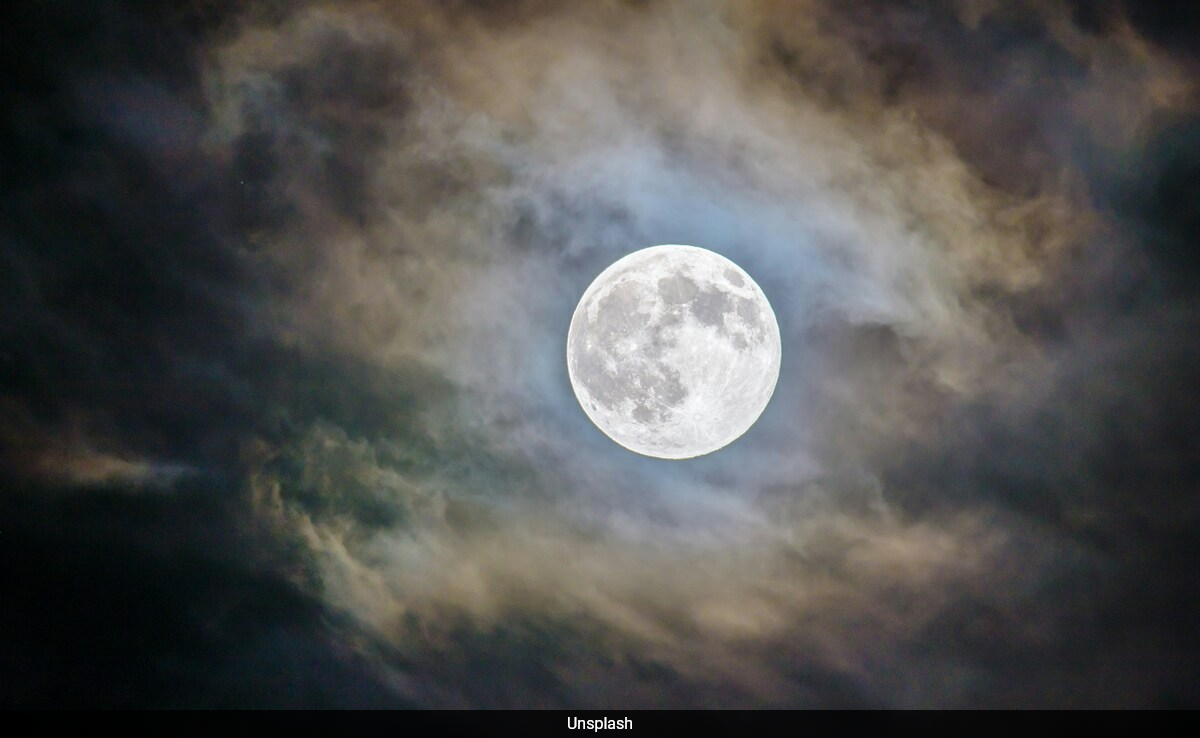
Whether out-of-the-box thinking or a sign of desperation, scientists on Wednesday proposed the regular transport of moon dust to a gravity point between Earth and Sun to temper the ravages of global warming.
-
www.ndtv.com
-
Scientists Just Solved the Mystery of the Moon’s Lopsided Dust Halo
- Sunday November 9, 2025
- Written by Gadgets 360 Staff
Scientists have solved why the Moon’s dust cloud is uneven: heat. Using computer models, researchers found that meteor impacts on the Moon’s sunlit surface fling 6–8% more dust into space than on the cold night side, creating a lopsided halo. NASA warns this dust could threaten future landers and astronauts.
-
www.gadgets360.com
-
Chang’e-6 Lunar Samples Reveal Water-Rich Asteroid Fragments
- Saturday October 25, 2025
- Written by Gadgets 360 Staff
Analysis of Chang’e-6 lunar dust uncovered microscopic carbonaceous chondrite fragments—evidence of water-bearing asteroids that once struck the Moon. The discovery indicates a far greater delivery of water and organics to Earth and the Moon than thought, helping scientists refine theories about the solar system’s early volatile sources.
-
www.gadgets360.com
-
NASA and ESA Trace Mysterious Lunar Flashes to Meteors and Gas Leaks
- Wednesday October 22, 2025
- Written by Gadgets 360 Staff
Transient Lunar Phenomena are mysterious bursts and glows observed on the Moon, lasting from milliseconds to hours. NASA and ESA research show that these events often result from meteoroid impacts, radon gas outgassing, and dust charged by solar wind, illuminating the Moon’s dynamic surface in surprising ways.
-
www.gadgets360.com
-
Russia Launches Bion-M No.2 with Mice, Flies, and Seeds to Study Space Biology
- Sunday August 24, 2025
- Written by Gadgets 360 Staff
Russia’s latest resupply mission to low-Earth orbit has delivered a unique scientific cargo: 75 mice, 1,000 fruit flies, microbes, cell cultures, and plant seeds aboard the Bion-M No.2 biosatellite. Over the next month, these organisms will orbit Earth, helping scientists study how microgravity and cosmic radiation affect life. Some mice are gene...
-
www.gadgets360.com
-
Hubble Finds Cosmic Dust Coating Uranus’ Moons, Not Radiation Scars
- Thursday June 12, 2025
- Written by Gadgets 360 Staff
New Hubble Space Telescope observations have upended decades of expectations about Uranus’ moons. Scientists once thought the planet’s magnetic field darkened their backsides with radiation, but the latest data shows Titania and Oberon are collecting space dust on their leading sides instead. This “cosmic bug splatter” effect suggests dust ...
-
www.gadgets360.com
-
Indian-Origin Scientist In UK Gets World's First Far-Side Moon Dust From China
- Friday May 9, 2025
- Science | Edited by Nikhil Pandey
Professor Mahesh Anand, a UK-based Indian-origin scientist, has received a rare sample of Moon dust from China's Chang'e 5 mission, which collected 2kg of material from the Moon's volcanic region called Mons Rumker in 2020.
-
www.ndtv.com
-
Blue Origin’s New Shepard NS-29 Conducts First Lunar Gravity Simulation
- Thursday February 6, 2025
- Written by Gadgets 360 Staff
Blue Origin successfully launched its NS-29 mission, marking the first lunar gravity simulation on its New Shepard vehicle. The capsule rotated mid-flight to replicate Moon gravity for research payloads, including NASA-supported experiments on lunar dust behaviour and fire safety. Over half of the 30 payloads focused on Moon-related technologies. T...
-
www.gadgets360.com
-
Blue Origin’s New Shepard NS-29 Mission to Test Lunar Gravity Simulation
- Thursday January 30, 2025
- Written by Gadgets 360 Staff
Blue Origin’s New Shepard NS-29 mission, scheduled for Jan. 28, 2025, will simulate lunar gravity during its suborbital flight. The uncrewed mission, launching from West Texas, carries 30 experiments, with 17 contributed by NASA. These experiments aim to advance lunar exploration technologies, including studying moon dust behaviour, fire dynamics...
-
www.gadgets360.com
-
NASA's TESS Discovers Fastest Disintegrating Planet Ever Seen: What You Need to Know
- Monday January 20, 2025
- Written by Gadgets 360 Staff
NASA’s TESS has observed the closest and fastest disintegrating planet, BD+05 4868 Ab, located 141 light-years away. The planet loses a moon’s mass every million years as it is bombarded by its host star. Scientists are examining its massive dust trails, offering rare insights into the composition of terrestrial exoplanets. Researchers from MIT...
-
www.gadgets360.com
-
Moon Rocks Brought From the Far Side Confirm Ancient Volcanic Activity
- Wednesday November 20, 2024
- Written by Gadgets 360 Staff
Researchers analysing lunar samples from China’s Chang’e-6 mission have uncovered evidence of ancient volcanic activity on the Moon’s far side. The mission, which returned nearly two kilograms of lunar soil in June, landed in the South Pole-Aitken Basin, one of the Moon’s oldest craters. Studies published in Science and Nature revealed volc...
-
www.gadgets360.com
-
NASA's Europa Clipper Launches to Explore Life Possibilities on Icy Moon Europa
- Tuesday October 15, 2024
- Written by Gadgets 360 Staff
NASA's Europa Clipper mission is set to launch soon, aiming to explore the icy moon Europa's potential for life. By examining the ocean beneath its ice shell, the spacecraft will gather data on the moon's surface materials and atmospheric conditions. With advanced instruments, the mission seeks to identify organic compounds, analyze gas and dust pa...
-
www.gadgets360.com
-
Chandrayaan-3's Historic Moon Landing Displaced 2.06 Tonnes Of Dust: ISRO
- Friday October 27, 2023
- India News | Edited by NDTV News Desk
Chandrayaan-3’s Lander Module, Vikram, along with the rover Pragyan, successfully landed on the Moon's South Polar Region at the Shiva Shakti Point.
-
www.ndtv.com
-
Chandrayaan-3 Vikram Lander Ejected Lunar Soil As It Landed On Moon
- Friday October 27, 2023
- India News | Asian News International
The Indian Space Research Organisation (ISRO) on Friday said that the Vikram lander module of Chandrayaan-3 blew off 2.06 tonnes of lunar epiregolith (Moon Dust) and generated a "spectacular ejecta halo".
-
www.ndtv.com
-
Scientists Propose Using Moon Dust To Keep Earth From Overheating
- Thursday February 9, 2023
- Science | Agence France-Presse
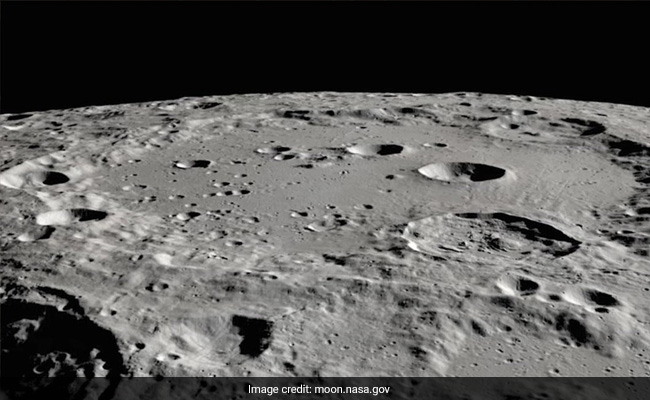
Whether out-of-the-box thinking or a sign of desperation, scientists on Wednesday proposed the regular transport of moon dust to a gravity point between Earth and Sun to temper the ravages of global warming.
-
www.ndtv.com