



Ligo
-
{
- All
- News
-

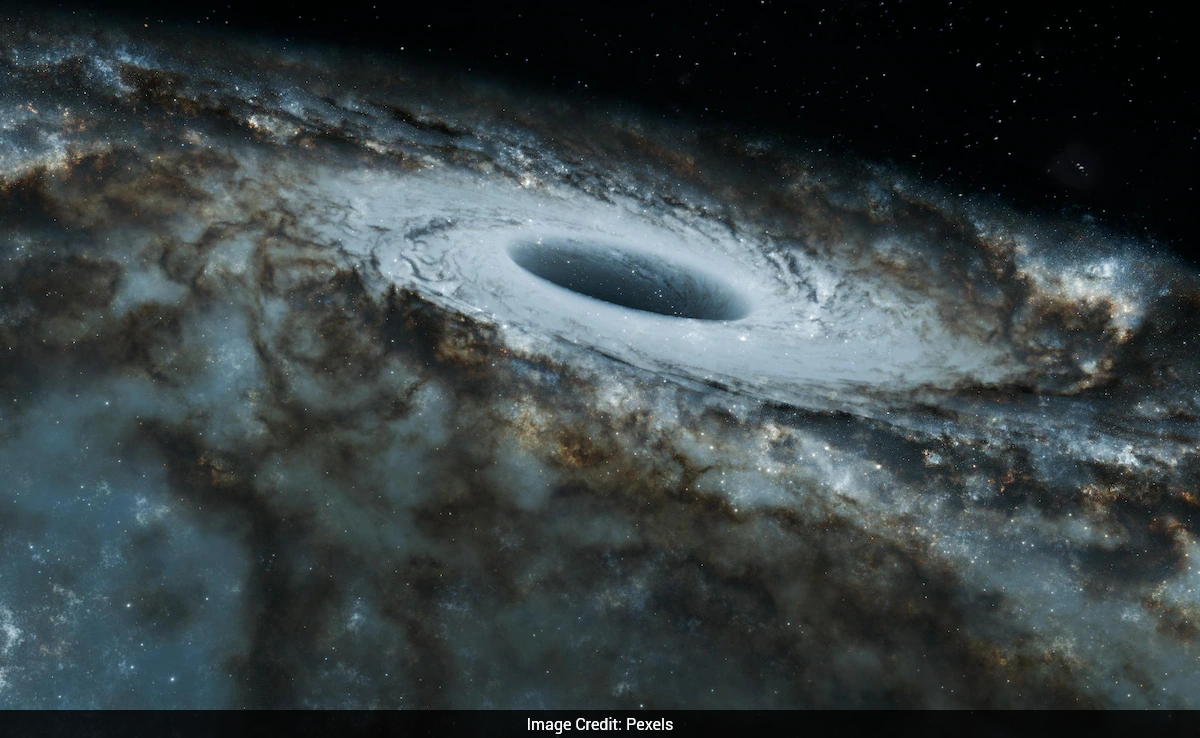
Study Reveals Black Hole Collisions May Be Creating Universe's Biggest Cosmic Giants
According to the study, this creates a forbidden mass range for stellar-mass black holes formed from collapsing stars.
-
Largest Black Holes May Form Through Repeated Collisions, Study Suggests
New gravitational-wave data from LIGO Scientific Collaboration, Virgo, and KAGRA suggests the largest Black Holes form through repeated mergers inside dense star clusters rather than directly from collapsing stars.
-
Physicists Develop New Method to Detect Tiny Fluctuations in Spacetime
Physicists at the University of Warwick have developed a new framework to detect tiny spacetime fluctuations known as “quantum foam,” a long-standing prediction of quantum gravity theories. The study maps different types of spacetime noise to measurable signals in interferometers such as LIGO and smaller laboratory setups. By translating abstra...
-
New Gravitational-Wave Signal May Reveal Primordial Black Holes Born After the Big Bang
Scientists have spotted an unusual gravitational-wave signal that may reveal the universe’s first primordial black holes—tiny relics dating back to the Big Bang. Recorded by LIGO–Virgo–KAGRA in November 2025, the event involves an object far lighter than any known stellar remnant. If verified, it could reshape theories of black holes and da...
-
Scientists Solve the Mystery Behind LIGO’s “Forbidden” Black Hole Pair
When LIGO and Virgo detected GW231123 in late 2023, it appeared to show two black holes merging in the so-called mass gap, where theory predicted none should exist. But new simulations indicate that rapidly spinning, strongly magnetized massive stars can collapse into black holes without exploding entirely. This process sheds enough mass to leave b...
-
LIGO Detect Possible Second-Generation Black Holes with Extreme Spins
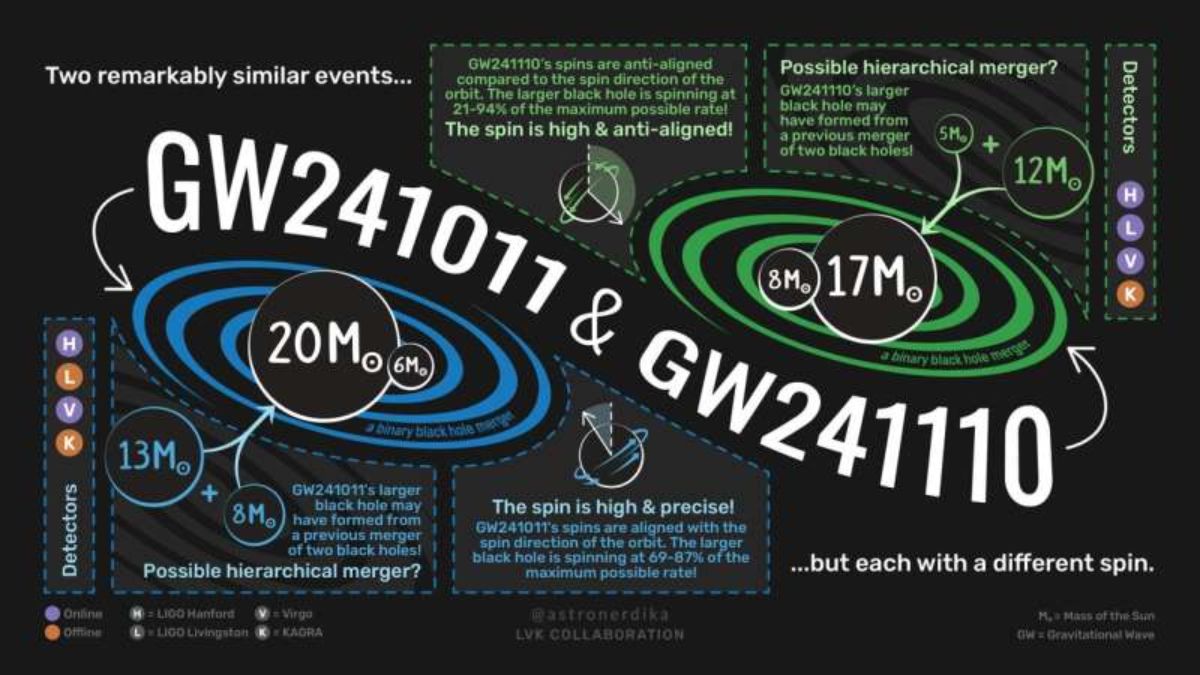
LIGO-Virgo-KAGRA observatories detected two extraordinary black hole collisions in late 2024—GW241011 and GW241110. The first involved a rapidly spinning black hole, while the second revealed one rotating opposite its orbit. These findings fit predictions for second-generation black holes, born from earlier mergers within crowded star clusters. T...
-
New Black Hole Merger Gives Clearest Test of Einstein’s Relativity
LIGO has detected GW250114, the loudest gravitational-wave signal yet, marking ten years since its first breakthrough. The event confirmed Einstein’s relativity, Hawking’s horizon theorem, and Kerr’s spinning black hole model. By capturing the merger of two 32-solar-mass black holes, scientists gained the clearest view of black hole physics, ...
-
Gravitational Waves Reveal Most Massive Black Hole Merger Ever Observed
The GW231123 event marks the most massive black hole merger ever detected through gravitational waves, involving black holes of 100 and 140 solar masses. Observed by the LIGO-Virgo-KAGRA network, it challenges current black hole formation models with extreme mass and spin, suggesting a complex origin. Scientists believe its full implications may ta...
-
Gravitational Waves Reveal Black Hole Ancestry Through Spin Analysis
A study published in Physical Review Letters explores how gravitational waves reveal the ancestry of black holes. By examining 69 black hole mergers, researchers found that spin shifts indicate repeated collisions in dense star clusters. This insight supports models suggesting black holes grow through sequential mergers. Observatories like LIGO and...
-
Scientists Develop New Approach to Capture Gravitational Wave Memory from Supernovae
A study published in Physical Review Letters highlights new methods to detect the gravitational wave memory effect, a unique phenomenon predicted by Einstein's general relativity. Core-collapse supernovae (massive stellar explosions) generate these low-frequency gravitational waves, offering a rare glimpse into stellar interiors. Despite their weak...
-
Technology Day: PM Modi To Lay Foundation Of Gravity Observatory LIGO-India Tomorrow
Prime Minister Narendra Modi will lay the foundation stone of Laser Interferometer Gravitational Wave Observatory India (LIGO-India) on Thursday, when the country celebrates the 25th anniversary of the Pokhran-II nuclear tests.
-
India To Build Massive Observatory 'LIGO' To Detect Gravitational Waves
LIGO-India will significantly enhance scientists' ability to pinpoint the sources of gravitational waves -- ripples in the fabric of space and time -- and answer fundamental questions about the universe, experts say.
-
Dozens of Newly-Detected Gravitational-Wave Events May Help Better Understand Black Holes, Neutron Stars
Astrophysicists have found new 39 gravitational-wave events caused by collision of black holes and neutron stars far in the universe. These, along with previously observed 11 events, will help them understand the population of black holes and neutron stars across the universe.
-
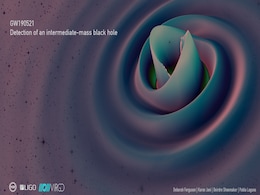
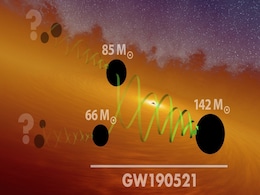
First Black Hole With 'Intermediate Mass' Discovered, Oldest Ever Detected
Scientists announced Wednesday the discovery of a black hole -- the oldest ever detected -- that shouldn't even exist according to the current understanding of cosmic monsters so dense not even light can escape their gravitational pull.
-
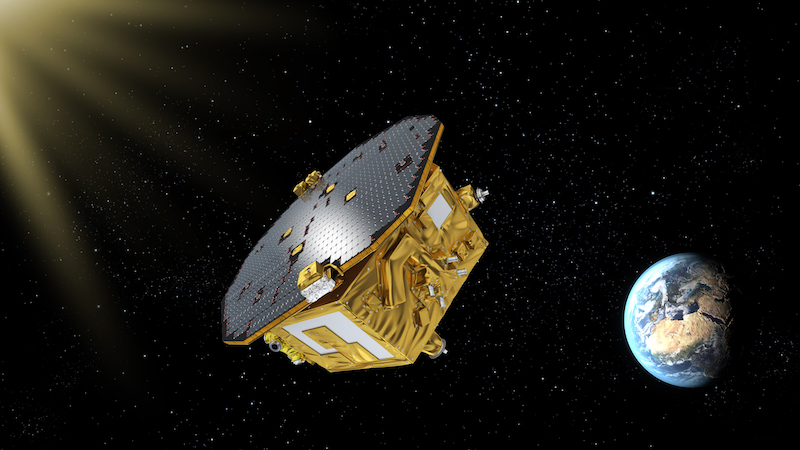
NASA to Support ESA's Gravitational Wave Space Mission
ESA's Science Program Committee announced the selection of the three-spacecraft constellation LISA this week.



-
Study Reveals Black Hole Collisions May Be Creating Universe's Biggest Cosmic Giants
According to the study, this creates a forbidden mass range for stellar-mass black holes formed from collapsing stars.
-
Largest Black Holes May Form Through Repeated Collisions, Study Suggests
New gravitational-wave data from LIGO Scientific Collaboration, Virgo, and KAGRA suggests the largest Black Holes form through repeated mergers inside dense star clusters rather than directly from collapsing stars.
-
Physicists Develop New Method to Detect Tiny Fluctuations in Spacetime
Physicists at the University of Warwick have developed a new framework to detect tiny spacetime fluctuations known as “quantum foam,” a long-standing prediction of quantum gravity theories. The study maps different types of spacetime noise to measurable signals in interferometers such as LIGO and smaller laboratory setups. By translating abstra...
-
New Gravitational-Wave Signal May Reveal Primordial Black Holes Born After the Big Bang
Scientists have spotted an unusual gravitational-wave signal that may reveal the universe’s first primordial black holes—tiny relics dating back to the Big Bang. Recorded by LIGO–Virgo–KAGRA in November 2025, the event involves an object far lighter than any known stellar remnant. If verified, it could reshape theories of black holes and da...
-
Scientists Solve the Mystery Behind LIGO’s “Forbidden” Black Hole Pair
When LIGO and Virgo detected GW231123 in late 2023, it appeared to show two black holes merging in the so-called mass gap, where theory predicted none should exist. But new simulations indicate that rapidly spinning, strongly magnetized massive stars can collapse into black holes without exploding entirely. This process sheds enough mass to leave b...
-
LIGO Detect Possible Second-Generation Black Holes with Extreme Spins
LIGO-Virgo-KAGRA observatories detected two extraordinary black hole collisions in late 2024—GW241011 and GW241110. The first involved a rapidly spinning black hole, while the second revealed one rotating opposite its orbit. These findings fit predictions for second-generation black holes, born from earlier mergers within crowded star clusters. T...
-
New Black Hole Merger Gives Clearest Test of Einstein’s Relativity
LIGO has detected GW250114, the loudest gravitational-wave signal yet, marking ten years since its first breakthrough. The event confirmed Einstein’s relativity, Hawking’s horizon theorem, and Kerr’s spinning black hole model. By capturing the merger of two 32-solar-mass black holes, scientists gained the clearest view of black hole physics, ...
-
Gravitational Waves Reveal Most Massive Black Hole Merger Ever Observed
The GW231123 event marks the most massive black hole merger ever detected through gravitational waves, involving black holes of 100 and 140 solar masses. Observed by the LIGO-Virgo-KAGRA network, it challenges current black hole formation models with extreme mass and spin, suggesting a complex origin. Scientists believe its full implications may ta...
-
Gravitational Waves Reveal Black Hole Ancestry Through Spin Analysis
A study published in Physical Review Letters explores how gravitational waves reveal the ancestry of black holes. By examining 69 black hole mergers, researchers found that spin shifts indicate repeated collisions in dense star clusters. This insight supports models suggesting black holes grow through sequential mergers. Observatories like LIGO and...
-
Scientists Develop New Approach to Capture Gravitational Wave Memory from Supernovae
A study published in Physical Review Letters highlights new methods to detect the gravitational wave memory effect, a unique phenomenon predicted by Einstein's general relativity. Core-collapse supernovae (massive stellar explosions) generate these low-frequency gravitational waves, offering a rare glimpse into stellar interiors. Despite their weak...
-
Technology Day: PM Modi To Lay Foundation Of Gravity Observatory LIGO-India Tomorrow
Prime Minister Narendra Modi will lay the foundation stone of Laser Interferometer Gravitational Wave Observatory India (LIGO-India) on Thursday, when the country celebrates the 25th anniversary of the Pokhran-II nuclear tests.
-
India To Build Massive Observatory 'LIGO' To Detect Gravitational Waves
LIGO-India will significantly enhance scientists' ability to pinpoint the sources of gravitational waves -- ripples in the fabric of space and time -- and answer fundamental questions about the universe, experts say.
-
Dozens of Newly-Detected Gravitational-Wave Events May Help Better Understand Black Holes, Neutron Stars
Astrophysicists have found new 39 gravitational-wave events caused by collision of black holes and neutron stars far in the universe. These, along with previously observed 11 events, will help them understand the population of black holes and neutron stars across the universe.
-
First Black Hole With 'Intermediate Mass' Discovered, Oldest Ever Detected
Scientists announced Wednesday the discovery of a black hole -- the oldest ever detected -- that shouldn't even exist according to the current understanding of cosmic monsters so dense not even light can escape their gravitational pull.
-
NASA to Support ESA's Gravitational Wave Space Mission
ESA's Science Program Committee announced the selection of the three-spacecraft constellation LISA this week.

