



Jupiter Planet
-
{
- All
- News
-

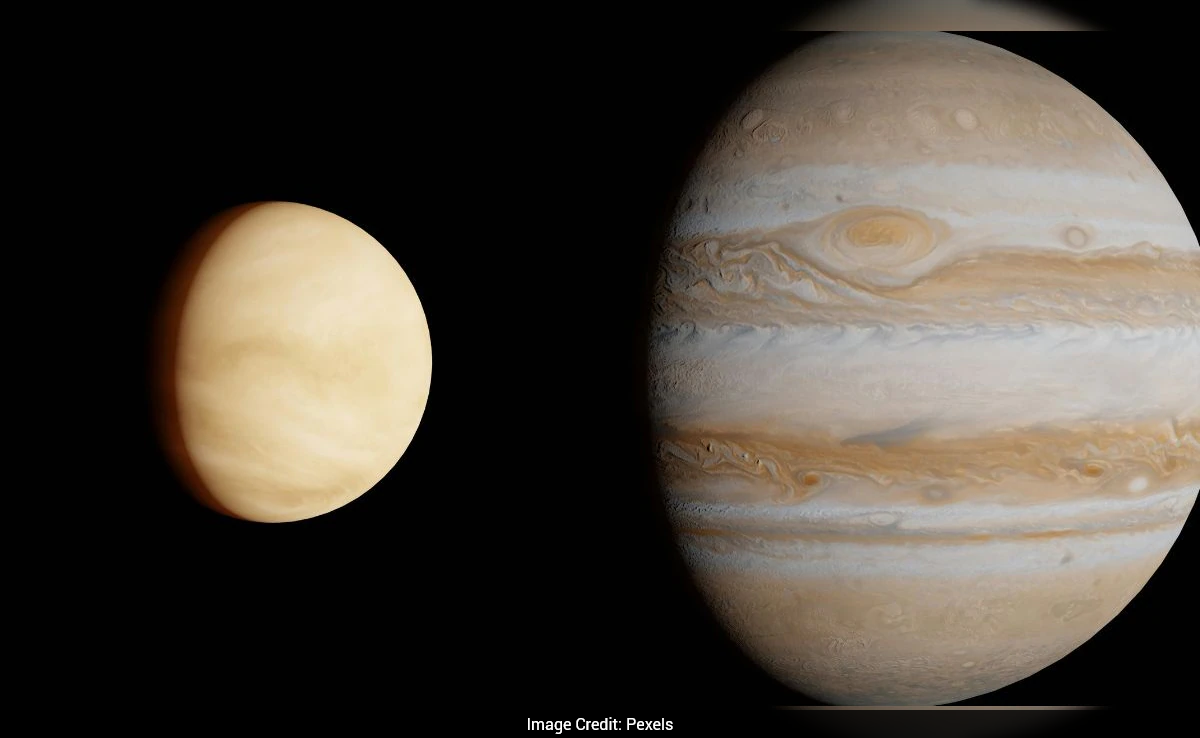
Scientists Predict Venus-Jupiter Close Encounter In June After May Alignment
The two planets will reach their closest point during a conjunction on 9 June 2026.
-
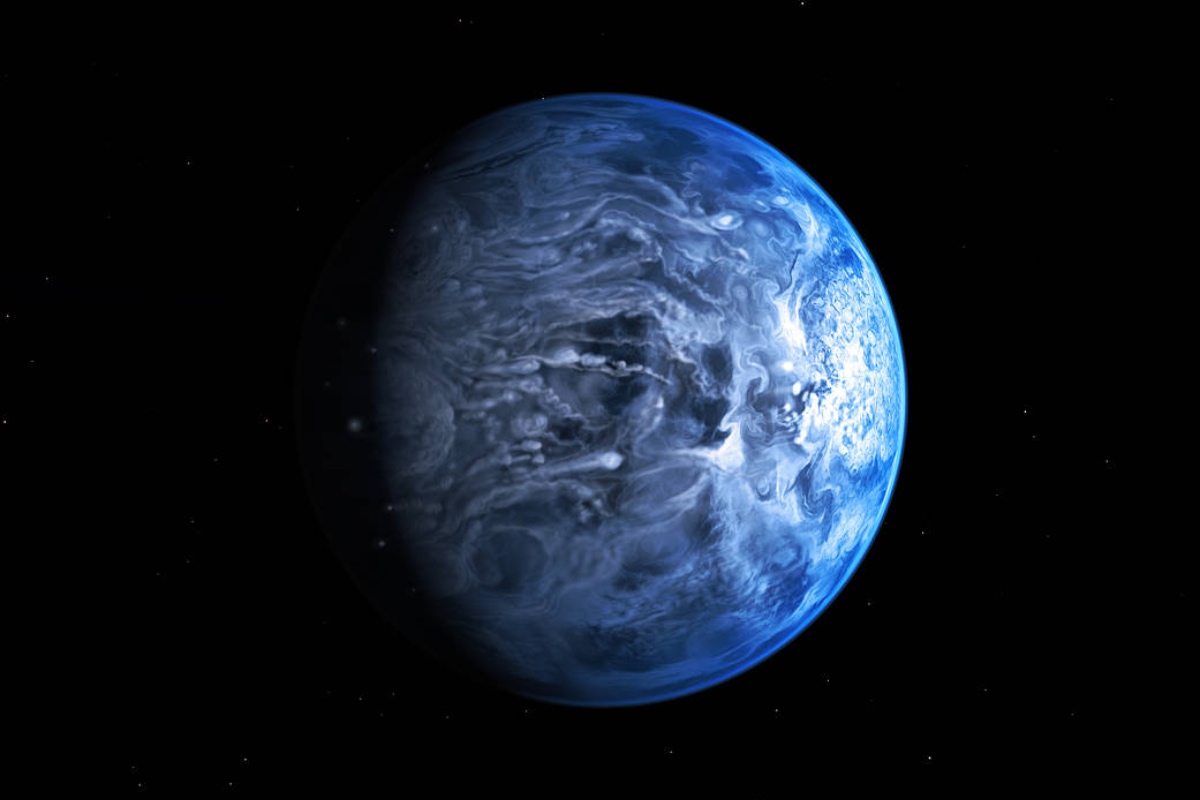
Researchers Propose New Method to Find Planets Beyond Our Solar System
In s new study, researchers have tried to unravel what the signal from aJupiter-like planet be like. They have developed a model of magnetohydrodynamics (MHD) and applied it to a planetary system called HD 189733. They have simulated the interaction between the star's stellar wind and the planet's magnetic field and performed calculations around th...
-
Scientists Find Out Why Jupiter Doesn't Have Glorious Rings Like Saturn
Scientists have uncovered why Jupiter does not have rings like its neighbouring planet Saturn. Researchers from the University of California, Riverside, ran a computer simulation of both Jupiter's orbits and the four main moons that surrounded it to understand why the giant gaseous planet is missing the hoops.
-
Planet 8 Times Bigger Than Jupiter Found Near Very Young Star
Astronomers have discovered a giant planet, at least eight times larger than Jupiter, that orbits a 2 million-year-old star about 450 light years from Earth, contradicting a long-standing idea that larger planets take longer to form.
-
Jupiter-Sized Planet Found in Triple-Star System
Known planets with three stars appearing in their sky are rare - the new discovery is just the fourth and the closest one yet.
-
Astronomer Discovers Planet 3 Times as Large as Jupiter
The discovery of planets orbiting red giant stars is "rare", with only five such planets located around stars of that kind to date.
-
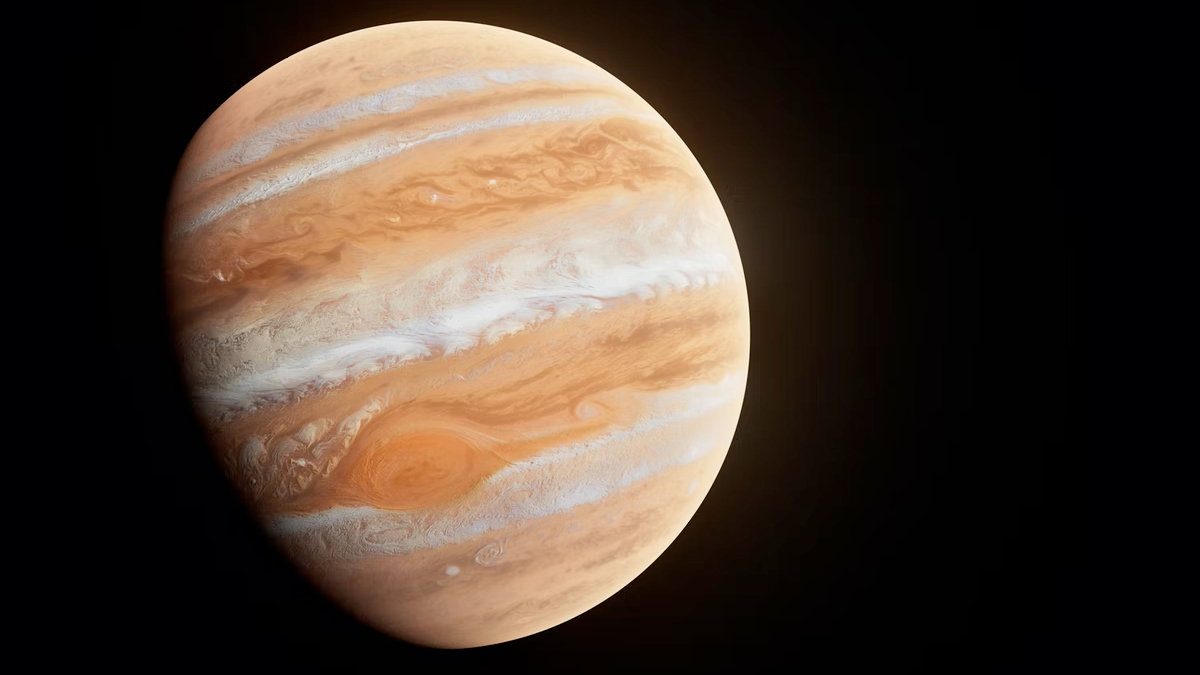
Jupiter will be big, bright on Monday night
Jupiter, the largest after the Sun in the solar system, will be at its biggest and brightest on Monday night much to the delight of sky-gazers.
-
Jupiter to rise, set opposite Sun on Friday
Sky gazers can watch the biggest planet Jupiter rise and set opposite the Sun on Friday night.


-
Scientists Predict Venus-Jupiter Close Encounter In June After May Alignment
The two planets will reach their closest point during a conjunction on 9 June 2026.
-
Researchers Propose New Method to Find Planets Beyond Our Solar System
In s new study, researchers have tried to unravel what the signal from aJupiter-like planet be like. They have developed a model of magnetohydrodynamics (MHD) and applied it to a planetary system called HD 189733. They have simulated the interaction between the star's stellar wind and the planet's magnetic field and performed calculations around th...
-
Scientists Find Out Why Jupiter Doesn't Have Glorious Rings Like Saturn
Scientists have uncovered why Jupiter does not have rings like its neighbouring planet Saturn. Researchers from the University of California, Riverside, ran a computer simulation of both Jupiter's orbits and the four main moons that surrounded it to understand why the giant gaseous planet is missing the hoops.
-
Planet 8 Times Bigger Than Jupiter Found Near Very Young Star
Astronomers have discovered a giant planet, at least eight times larger than Jupiter, that orbits a 2 million-year-old star about 450 light years from Earth, contradicting a long-standing idea that larger planets take longer to form.
-
Jupiter-Sized Planet Found in Triple-Star System
Known planets with three stars appearing in their sky are rare - the new discovery is just the fourth and the closest one yet.
-
Astronomer Discovers Planet 3 Times as Large as Jupiter
The discovery of planets orbiting red giant stars is "rare", with only five such planets located around stars of that kind to date.
-
Jupiter will be big, bright on Monday night
Jupiter, the largest after the Sun in the solar system, will be at its biggest and brightest on Monday night much to the delight of sky-gazers.
-
Jupiter to rise, set opposite Sun on Friday
Sky gazers can watch the biggest planet Jupiter rise and set opposite the Sun on Friday night.

