



Glow Stars
- All
- News
-

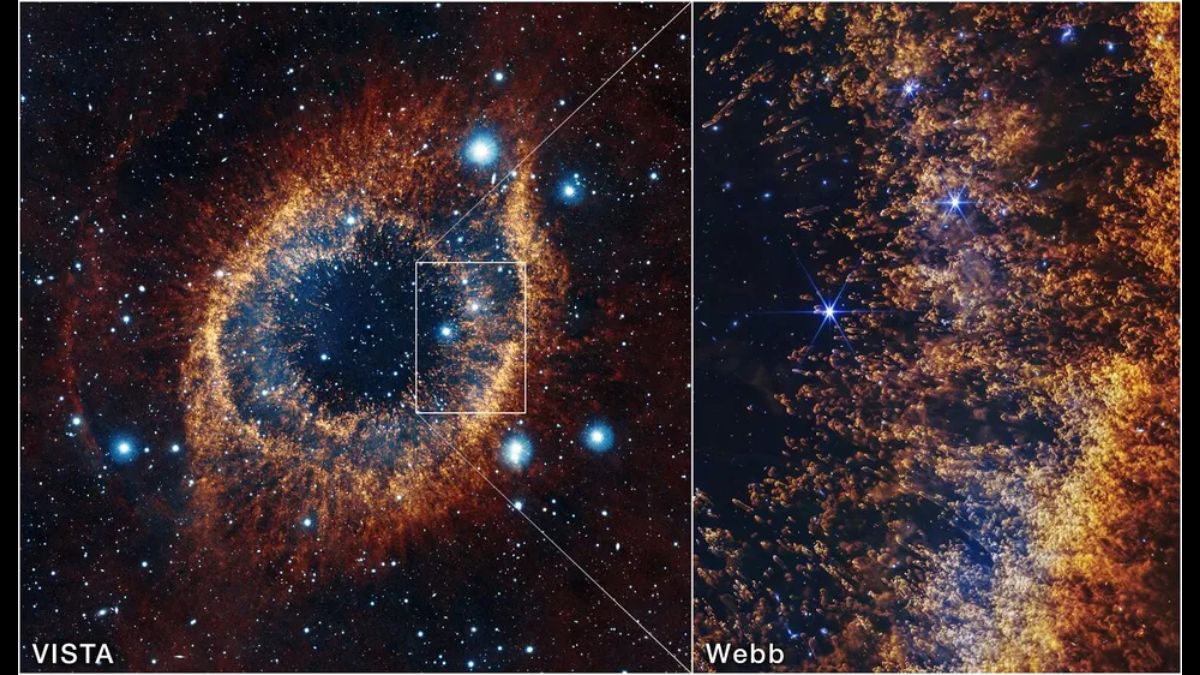
James Webb Captures Stunning Infrared Image of the Helix Nebula Eye of God
The James Webb Space Telescope has captured a detailed infrared image of the Helix Nebula, also known as the “Eye of God.” The glowing ring of gas around a white dwarf star reveals filaments and knots formed as stellar winds collide with older material, offering insight into the fate of Sun-like stars.
-
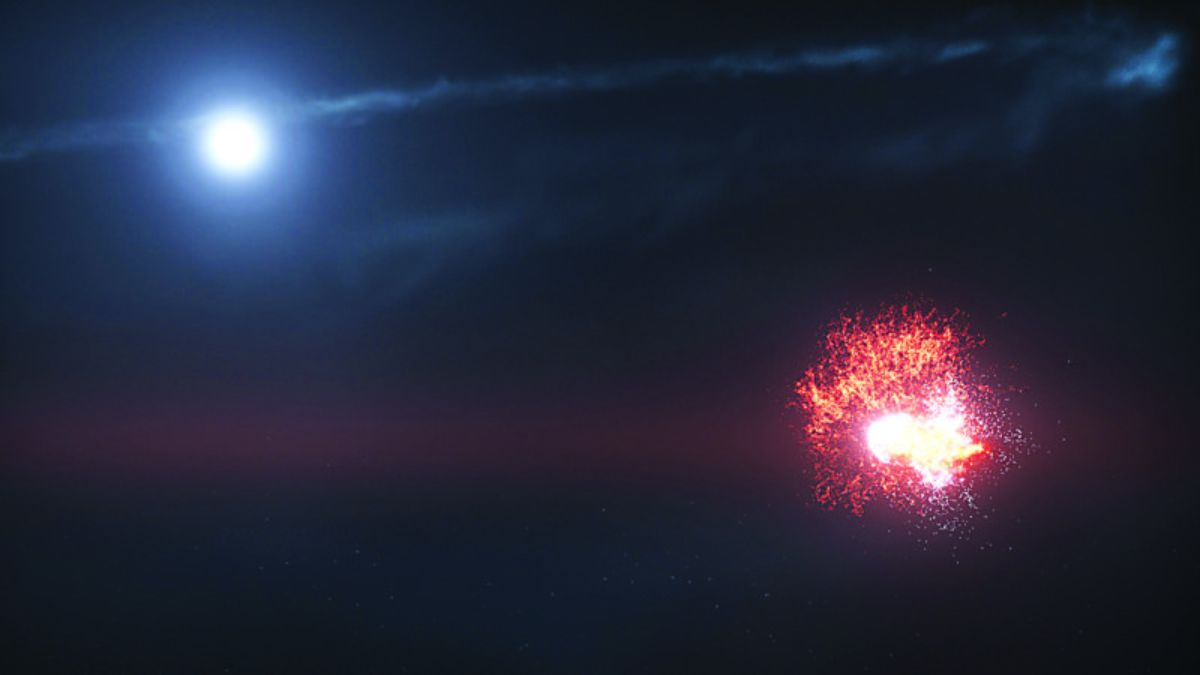
Hubble Observations Turn Exoplanet Into Dust; Reveal Rare Double Asteroid Impact in Nearby System
NASA’s Hubble Space Telescope has revealed that a vanished exoplanet near the star Fomalhaut was never a planet at all. Scientists discovered two rare, violent collisions between asteroid-sized bodies, producing glowing debris clouds that briefly mimicked planets. The findings offer a rare glimpse into how planetary systems evolve and how mislead...
-
Astronomers Look to the Large Magellanic Cloud to Study How Stars Are Born
The Large Magellanic Cloud is a nearby dwarf galaxy glowing with star birth. Just 160,000 light-years away, it hosts vast nebulae like the Tarantula and historic events such as Supernova 1987A, offering astronomers a rare, close-up laboratory to study how stars form, evolve, and explode.
-
Scientists Study Ancient Interstellar Comet 3I/ATLAS, Seeking Clues to Early Star System Formation
Comet 3I/ATLAS, a rare interstellar visitor from beyond the solar system, is putting on a striking celestial show as it nears Earth. After passing perihelion in October, the comet brightened nearly tenfold and shifted from red to green due to glowing carbon molecules. Tracked closely by astronomers worldwide, this ancient object offers a unique opp...
-
Scientists May Have Come Closer To Confirming Dark Matter's Existence, New Study Finds Clue
The study notes that if excess gamma light is not from dying stars, it could become the first proof that dark matter exists.
-
Scientists Create Most Detailed Radio Map of Early Universe Using MWA
Scientists using the Murchison Widefield Array in Australia analyzed nine years of radio data to study the elusive 21-cm hydrogen signal from the universe’s dark ages. Their findings suggest early black holes and stars had already heated cosmic gas, marking the first observational evidence of this warming phase.
-
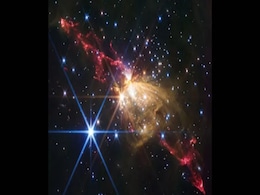
James Webb Space Telescope Spots Rare Protostar Blasting Twin Jets Across Milky Way
NASA’s James Webb Space Telescope has captured a rare protostar about ten times the Sun’s mass blasting twin jets nearly eight light-years long. The beams carve through the glowing Sharpless 2-284 nebula, offering astronomers a vivid glimpse into how massive stars form and shape their galactic environment.
-
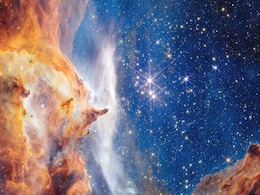
NASA's James Webb Space Telescope Captures Lobster Nebula’s Towering Spires and Massive Stars
NASA’s Webb Telescope imaged the Lobster Nebula (NGC 6357), 5,500 light-years away. Its young star cluster, Pismis 24, contains giant stars carving glowing gas pillars. Pismis 24-1, once thought to be one supermassive star, is a triple system with stars up to 74 times the Sun’s mass.
-
Asteroids vs Comets vs Meteors vs Meteorites: What Are They and How Are They Different From Each Other?
Asteroids, comets, meteoroids, meteors, and meteorites may seem similar, but each plays a unique role in the Solar System. Asteroids are rocky remnants, comets are icy wanderers, meteors are shooting stars, and meteorites are fragments that survive the plunge to Earth.
-
Scientists Say Dark Matter Could Turn Failed Stars Into ‘Dark Dwarfs’
Astronomers suggest that brown dwarfs—dim, failed stars—could transform into “dark dwarfs” by capturing dark matter in their cores. When dark matter particles annihilate, they release heat, potentially lighting up these stars. Physicist Jeremy Sakstein and researchers like Jillian Paulin and Rebecca Leane support this idea, which could help...
-
Dark Dwarfs: New Star-Like Objects May Reveal Nature of Dark Matter
Scientists have proposed a new class of stellar objects called “dark dwarfs,” sub-stellar bodies that may glow faintly from the energy released by annihilating dark matter particles. Found near the galaxy’s core, these objects could hold crucial clues about the elusive nature of dark matter. Powered not by fusion but by WIMP-like particles, d...
-
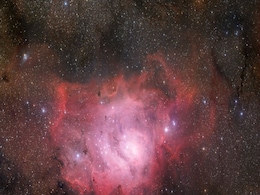
Astrophotographer Captures Stunning Portrait of Lagoon and Trifid Nebulas in Glowing Detail
Astrophotographer Greg Meyer captured a vivid 34-hour exposure of the Lagoon and Trifid nebulas glowing in the constellation Sagittarius. Framed beneath a dense starfield, the image reveals young stars sculpting gas and dust across 4,000 light-years. Taken from Arizona’s dark skies, the portrait offers a dazzling glimpse into stellar birth region...
-
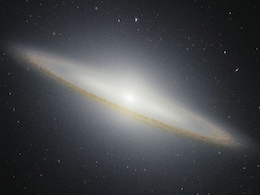
James Webb Space Telescope Captures Stunning Near-Infrared View of Sombrero Galaxy
NASA has unveiled a spectacular near-infrared image of the Sombrero Galaxy taken by the James Webb Space Telescope. This fresh perspective showcases the glowing stellar bulge and dust distribution, deepening our understanding of how galaxies evolve over time.
-
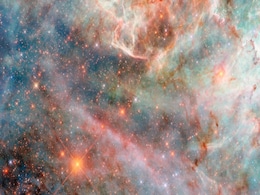
Hubble Unveils Galactic ‘Cotton Candy’ in the Large Magellanic Cloud
NASA’s Hubble Space Telescope has captured a breathtaking image of glowing gas and dust in the Large Magellanic Cloud, a dwarf galaxy orbiting the Milky Way. The colorful filaments—nicknamed “galactic cotton candy”—highlight active star-forming regions. Taken with five filters across ultraviolet to infrared wavelengths, the image reveals ...
-
Astronomers Discover Closest Known Molecular Cloud to Earth
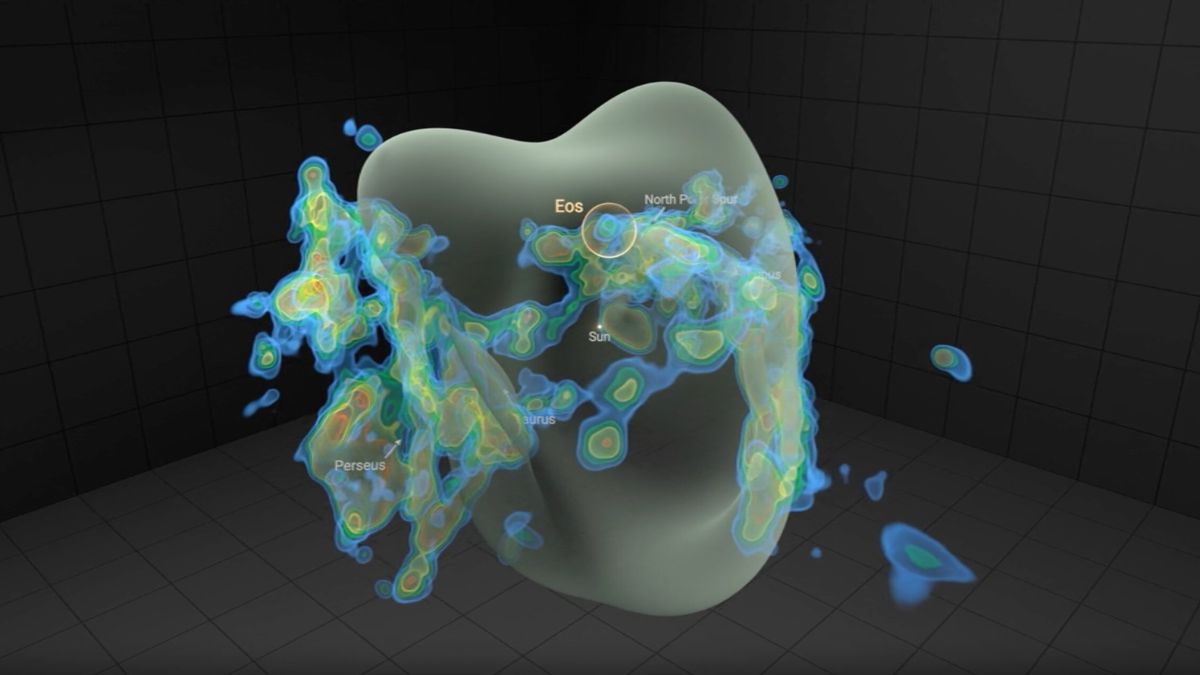
Astronomers have discovered Eos, a massive, crescent-shaped molecular cloud only 300 light-years from Earth, making it the closest known cloud of its kind. Unlike most molecular clouds, Eos contains little carbon monoxide, which is typically used to detect such formations. Instead, it was found by tracking the faint glow of hydrogen. Shaped by cosm...


-
James Webb Captures Stunning Infrared Image of the Helix Nebula Eye of God
The James Webb Space Telescope has captured a detailed infrared image of the Helix Nebula, also known as the “Eye of God.” The glowing ring of gas around a white dwarf star reveals filaments and knots formed as stellar winds collide with older material, offering insight into the fate of Sun-like stars.
-
Hubble Observations Turn Exoplanet Into Dust; Reveal Rare Double Asteroid Impact in Nearby System
NASA’s Hubble Space Telescope has revealed that a vanished exoplanet near the star Fomalhaut was never a planet at all. Scientists discovered two rare, violent collisions between asteroid-sized bodies, producing glowing debris clouds that briefly mimicked planets. The findings offer a rare glimpse into how planetary systems evolve and how mislead...
-
Astronomers Look to the Large Magellanic Cloud to Study How Stars Are Born
The Large Magellanic Cloud is a nearby dwarf galaxy glowing with star birth. Just 160,000 light-years away, it hosts vast nebulae like the Tarantula and historic events such as Supernova 1987A, offering astronomers a rare, close-up laboratory to study how stars form, evolve, and explode.
-
Scientists Study Ancient Interstellar Comet 3I/ATLAS, Seeking Clues to Early Star System Formation
Comet 3I/ATLAS, a rare interstellar visitor from beyond the solar system, is putting on a striking celestial show as it nears Earth. After passing perihelion in October, the comet brightened nearly tenfold and shifted from red to green due to glowing carbon molecules. Tracked closely by astronomers worldwide, this ancient object offers a unique opp...
-
Scientists May Have Come Closer To Confirming Dark Matter's Existence, New Study Finds Clue
The study notes that if excess gamma light is not from dying stars, it could become the first proof that dark matter exists.
-
Scientists Create Most Detailed Radio Map of Early Universe Using MWA
Scientists using the Murchison Widefield Array in Australia analyzed nine years of radio data to study the elusive 21-cm hydrogen signal from the universe’s dark ages. Their findings suggest early black holes and stars had already heated cosmic gas, marking the first observational evidence of this warming phase.
-
James Webb Space Telescope Spots Rare Protostar Blasting Twin Jets Across Milky Way
NASA’s James Webb Space Telescope has captured a rare protostar about ten times the Sun’s mass blasting twin jets nearly eight light-years long. The beams carve through the glowing Sharpless 2-284 nebula, offering astronomers a vivid glimpse into how massive stars form and shape their galactic environment.
-
NASA's James Webb Space Telescope Captures Lobster Nebula’s Towering Spires and Massive Stars
NASA’s Webb Telescope imaged the Lobster Nebula (NGC 6357), 5,500 light-years away. Its young star cluster, Pismis 24, contains giant stars carving glowing gas pillars. Pismis 24-1, once thought to be one supermassive star, is a triple system with stars up to 74 times the Sun’s mass.
-
Asteroids vs Comets vs Meteors vs Meteorites: What Are They and How Are They Different From Each Other?
Asteroids, comets, meteoroids, meteors, and meteorites may seem similar, but each plays a unique role in the Solar System. Asteroids are rocky remnants, comets are icy wanderers, meteors are shooting stars, and meteorites are fragments that survive the plunge to Earth.
-
Scientists Say Dark Matter Could Turn Failed Stars Into ‘Dark Dwarfs’
Astronomers suggest that brown dwarfs—dim, failed stars—could transform into “dark dwarfs” by capturing dark matter in their cores. When dark matter particles annihilate, they release heat, potentially lighting up these stars. Physicist Jeremy Sakstein and researchers like Jillian Paulin and Rebecca Leane support this idea, which could help...
-
Dark Dwarfs: New Star-Like Objects May Reveal Nature of Dark Matter
Scientists have proposed a new class of stellar objects called “dark dwarfs,” sub-stellar bodies that may glow faintly from the energy released by annihilating dark matter particles. Found near the galaxy’s core, these objects could hold crucial clues about the elusive nature of dark matter. Powered not by fusion but by WIMP-like particles, d...
-
Astrophotographer Captures Stunning Portrait of Lagoon and Trifid Nebulas in Glowing Detail
Astrophotographer Greg Meyer captured a vivid 34-hour exposure of the Lagoon and Trifid nebulas glowing in the constellation Sagittarius. Framed beneath a dense starfield, the image reveals young stars sculpting gas and dust across 4,000 light-years. Taken from Arizona’s dark skies, the portrait offers a dazzling glimpse into stellar birth region...
-
James Webb Space Telescope Captures Stunning Near-Infrared View of Sombrero Galaxy
NASA has unveiled a spectacular near-infrared image of the Sombrero Galaxy taken by the James Webb Space Telescope. This fresh perspective showcases the glowing stellar bulge and dust distribution, deepening our understanding of how galaxies evolve over time.
-
Hubble Unveils Galactic ‘Cotton Candy’ in the Large Magellanic Cloud
NASA’s Hubble Space Telescope has captured a breathtaking image of glowing gas and dust in the Large Magellanic Cloud, a dwarf galaxy orbiting the Milky Way. The colorful filaments—nicknamed “galactic cotton candy”—highlight active star-forming regions. Taken with five filters across ultraviolet to infrared wavelengths, the image reveals ...
-
Astronomers Discover Closest Known Molecular Cloud to Earth
Astronomers have discovered Eos, a massive, crescent-shaped molecular cloud only 300 light-years from Earth, making it the closest known cloud of its kind. Unlike most molecular clouds, Eos contains little carbon monoxide, which is typically used to detect such formations. Instead, it was found by tracking the faint glow of hydrogen. Shaped by cosm...

