



Atomic Clock
-
{
- All
- News
-

UK Top Secret Lab Develops 'Groundbreaking' Quantum Clock For Military Use
The trial is the first time that DSTL has tested a UK-built optical atomic clock outside of a laboratory, offering a new capability beyond the Global Navigation Satellite Systems (GNSS) that currently exist.
-
Here's How Nuclear Clocks Could Redefine Time and Reshape Modern Technology
Timekeeping is entering a new era with nuclear clocks, capable of achieving accuracy to the 19th decimal place. Current atomic clocks rely on caesium-133, but innovations with thorium-229’s nuclear transitions, excited by ultraviolet light, promise unprecedented precision. Scientists aim to redefine the second using elements like strontium by 203...
-
Chinese Scientists Seek To Redefine Second With New Ultra-Precise Clock
The current record holder is the optical clock hosted by the University of Colorado in Boulder. It was developed by a group led by Chinese-American physicist Jun Ye.
-
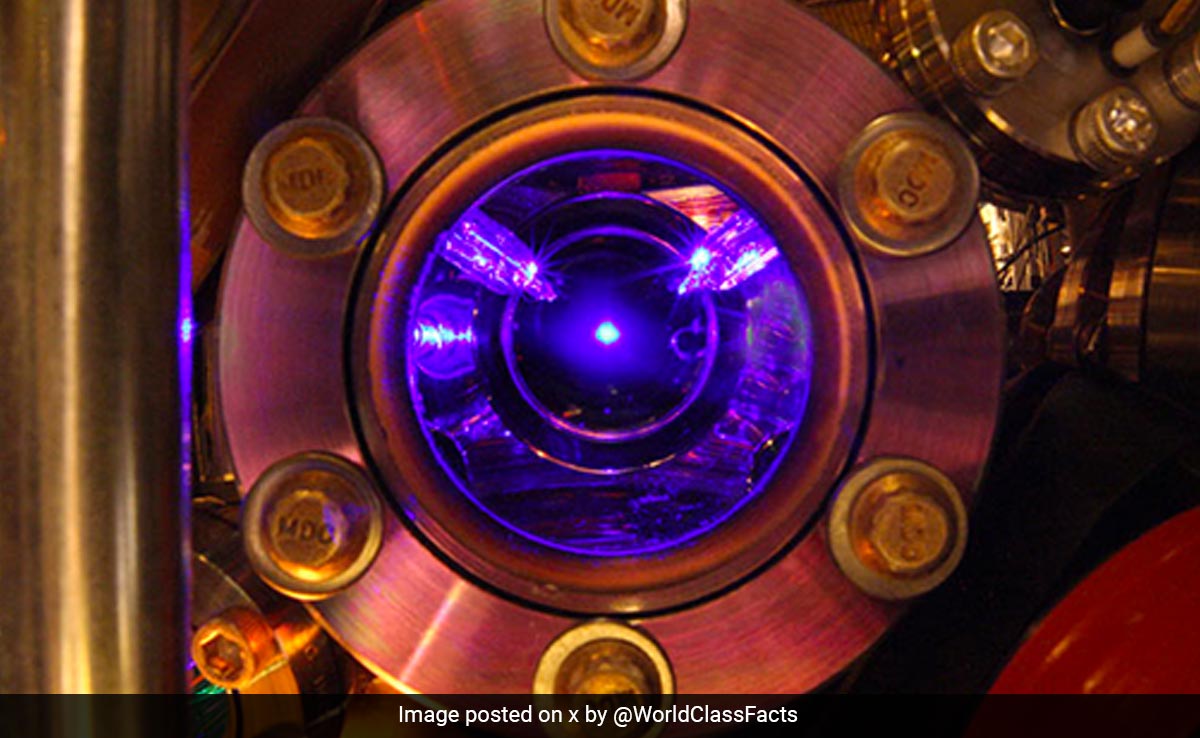
New atomic clock is good for accurate timekeeping for 300 million years
The clocks uses cesium atom - which is more than 9.1 billion vibrations per second to determine the exact length of a second.
-
It's about time: New atomic clock is more accurate
Good news for people who are sticklers for punctuality: The National Institute of Standards and Technology has a new atomic clock that isn't supposed to gain or lose a second in roughly 300 million years.

-
UK Top Secret Lab Develops 'Groundbreaking' Quantum Clock For Military Use
The trial is the first time that DSTL has tested a UK-built optical atomic clock outside of a laboratory, offering a new capability beyond the Global Navigation Satellite Systems (GNSS) that currently exist.
-
Here's How Nuclear Clocks Could Redefine Time and Reshape Modern Technology
Timekeeping is entering a new era with nuclear clocks, capable of achieving accuracy to the 19th decimal place. Current atomic clocks rely on caesium-133, but innovations with thorium-229’s nuclear transitions, excited by ultraviolet light, promise unprecedented precision. Scientists aim to redefine the second using elements like strontium by 203...
-
Chinese Scientists Seek To Redefine Second With New Ultra-Precise Clock
The current record holder is the optical clock hosted by the University of Colorado in Boulder. It was developed by a group led by Chinese-American physicist Jun Ye.
-
New atomic clock is good for accurate timekeeping for 300 million years
The clocks uses cesium atom - which is more than 9.1 billion vibrations per second to determine the exact length of a second.
-
It's about time: New atomic clock is more accurate
Good news for people who are sticklers for punctuality: The National Institute of Standards and Technology has a new atomic clock that isn't supposed to gain or lose a second in roughly 300 million years.

