Astronomy Discovery
- All
- News
- Videos
-
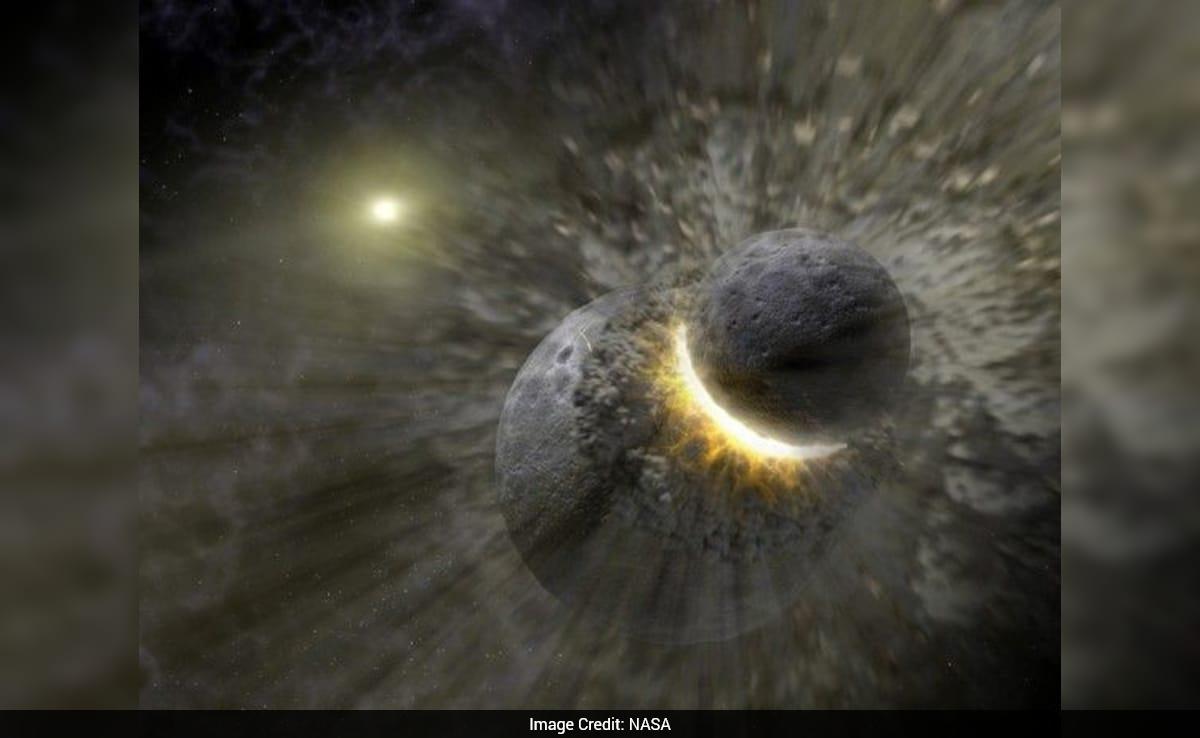
Dramatic Planet Collision In Distant Galaxy May Explain How Earth's Moon Was Formed 4.5 Billion Years Ago
- Friday March 13, 2026
- Feature | Edited by Abhinav Singh
Scientists observe a dramatic collision between two planets, offering insights into the formation of Earth's Moon 4.5 billion years ago.
-
www.ndtv.com
-
Chandra Detects Giant X-Ray Bubble Around Young Sun-Like Star HD 61005
- Tuesday February 24, 2026
- Written by Gadgets 360 Staff
NASA astronomers using the Chandra X-ray Observatory have discovered a vast, million-degree gas bubble surrounding HD 61005, a 100-million-year-old Sun-like star about 120 light-years away. Its stellar wind is far stronger than today’s solar wind, forming a 200 astronomical unit-wide astrosphere that offers rare insight into how the young Sun onc...
-
www.gadgets360.com
-
Scientists Identify Rare Black Hole Merger in the Early Universe Using Gravitational Mapping
- Monday February 16, 2026
- Written by Gadgets 360 Staff
Astronomers have identified two merging supermassive black hole systems named Gondor and Rohan using a new method combining quasars and gravitational wave background signals. The discovery offers a fresh way to map black hole mergers and understand galaxy evolution and cosmic gravitational waves in a clearer and more systematic manner.
-
www.gadgets360.com
-
Unique Inside-Out Planetary System Reveals Unexpected Rocky World on the Outer Edge
- Friday February 13, 2026
- Written by Gadgets 360 Staff
Astronomers have discovered a rare inside-out planetary system around LHS 1903, where a rocky planet exists beyond gas giants. Using ESA’s CHEOPS telescope, researchers found evidence that planets formed one after another in a gas-depleted environment, challenging long-standing theories about how planetary systems form and evolve across the galax...
-
www.gadgets360.com
-
Astronomers Witness Rare Failed Supernova in Andromeda Galaxy
- Friday February 13, 2026
- Written by Gadgets 360 Staff
NASA’s NEOWISE infrared telescope has provided striking evidence that a massive star in the Andromeda galaxy collapsed directly into a black hole without exploding as a supernova. The star, M31-2014-DS1, faded dramatically in visible light while leaving a faint infrared glow from surrounding dust. Astronomers say this rare “failed supernova” ...
-
www.gadgets360.com
-
James Webb Space Telescope Finds Most Distant Galaxy Ever Detected
- Sunday February 8, 2026
- Written by Gadgets 360 Staff
The James Webb Space Telescope has discovered MoM-z14, the most distant galaxy ever observed, dating to just 280 million years after the Big Bang. The galaxy’s brightness, chemical richness, and structure challenge existing theories of early cosmic evolution. Scientists say the finding highlights a growing gap between models and observations of t...
-
www.gadgets360.com
-
Scientists Solve Mystery Of Puzzling Radio Pulses From Space
- Monday February 2, 2026
- World News | The Conversation
Cosmic radio pulses repeating every few minutes or hours, known as long-period transients, have puzzled astronomers since their discovery in 2022. Our new study, published in Nature Astronomy today, might finally add some clarity.
-
www.ndtv.com
-
Astronomers Solve the Mystery Behind M87’s Enormous Space Jet
- Saturday January 31, 2026
- Written by Gadgets 360 Staff
Astronomers have directly linked the supermassive black hole M87* to its enormous plasma jet using new Event Horizon Telescope data. The findings reveal where the jet originates near the black hole’s shadow, providing crucial insight into how black holes launch matter at nearly the speed of light.
-
www.gadgets360.com
-
Indian-Origin Astronomer Wins UK's Royal Astronomical Society Gold Medal
- Tuesday January 13, 2026
- World News | Press Trust of India
US-based astronomer Professor Shrinivas Kulkarni has been awarded the prestigious Gold Medal by the Royal Astronomical Society (RAS) in London for his "field-defining" discoveries in time-domain astronomy.
-
www.ndtv.com
-
Rubin Observatory Discovers Fastest-Spinning Large Asteroid Ever Seen
- Sunday January 11, 2026
- Written by Gadgets 360 Staff
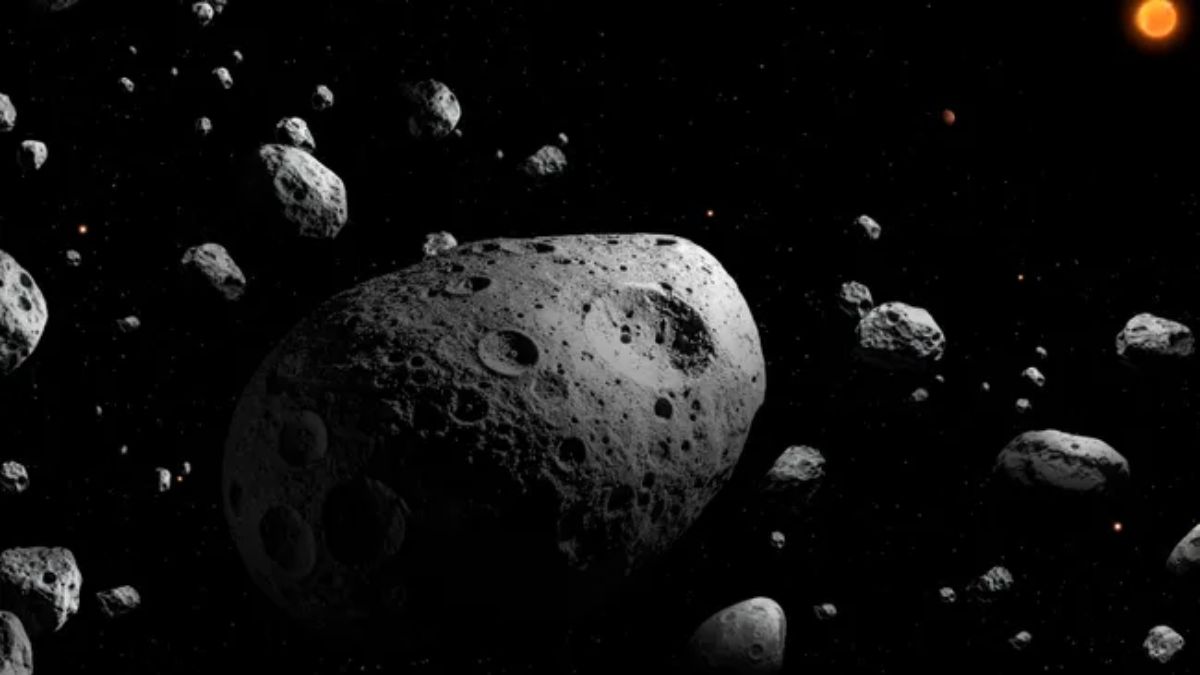
Astronomers using the Vera C. Rubin Observatory have discovered asteroid 2025 MN45, the fastest-spinning large asteroid ever recorded. About 710 metres wide, the object completes one full rotation every 1.88 minutes—far quicker than any asteroid of similar size. The finding emerged from an early survey that detected nearly 2,000 new asteroids, in...
-
www.gadgets360.com
-
Dramatic Planet Collision In Distant Galaxy May Explain How Earth's Moon Was Formed 4.5 Billion Years Ago
- Friday March 13, 2026
- Feature | Edited by Abhinav Singh
Scientists observe a dramatic collision between two planets, offering insights into the formation of Earth's Moon 4.5 billion years ago.
-
www.ndtv.com
-
Chandra Detects Giant X-Ray Bubble Around Young Sun-Like Star HD 61005
- Tuesday February 24, 2026
- Written by Gadgets 360 Staff
NASA astronomers using the Chandra X-ray Observatory have discovered a vast, million-degree gas bubble surrounding HD 61005, a 100-million-year-old Sun-like star about 120 light-years away. Its stellar wind is far stronger than today’s solar wind, forming a 200 astronomical unit-wide astrosphere that offers rare insight into how the young Sun onc...
-
www.gadgets360.com
-
Scientists Identify Rare Black Hole Merger in the Early Universe Using Gravitational Mapping
- Monday February 16, 2026
- Written by Gadgets 360 Staff
Astronomers have identified two merging supermassive black hole systems named Gondor and Rohan using a new method combining quasars and gravitational wave background signals. The discovery offers a fresh way to map black hole mergers and understand galaxy evolution and cosmic gravitational waves in a clearer and more systematic manner.
-
www.gadgets360.com
-
Unique Inside-Out Planetary System Reveals Unexpected Rocky World on the Outer Edge
- Friday February 13, 2026
- Written by Gadgets 360 Staff
Astronomers have discovered a rare inside-out planetary system around LHS 1903, where a rocky planet exists beyond gas giants. Using ESA’s CHEOPS telescope, researchers found evidence that planets formed one after another in a gas-depleted environment, challenging long-standing theories about how planetary systems form and evolve across the galax...
-
www.gadgets360.com
-
Astronomers Witness Rare Failed Supernova in Andromeda Galaxy
- Friday February 13, 2026
- Written by Gadgets 360 Staff
NASA’s NEOWISE infrared telescope has provided striking evidence that a massive star in the Andromeda galaxy collapsed directly into a black hole without exploding as a supernova. The star, M31-2014-DS1, faded dramatically in visible light while leaving a faint infrared glow from surrounding dust. Astronomers say this rare “failed supernova” ...
-
www.gadgets360.com
-
James Webb Space Telescope Finds Most Distant Galaxy Ever Detected
- Sunday February 8, 2026
- Written by Gadgets 360 Staff
The James Webb Space Telescope has discovered MoM-z14, the most distant galaxy ever observed, dating to just 280 million years after the Big Bang. The galaxy’s brightness, chemical richness, and structure challenge existing theories of early cosmic evolution. Scientists say the finding highlights a growing gap between models and observations of t...
-
www.gadgets360.com
-
Scientists Solve Mystery Of Puzzling Radio Pulses From Space
- Monday February 2, 2026
- World News | The Conversation
Cosmic radio pulses repeating every few minutes or hours, known as long-period transients, have puzzled astronomers since their discovery in 2022. Our new study, published in Nature Astronomy today, might finally add some clarity.
-
www.ndtv.com
-
Astronomers Solve the Mystery Behind M87’s Enormous Space Jet
- Saturday January 31, 2026
- Written by Gadgets 360 Staff
Astronomers have directly linked the supermassive black hole M87* to its enormous plasma jet using new Event Horizon Telescope data. The findings reveal where the jet originates near the black hole’s shadow, providing crucial insight into how black holes launch matter at nearly the speed of light.
-
www.gadgets360.com
-
Indian-Origin Astronomer Wins UK's Royal Astronomical Society Gold Medal
- Tuesday January 13, 2026
- World News | Press Trust of India
US-based astronomer Professor Shrinivas Kulkarni has been awarded the prestigious Gold Medal by the Royal Astronomical Society (RAS) in London for his "field-defining" discoveries in time-domain astronomy.
-
www.ndtv.com
-
Rubin Observatory Discovers Fastest-Spinning Large Asteroid Ever Seen
- Sunday January 11, 2026
- Written by Gadgets 360 Staff
Astronomers using the Vera C. Rubin Observatory have discovered asteroid 2025 MN45, the fastest-spinning large asteroid ever recorded. About 710 metres wide, the object completes one full rotation every 1.88 minutes—far quicker than any asteroid of similar size. The finding emerged from an early survey that detected nearly 2,000 new asteroids, in...
-
www.gadgets360.com