



Astrobiology
-
{
- All
- News
-

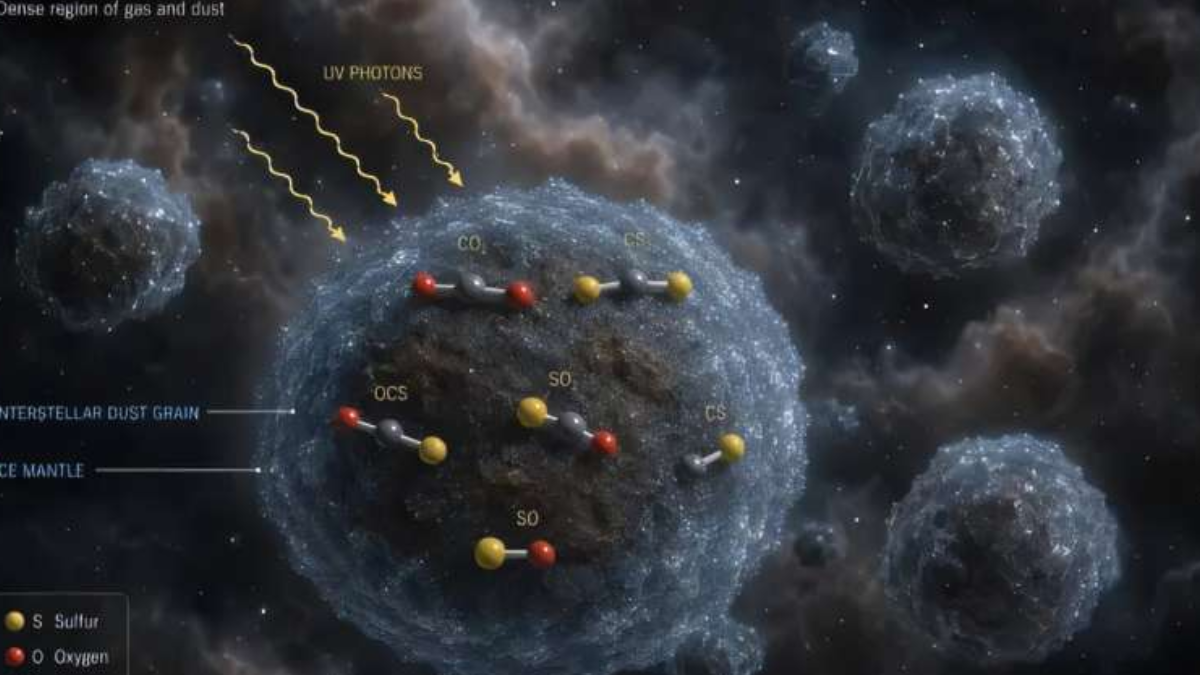
Scientists May Have Solved the Missing Sulfur Mystery in Star-Forming Clouds
A new simulation suggests sulfur in star-forming clouds may be locked inside icy dust grains through previously overlooked chemical reactions. The findings offer fresh clues to a decades-old cosmic mystery and could improve our understanding of life's essential ingredients in space.
-
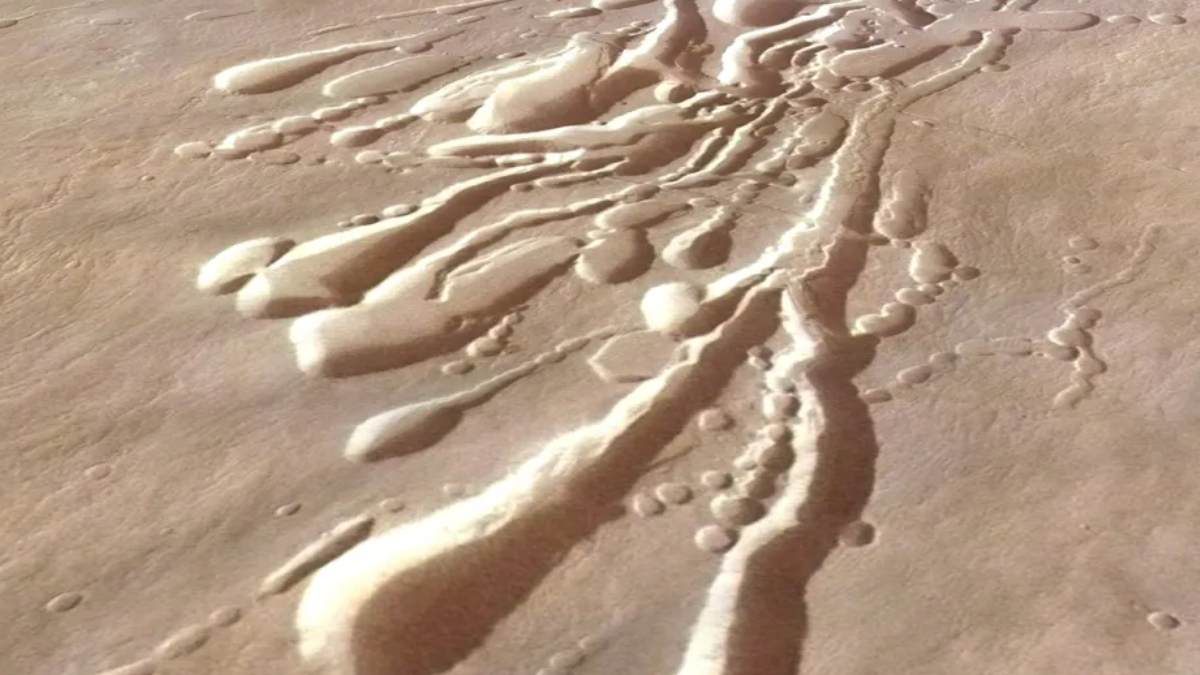
Scientists Develop Swarm Robots to Explore Hidden Lava Tubes on Mars
Scientists are developing biomimicry-inspired robots to explore enormous lava tubes beneath Mars. The underground caves could preserve signs of life and potentially shelter future human explorers from harsh Martian radiation.
-
New Biosignature Method Could Transform Search for Alien Life
Researchers developed a new method to detect Life by studying how biological molecules are organized rather than simply identifying them. The approach could help missions like Europa Clipper search for microbial signatures on worlds such as Europa and Mars.
-
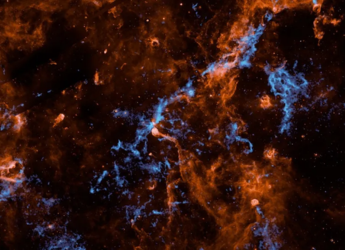
NASA’s SPHEREx Maps Water Ice Deposits in Cygnus X, Offering Clues to Earth’s Water
SPHEREx has mapped vast ice deposits in Cygnus X, revealing how water and life-forming chemicals may be preserved and delivered to newly forming planets.
-
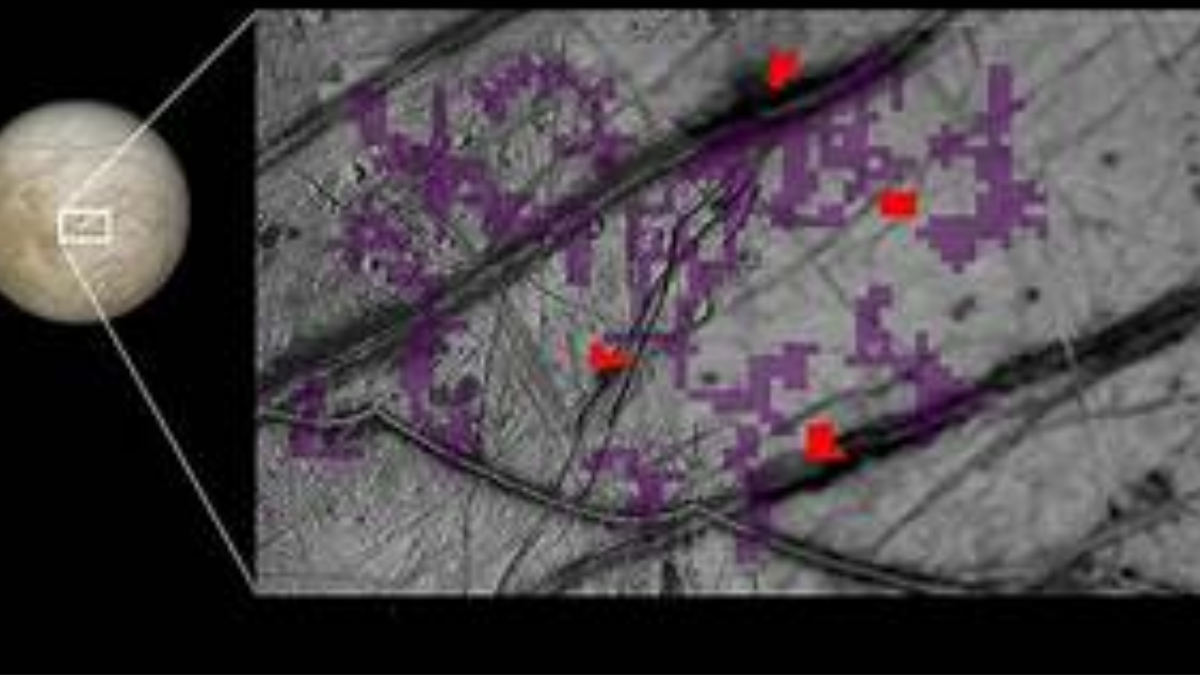
NASA Finds a Crucial Life-Building Chemical on Jupiter’s Moon
Scientists studying archival Galileo spacecraft data have identified ammonia-bearing compounds on Europa for the first time. The ammonia appears along surface cracks, indicating recent transport from the moon’s subsurface ocean. Because ammonia contains nitrogen and degrades quickly under radiation, its presence strengthens Europa’s status as a...
-
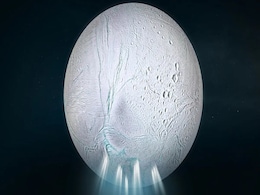
Saturn’s Icy Moon Enceladus Organic Molecules May Have Been Fromed by Cosmic Rays, Scientists Find
Laboratory experiments reveal that radiation striking Saturn’s icy moon Enceladus can create simple organic molecules, reshaping how scientists interpret Cassini’s data and highlighting radiation’s key role in the chemistry of icy moons.
-
Newly Found ‘Super-Earth’ GJ 251 c Could Be One of the Most Promising Worlds for Alien Life
A new super-Earth, GJ 251 c, has been found orbiting a nearby red dwarf star within its habitable zone. About four times Earth’s mass, it may host liquid water. Detected via the radial-velocity method using Penn State’s Habitable Zone Planet Finder, it’s a prime target in the search for life.
-
Saturn’s Moon Enceladus Spouts Complex Organics That Could Hold Clues to Life
Analysis of Cassini data confirms Saturn’s moon Enceladus emits organic molecules, suggesting its subsurface ocean may harbor chemistry conducive to life.
-
Study Links Microbial Colonization to Ancient Meteorite Crater: What You Need to Know
A Swedish team has precisely dated microbial life in Finland’s Lappajärvi crater. Isotopic traces show bacteria colonized the hydrothermal system just a few million years after the meteorite impact, thriving for millions of years. The finding suggests impact craters on Earth and Mars may provide lasting habitats for life.
-
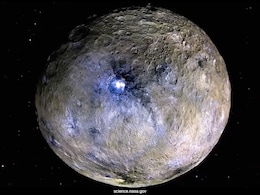
Life In Asteroid Belt? New Research Suggests Ceres Was Once Habitable
A new study based on data from NASA's Dawn mission suggests that Ceres, the largest object in the asteroid belt, may have been capable of supporting single-celled life billions of years ago.
-
Scientists Explore Role of Space Radiation in Powering Alien Microbial Life
A new study proposes that life may exist far from sunlight in a “radiolytic habitable zone” deep beneath the icy surfaces of Mars, Europa, and Enceladus. Cosmic rays, which can penetrate rock and ice, break water molecules apart to release hydrogen, oxygen, and energy-rich electrons. These can fuel microbes in subsurface water, much like bacter...
-
New Habitability Model Helps Identify Which Alien Planets Might Be Able to Host Life
A NASA-developed model now enables scientists to estimate the likelihood of life on distant planets or moons using limited and uncertain remote-sensing data. By comparing habitat conditions with known lifeforms or hypothetical organisms, the framework offers a probabilistic tool to assess alien environments and improve telescope targeting in the on...
-
Are We Alone? Breakthrough Study Reveals New Way To Find Alien Life
A new model developed by Daniel Apai and his team offers a comprehensive method to assess the habitability of exoplanets, moving beyond traditional water-centric criteria.
-
Life on Mars? Studies Suggest Bacteria-Like Organisms Could Exist
New findings indicate that Mars' past conditions may have supported microbial life. Research draws parallels with extremophiles—microorganisms that thrive in extreme environments on Earth. Studies on bacteria like Helicobacter pylori suggest that if life exists on Mars, it might resemble resilient microbes found in human stomachs. Scientists cont...
-
New Study Challenges Great Filter Theory, Suggests Life Evolves with Planetary Changes
A recent study argues that intelligent life does not emerge by sheer luck but evolves when planetary conditions become suitable. Researchers challenge the "great filter" concept, suggesting that Earth's changing geobiology influenced when life arose rather than a series of improbable events. This perspective shifts the focus to how planetary enviro...





-
Scientists May Have Solved the Missing Sulfur Mystery in Star-Forming Clouds
A new simulation suggests sulfur in star-forming clouds may be locked inside icy dust grains through previously overlooked chemical reactions. The findings offer fresh clues to a decades-old cosmic mystery and could improve our understanding of life's essential ingredients in space.
-
Scientists Develop Swarm Robots to Explore Hidden Lava Tubes on Mars
Scientists are developing biomimicry-inspired robots to explore enormous lava tubes beneath Mars. The underground caves could preserve signs of life and potentially shelter future human explorers from harsh Martian radiation.
-
New Biosignature Method Could Transform Search for Alien Life
Researchers developed a new method to detect Life by studying how biological molecules are organized rather than simply identifying them. The approach could help missions like Europa Clipper search for microbial signatures on worlds such as Europa and Mars.
-
NASA’s SPHEREx Maps Water Ice Deposits in Cygnus X, Offering Clues to Earth’s Water
SPHEREx has mapped vast ice deposits in Cygnus X, revealing how water and life-forming chemicals may be preserved and delivered to newly forming planets.
-
NASA Finds a Crucial Life-Building Chemical on Jupiter’s Moon
Scientists studying archival Galileo spacecraft data have identified ammonia-bearing compounds on Europa for the first time. The ammonia appears along surface cracks, indicating recent transport from the moon’s subsurface ocean. Because ammonia contains nitrogen and degrades quickly under radiation, its presence strengthens Europa’s status as a...
-
Saturn’s Icy Moon Enceladus Organic Molecules May Have Been Fromed by Cosmic Rays, Scientists Find
Laboratory experiments reveal that radiation striking Saturn’s icy moon Enceladus can create simple organic molecules, reshaping how scientists interpret Cassini’s data and highlighting radiation’s key role in the chemistry of icy moons.
-
Newly Found ‘Super-Earth’ GJ 251 c Could Be One of the Most Promising Worlds for Alien Life
A new super-Earth, GJ 251 c, has been found orbiting a nearby red dwarf star within its habitable zone. About four times Earth’s mass, it may host liquid water. Detected via the radial-velocity method using Penn State’s Habitable Zone Planet Finder, it’s a prime target in the search for life.
-
Saturn’s Moon Enceladus Spouts Complex Organics That Could Hold Clues to Life
Analysis of Cassini data confirms Saturn’s moon Enceladus emits organic molecules, suggesting its subsurface ocean may harbor chemistry conducive to life.
-
Study Links Microbial Colonization to Ancient Meteorite Crater: What You Need to Know
A Swedish team has precisely dated microbial life in Finland’s Lappajärvi crater. Isotopic traces show bacteria colonized the hydrothermal system just a few million years after the meteorite impact, thriving for millions of years. The finding suggests impact craters on Earth and Mars may provide lasting habitats for life.
-
Life In Asteroid Belt? New Research Suggests Ceres Was Once Habitable
A new study based on data from NASA's Dawn mission suggests that Ceres, the largest object in the asteroid belt, may have been capable of supporting single-celled life billions of years ago.
-
Scientists Explore Role of Space Radiation in Powering Alien Microbial Life
A new study proposes that life may exist far from sunlight in a “radiolytic habitable zone” deep beneath the icy surfaces of Mars, Europa, and Enceladus. Cosmic rays, which can penetrate rock and ice, break water molecules apart to release hydrogen, oxygen, and energy-rich electrons. These can fuel microbes in subsurface water, much like bacter...
-
New Habitability Model Helps Identify Which Alien Planets Might Be Able to Host Life
A NASA-developed model now enables scientists to estimate the likelihood of life on distant planets or moons using limited and uncertain remote-sensing data. By comparing habitat conditions with known lifeforms or hypothetical organisms, the framework offers a probabilistic tool to assess alien environments and improve telescope targeting in the on...
-
Are We Alone? Breakthrough Study Reveals New Way To Find Alien Life
A new model developed by Daniel Apai and his team offers a comprehensive method to assess the habitability of exoplanets, moving beyond traditional water-centric criteria.
-
Life on Mars? Studies Suggest Bacteria-Like Organisms Could Exist
New findings indicate that Mars' past conditions may have supported microbial life. Research draws parallels with extremophiles—microorganisms that thrive in extreme environments on Earth. Studies on bacteria like Helicobacter pylori suggest that if life exists on Mars, it might resemble resilient microbes found in human stomachs. Scientists cont...
-
New Study Challenges Great Filter Theory, Suggests Life Evolves with Planetary Changes
A recent study argues that intelligent life does not emerge by sheer luck but evolves when planetary conditions become suitable. Researchers challenge the "great filter" concept, suggesting that Earth's changing geobiology influenced when life arose rather than a series of improbable events. This perspective shifts the focus to how planetary enviro...

