





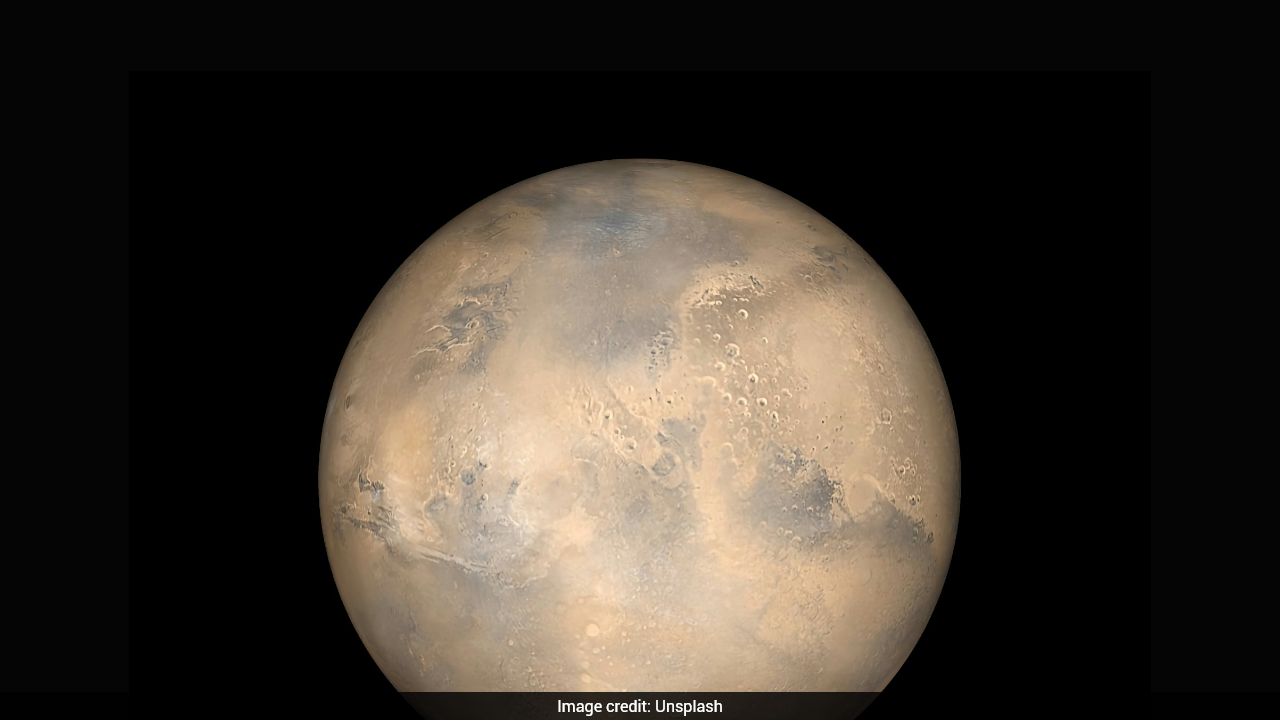
NASA is planning a crewed mission to Mars, targeting a potential launch in the 2030s. The mission is expected to take around 34 to 36 months total for a round trip. But preparations are currently underway, with the space agency trying to figure out how to feed the astronauts on the mission. NASA recently launched a Deep Space Food Challenge: Mars to Table, and a 25-year-old computer scientist and designer from Northeast Philadelphia claimed the top $300,000 prize.
According to the space agency, Chinyere Ukeje emerged as the primary winner after competing against more than 100 entries from 28 states and 33 countries.
Her winning concept, named the Adaptive Nourishment Infrastructure (ANI), was centred around how space crews might grow, prepare, and eat nutritious meals millions of miles away from Earth.
Also read | US Teen Seriously Injured By Truck While Recording TikTok Haircut Stunt
"We're thrilled to keep advancing the future of space food systems with this challenge," said Jennifer Edmunson, program manager for Centennial Challenges at NASA's Marshall Space Flight Center in Huntsville, Alabama.
"The future of human space exploration will rely on innovative food systems, and it is amazing how much ingenuity this challenge has helped us identify from participants near and far."
Sending humans to Mars presents severe logistical challenges. Providing them with food, along with nutrients, won't be an easy task for the researchers.
Currently, astronauts aboard the International Space Station (ISS) rely on pre-packaged meals shipped directly from Earth. However, pre-packaged food gradually loses vitamins and flavour over time.
Also read | Delivery Robots Cause Minor Traffic Jam At Pedestrian Crossing In Russia: 'Like Lost Schoolkids'
To address this, NASA asked public innovators to design reliable food systems which can support a 15-person crew for 500 Martian sols, which is about 513 Earth days.
The space agency asked the contestants to share what would be their daily meal plans, operational frameworks, and visual walkthroughs.
"The criteria we laid out for this competition were challenging, but intentionally so," said Mars to Table head judge Dr Alexander Meyers.
"This challenge spotlights the complexity of a complete space food system and the human ingenuity required to solve these problems. Every new idea presented in this challenge represents a possible new tool in NASA's plans for the future of space exploration."
Ukeje's design focuses on flexibility and sustainability. Rather than relying on a single fail-prone machine, her modular ecosystem is built to handle everyday cooking while staying functional during sudden shortages of power, water, equipment, or crew labour.
According to NASA, "ANI, named after the Nigerian Earth goddess of harvest and fertility, envisions a system that cooks fresh meals daily and has provisions to work through shortages of power, water, equipment, or crew time."
Track Latest News Live on NDTV.com and get news updates from India and around the world

