





Scientists have documented a handful of extraordinarily rare genetic conditions that give their carriers abilities that seem to defy the limits of ordinary human biology. From sleeping only a few hours a night without any ill effects, to surviving car crashes without a single broken bone, these mutations read like the plot of a superhero film. The reality, as researchers caution, is considerably more complicated.
The Four-Hour Sleep Gene
In 2009, UC San Francisco neurology professor Ying-Hui Fu discovered a mutation in the gene DEC2 in a family of natural short sleepers - people who went to bed at a normal time but woke naturally around 5 in the morning. Carriers of the DEC2 mutation need only four to six hours of sleep to feel completely rested.
The mutation is found in around one in 1,000 people, and those who carry it often report feeling worse if they sleep as many as seven hours. Unlike ordinary sleep deprivation, which causes cognitive decline and serious health damage, individuals with the DEC2 mutation sleep less without the usual effects associated with sleep deprivation. Researchers believe the mutation causes the brain to produce more orexin, a hormone linked to wakefulness, keeping carriers alert for longer without the biological cost that exhaustion normally brings.
The Memory That Never Forgets
Hyperthymesia, also known as Highly Superior Autobiographical Memory or HSAM, gives its carriers the ability to recall virtually every day of their lives in vivid, precise detail. It is extraordinarily rare, with fewer than 100 people in the world having been diagnosed with the condition as of 2021.
The seminal 2006 study that identified HSAM described a woman who could effortlessly provide clear and verifiable memories in response to any given date. Since then, almost one hundred more individuals have been identified with the ability.
While it might seem an advantage, HSAM can make it difficult to forget painful or upsetting memories. A healthcare provider can help manage its effects. Jill Price, the first person formally diagnosed, described the experience to researchers as "non-stop, uncontrollable and totally exhausting."
The Toddler Built Like a Bodybuilder
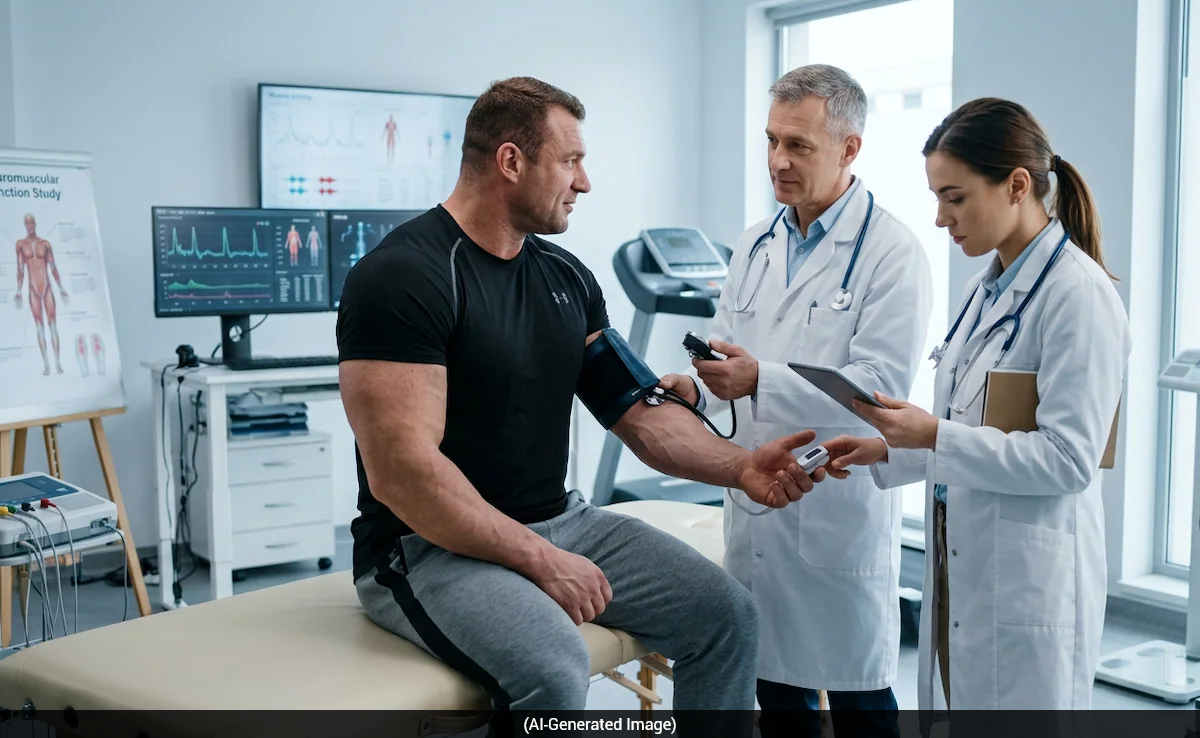
In 2004, German doctors published a case in the New England Journal of Medicine that stunned the medical world. At 4.5 years of age, a child had increased muscle bulk and strength, and was able to hold two 3-kg dumbbells in horizontal suspension with his arms extended. The cause was a loss-of-function mutation in the myostatin gene.
According to ABC News, Myostatin is a protein that limits muscle growth, and when the gene producing it is mutated, muscles can grow far beyond normal limits even without exercise. A second case emerged in the United States, where a boy named Liam Hoekstra was found to have 40% more muscle than others his age.
The condition is not without risk. Researchers have noted that tendons and ligaments do not necessarily grow proportionally stronger alongside the muscles, and the long-term effects on the heart, which is also a muscle, are not yet fully understood.
The Brain That Cannot Feel Fear
Urbach-Wiethe disease is an extremely rare recessive genetic disorder, with roughly 400 cases reported. In some individuals, it causes calcification in the medial temporal lobes, damaging the amygdala-an area central to fear processing. The most studied patient, known as S.M., showed no fear when exposed to snakes, spiders, haunted houses, or frightening films, responding instead with curiosity. However, fear is not entirely absent. When exposed to carbon dioxide simulating suffocation, S.M. experienced intense panic, suggesting fear can arise through brain pathways independent of the amygdala.
The Bones That Cannot Break
In the 1990s, a man survived a devastating car crash without a single broken bone. Doctors found his skeleton had nearly eight times normal density due to sclerosteosis.
Unlike brittle bone disorders, the condition called sclerosteosis greatly increases strength and fracture resistance.
However, uncontrolled bone growth raises intracranial pressure, risking sudden death, deafness, and facial nerve paralysis.
The Life Without Pain
Congenital Insensitivity to Pain with Anhidrosis (CIPA) prevents people from feeling pain or temperature from birth. While it sounds advantageous, sufferers face constant danger from unnoticed injuries, poor wound healing, and joint damage. Because they cannot sweat, they also risk fatal overheating, seizures, and early death-showing pain is essential for survival.
(All conditions described in this article are documented in peer-reviewed medical literature, including publications in the New England Journal of Medicine, PNAS, and databases maintained by the National Institutes of Health and UC San Francisco.)
Track Latest News Live on NDTV.com and get news updates from India and around the world

