



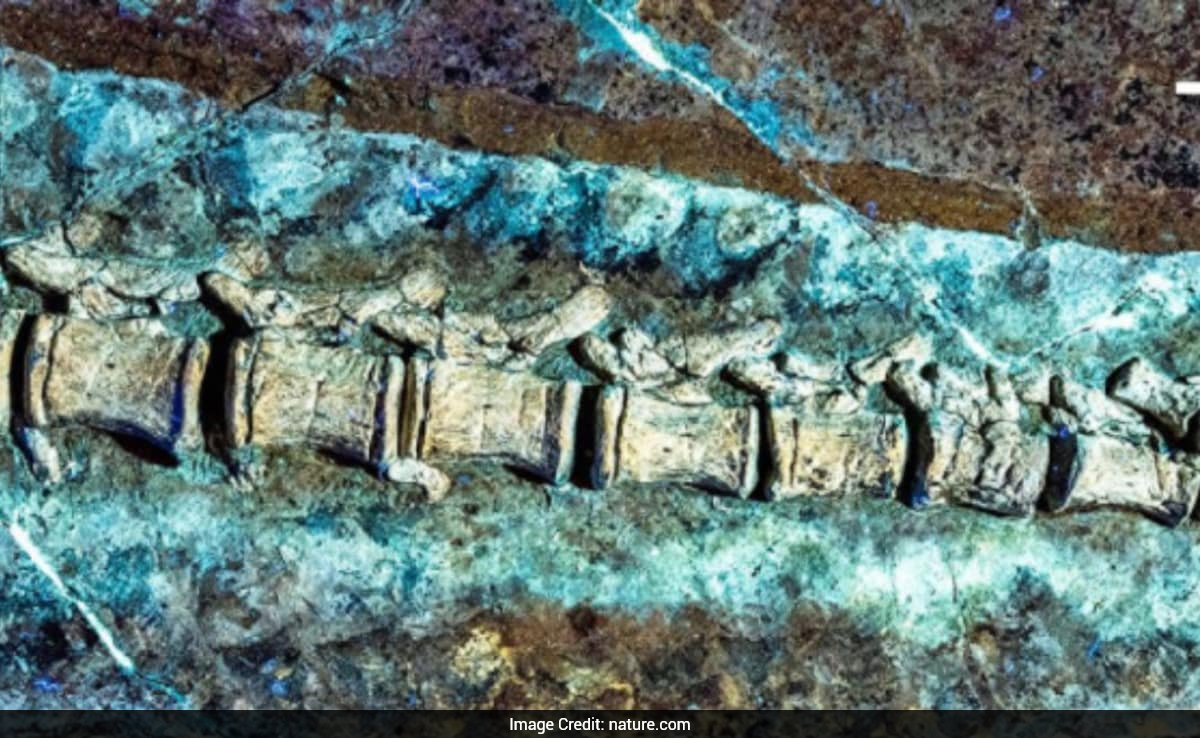
- Haolong dongi is a dinosaur species with hollow spikes like porcupine quills found in China
- The fossil, about 125 million years old, shows skin spikes, not bone structures
- The species belongs to the herbivorous Iguanodontia group from the Early Cretaceous period
A discovery in China has revealed a dinosaur covered in hollow spikes, similar to a porcupine's quills, a feature never seen before in these ancient reptiles. The fossil, found near the village of Xiawujiazi in Liaoning Province, has provided scientists with unprecedented insight into dinosaur biology, reported Newsweek.
The dinosaur has been named Haolong dongi and lived on Earth about 125 million years ago. This juvenile fossil is so well-preserved that even its individual cells can be seen. Researchers used X-ray scans and ultrathin slices to study the spikes, which were examined under a high-resolution microscope. They concluded that these spikes were not part of the dinosaur's bones, but rather part of its skin.
The species is named in memory of Dong Zhiming, a prominent vertebrate paleontologist who made significant contributions to dinosaur research in China.
H dongi is a member of the Iguanodontia group, a group of herbivorous dinosaurs known for their beak-like mouths and strong hind legs. Iguanodontia means "iguana tooth" because their teeth resembled those of modern iguanas. They were first identified in 1822.
According to researchers, Iguanodontia were the dominant herbivores in most terrestrial ecosystems during the Cretaceous period. The group's greatest growth occurred in the Late Cretaceous, when hadrosaurids, or duck-billed dinosaurs, spread across most continents.
During the Early Cretaceous, when H dongi lived, small carnivorous dinosaurs were also found in ancient China.
Scientists believe these hollow spikes may have served as a defense mechanism and helped deter predators, similar to the quills of modern porcupines. The spikes may also have helped regulate body temperature by increasing skin surface area. They may also have played a sensory role in sensing surrounding movement or environmental changes.
Since this fossil belongs to a juvenile, it's unclear whether these spikes remained in adulthood. However, finding more specimens of H dongi may provide further insight into this unique adaptation.
Track Latest News Live on NDTV.com and get news updates from India and around the world

