



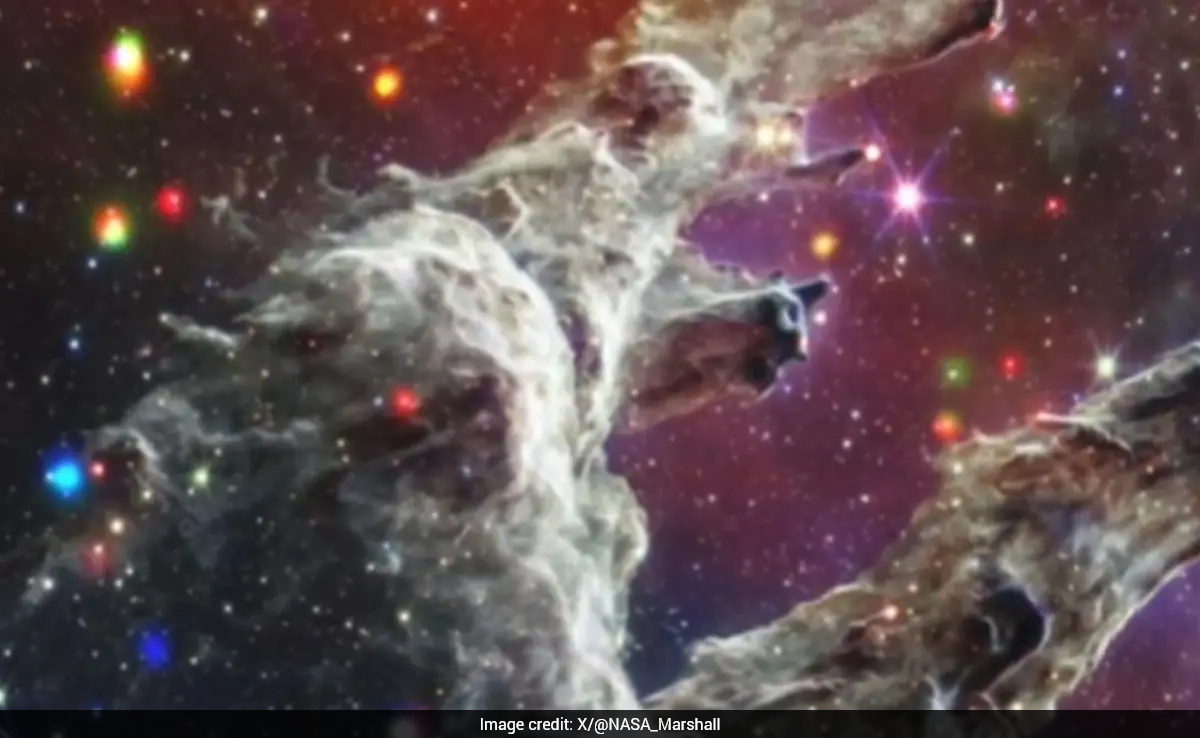
NASA has taken a unique approach to exploring the universe by converting cosmic data into music. The US-based space agency shared details of its "sonification" project, which translates data from space telescopes into sound, allowing us to "hear" the stars and galaxies. "This composition was made by the stars - literally!" NASA wrote in a post on X while sharing the melodious tune.
"Two new orchestral works have been made by using real data from the @chandraxray and @NASAWebb telescopes - transforming the life cycle of stars into music," the post mentioned.
Also read | Is The Universes Endless Expansion In Doubt? Changing Dark Energy Sparks Fresh Cosmic Debate
This composition was made by the stars - literally! 🎼
— NASA Marshall (@NASA_Marshall) December 27, 2025
Two new orchestral works have been made by using real data from the @chandraxray and @NASAWebb telescopes - transforming the life cycle of stars into music.
Play these pieces yourself by visiting https://t.co/WuEcBcZ2HZ pic.twitter.com/22xk3ALaGC
NASA first shared about this project in 2023 when it revealed that its Chandra X-ray Observatory and other space telescopes collect data on cosmic objects, which is then mapped to musical notes and sounds. For example, brightness is often translated to volume, while pitch is linked to position or colour.
"It's like a writing a fictional story that is largely based on real facts," said composer Sophie Kastner as quoted in a report by NASA. "We are taking the data from space that has been translated into sound and putting a new and human twist on it."
When it comes to cosmic sounds, Crab Nebula is a supernova remnant with sounds of a pulsar's rapid spin, powerful jets and expanding gas clouds. The Pillars of Creation is a stellar nursery with shimmering optical tones, spiralling rhythms and sounds of matter gathering.
Also read | New Study Challenges Long-Held Beliefs About Mars' Red Colour
The process of sonification allows the listener to experience the data through the sense of hearing instead of seeing it as images, especially for blind and visually-impaired audiences.
In another report by NASA, Kastner said, "I approached the form from a different perspective than the original sonifications: rather than scanning the image horizontally and treating the x-axis as time, I instead focused on small sections of the image creating short vignettes corresponding with these occurrences, approaching the piece as if I was writing a film score to accompany the image."
"Because the Galactic Center image was so full of information, of material, I wanted to draw the listener's attention to smaller events within the greater data set."
Track Latest News Live on NDTV.com and get news updates from India and around the world

