




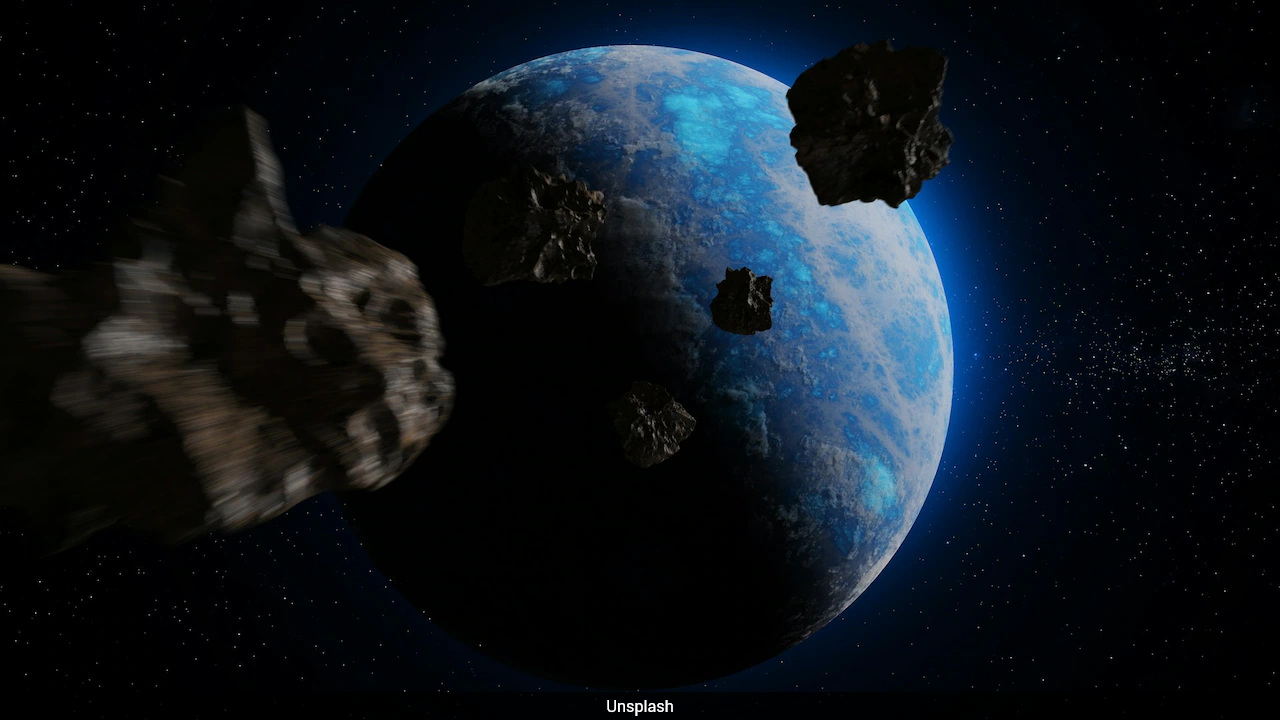
A small asteroid called 1998 KY26 is puzzling astronomers because it is speeding up in a way gravity alone cannot explain. Based on telescope data from its 2024 approach to Earth, astronomers have determined the object is about 36 feet, or 11 metres, across. Its spin period is about 5.35 minutes.
A study led by aerospace engineers Korbin Hansen and Masatoshi Hirabayashi at the Georgia Institute of Technology, published in the journal Icarus, tested one popular explanation. Some scientists had proposed that the rock might be a "dark comet," hiding ice that turns to gas and gives it a gentle push. Using detailed thermal modelling, the researchers found the object is too warm to keep frozen water. They concluded it is most likely a "dehydrated asteroid" that lost its water long ago. The study does not identify what is causing the acceleration.
Harvard astronomer Avi Loeb has put forward a far more unusual idea. He argues that the object closely matches the orbit of Phobos 1, a Soviet spacecraft that stopped communicating while travelling to Mars in 1988. Loeb, with co-authors Adam Hibberd and Adam Crowl, suggests that sunlight pushing on the probe's shiny metal surfaces and solar panels could explain the motion. This idea has not been confirmed by other researchers.
The object is currently about 186 million miles from Earth. The European Space Agency says it will pass within 32 million miles of Earth in 2028, and then come even closer in 2039, at around 10 million miles.
Japan's Hayabusa2 spacecraft is on its way to study the object. Arrival at 1998 KY26 is scheduled for 2031, after a series of Earth flybys. Whatever the answer turns out to be, that visit should give scientists their first close look at what this mysterious rock is made of.
Track Latest News Live on NDTV.com and get news updates from India and around the world

