





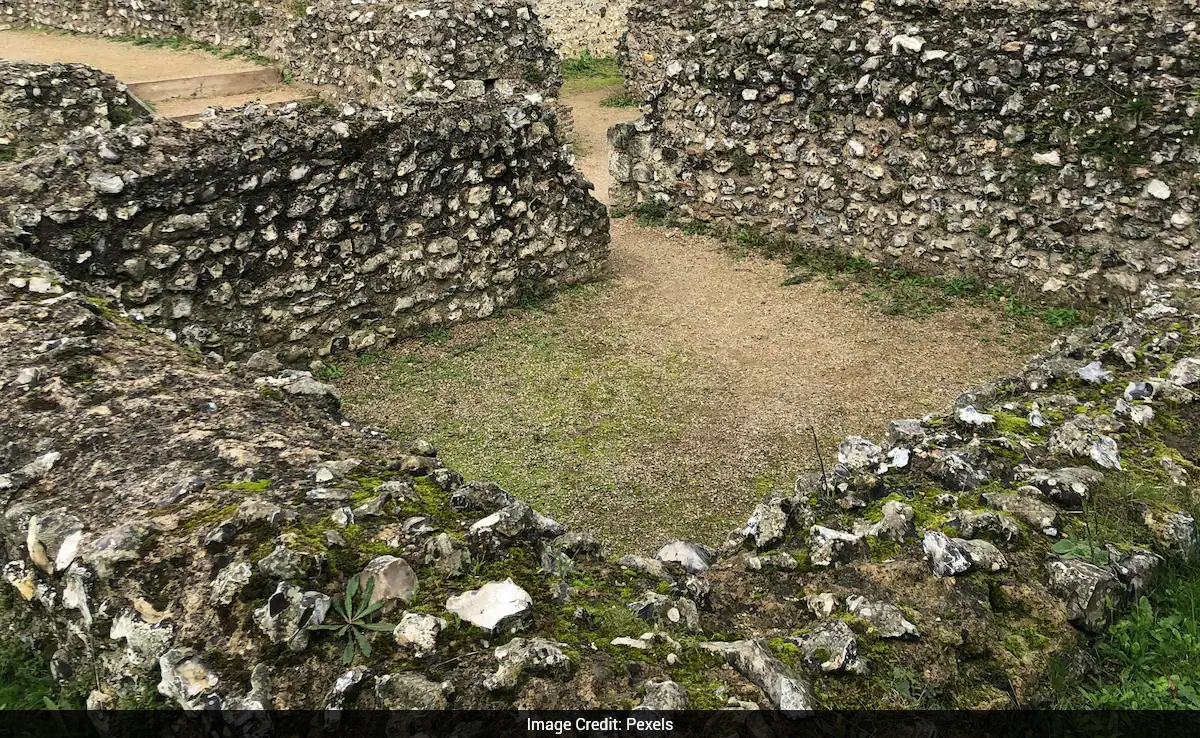
- Medieval castle remains from the 1380s were found under a Vannes mansion courtyard
- The fortress belonged to Chateau de lHermine, built by Duke John IV of Brittany
- Excavations in 2023 revealed decorated facades, rooms, passageways, and staircases
Archaeologists in France have made an exciting discovery after finding the remains of a medieval castle that was built in the 1380s. The castle was found hidden under the courtyard of a private mansion in the city of Vannes. The discovery has helped experts learn more about an important building from the 14th century, reported People.com.
These remains are associated with the Chateau de l'Hermine fortress, built by Duke John IV of Brittany. Archaeologists were astonished when they discovered the fortress in 2021, beneath the courtyard of the private mansion "Hotel Lagorce" in the city of Vannes.
Two years later, in 2023, excavations were conducted again ahead of the construction of the Vannes Museum of Fine Arts. According to a press release from the National Institute for Preventive Archaeological Research (INRAP), the purpose of this work was to determine the extent of the fortress's remains and which parts remained intact.
The excavations revealed the ducal residence with its decorated facade, several rooms, and passageways, including several staircases. Archaeologists also uncovered the ground floor of a large building. Excavated to a depth of approximately one meter, it became clear that this area was part of the ducal residence.
According to INRAP, a main passage connected the gate facing the city to a second gate on the north side. This second gate was connected to two large towers built into the city wall and is also mentioned in old maps. This gate opened onto the outer moat.
The ground floor of the building was approximately 42 meters long and 17 meters wide. Its walls were quite thick, reaching a height of approximately 5.6 meters. The structure was located directly next to the moat, and its eastern facade featured a square tower-like structure. Based on these facts, archaeologists believe the fort may have had three or possibly four stories.
The excavation also uncovered numerous well-preserved objects. These included coins, jewelry, and cooking utensils such as pots, pans, and roasting pans, which are dated to the 15th and 16th centuries. In addition, some wooden objects, such as bowls and fragments of barrels, were also found, which had been preserved by the moisture in the ground.
Judging by the condition and design of the remains, INRAP suggests that John IV must have employed the best engineers and craftsmen of his time. This discovery highlights the importance of this fortress and the advanced technology and exquisite craftsmanship used in its construction.
Track Latest News Live on NDTV.com and get news updates from India and around the world

