



By the time you read this, the three-day debate in Parliament on ‘150 years of Vande Mataram' would have ended. The Union government made the discussion on the national song a non-negotiable condition before any other issue (electoral reforms/SIR) was taken up.
The Opposition were very keen to let Parliament function despite being up against a government that often makes a mockery of Parliament. Yes, a discussion on SIR was and continued to be top priority. 39 people have lost their lives in Bengal alone. However, in the spirit of parliamentary democracy, the Opposition decided to accept the Government's proposal about the sequence in which the two issues would be taken up and made a tactical change. As the Lok Sabha and the Rajya Sabha proceed with their discussions, let's be very clear. No one is against SIR (Special Intensive Revision) as a concept. No one is against having clean electoral rolls. It is the methodology and the haphazard implementation that is being questioned. We are looking for answers to many questions. Here are five of them.
Question One: Is SIR meant to protect the voter list or exclude basis identity?
Four states are going to elections in a few months. Assam, Bengal, Kerala, and Tamil Nadu. Three out of these four states are going through the SIR process. One state only has a ‘Simple Revision'. Ten points if you guessed Assam. Meghalaya, Tripura, Mizoram, Manipur, Arunachal Pradesh, and Nagaland are all states that share borders with Bangladesh or Myanmar. Why is there no SIR being conducted in these states?
It is common knowledge that protecting borders (infiltration) is the responsibility of the Border Security Force, the Indo-Tibetan Border Police, the Central Reserve Police Force, the Sashastra Seema Bal. These institutions are all under the Home Minister. So who should be held accountable?
Question Two: Are States being singled out?
There have been innumerable cases of Bengali-speaking citizens being targeted solely due to their mother-tongue. Those who speak Bengali in a different dialect have been labelled infiltrators. There are 4,635 communities in India.
Each one have their own distinct identity. Why do all of these diverse identities need to fit the Union Government's ill-shaped cookie-cutter mold?
Question Three: Will the Union Government call for fresh elections?
The same electoral rolls that the Election Commission of India (ECI) now dismisses as unreliable were good to go for the 2024 Lok Sabha elections. Thereafter, the rolls were also deemed good enough for elections held in three states. Several questions arise. How did these rolls become defective overnight? And if they are indeed defective, should the Lok Sabha, elected through these supposedly compromised rolls, not be dissolved immediately? Will the Union Government call for fresh elections?
Question Four: Who is responsible for the human cost of this exercise?
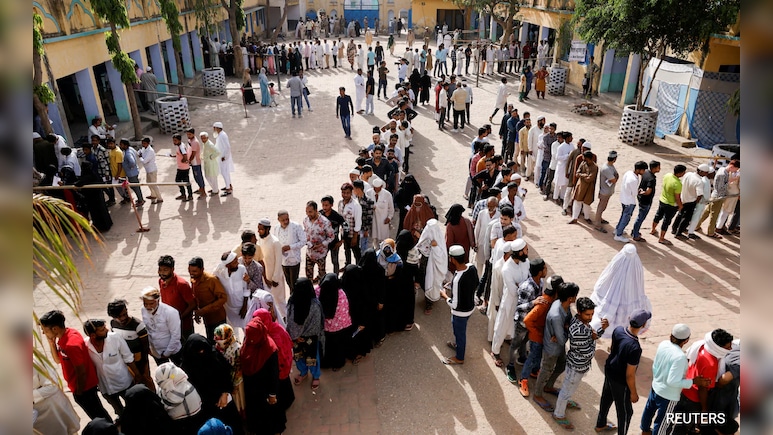
SIR is being debated in Parliament. The Opposition will hold this government accountable. Many issues will be raised about rushing the unplanned, SIR exercise. At the height of the Rabi season, why were thousands of farmers forced to stand in day-long queues? Why were daily-wage workers losing their wages running pillar to post to authenticate their documents? Why were development programmes in many states brought to a standstill? Who will take responsibility for the lives of Block Level Officers (BLOs) lost because of the inhuman psychological and physical pressures while executing SIR?
Question Five: Is the ECI taking enough accountability?
The ECI is a constitutional body. Its functioning should be non-partisan, above reproach. But what is happening in Bengal leading up to the Assembly elections deserves scrutiny. Here are two examples.
(i) Originally, to be a BLA (Booth Level Agent), one needed to be a registered elector in the ‘part of the Electoral roll' for which he/she is appointed. This rule has now been changed. Now, even if a BLA is unavailable from the same part of the Electoral roll, a BLA can be appointed from any registered elector of the same Assembly Constituency. (ii) There is an AI app being used to identify duplicate voters. There is no clarity about who built it, when the tenders were issued, or what data the app uses. Looking for answers is not anti-national.
(Derek O'Brien, MP, leads the Trinamool Congress in the Rajya Sabha)
Disclaimer: These are the personal opinions of the author

