





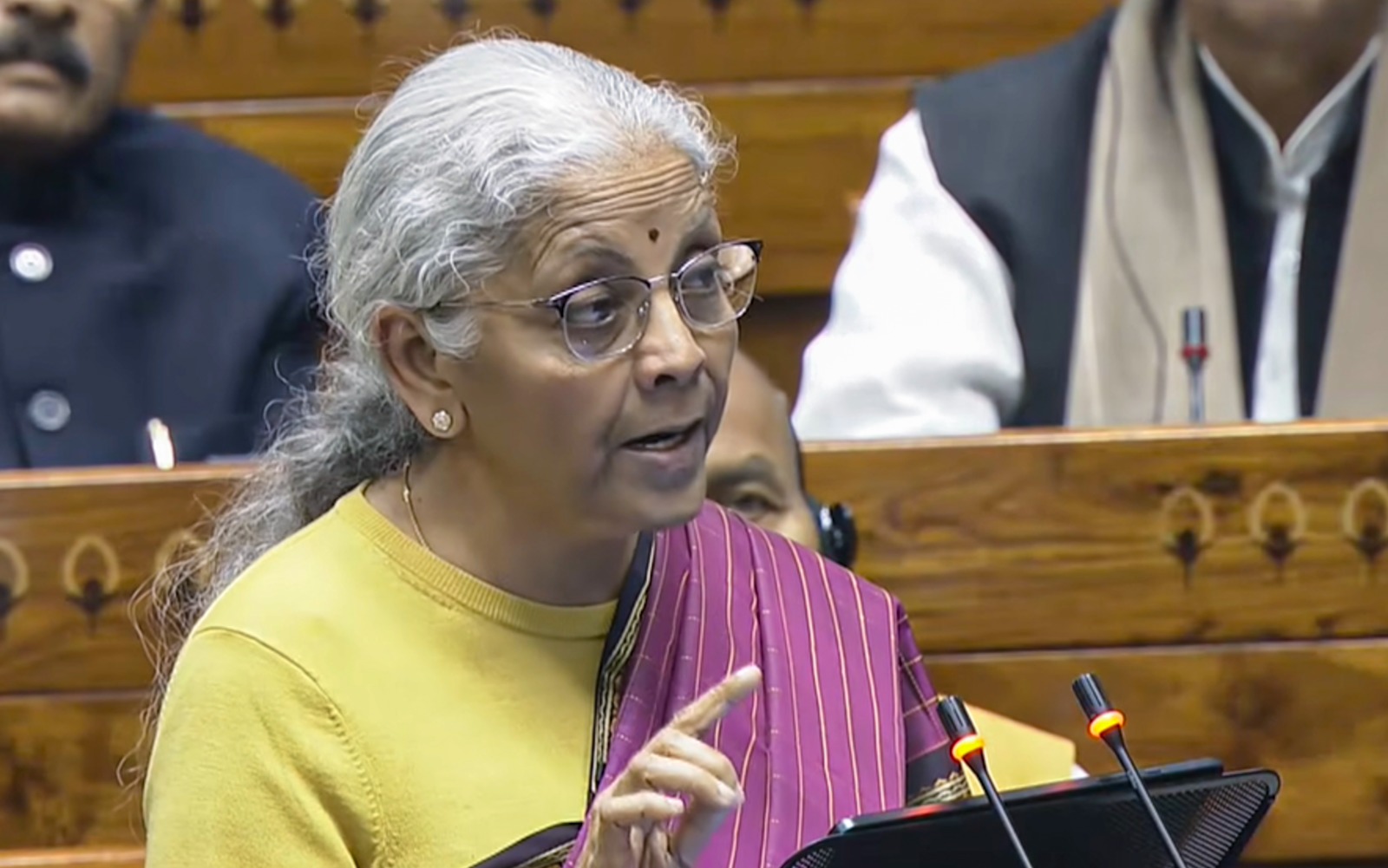
India's finance minister boosted spending in manufacturing and infrastructure projects while sticking to fiscal discipline, seeking to support an economy grappling with global risks and steep US tariffs.
The government will increase capital expenditure by 9 per cent to 12.2 trillion rupees ($133 billion) in the fiscal year beginning April 1, with a focus on railways, small businesses and the health sector, Finance Minister Nirmala Sitharaman said in her budget speech on Sunday.
The fiscal deficit will be curbed at 4.3 per cent of gross domestic product in the coming year from an estimated 4.4 per cent in the current year, she said, while government debt will be brought down to 55.6% from 56.1%, respectively.
Sitharaman is seeking to boost growth while sticking to fiscal discipline to protect the economy from mounting global risks. India has been unable to secure a trade deal with the US, it's biggest export market, with 50% tariffs weighing on industries, especially labour intensive businesses. Prime Minister Narendra Modi has focused on economic reforms, such as tax changes and cutting red tape, to lure more investment.
"Our first duty is to accelerate and sustain economic growth by enhancing productivity and competitiveness and building resilience to volatile global dynamics," she told lawmakers in New Delhi.
The benchmark stock index erased earlier gains and was 1.5 per cent lower at 12:35 p.m. local time after Sitharaman announced a plan to raise taxes on some equity transactions.
"The roughly 9 per cent increase in capital expenditure in this budget underlines the government's sustained and consistent focus on infrastructure over the last decade, reinforcing continuity rather than signalling a one-off push," said Raghav Madan, a director at Deloitte India.
Sitharaman highlighted several manufacturing initiatives, including for critical minerals, electronics manufacturing, pharmaceuticals and others. She also focused on measures to promote small businesses and build roads, railways, airports, ports, and logistics infrastructure.
The government is forecasting economic growth of 6.8 per cent to 7.2 per cent in the next fiscal year starting April 1, lower than the current year's 7.4 per cent and above the 6.6 per cent median estimate by economists.
Other key highlights include:
- Despite the lower fiscal deficit, the government plans to borrow a record 17.2 trillion rupees in the coming fiscal year
- The government will increase its program for the electronics component sector to 400 billion rupees
- The tax on some equity transactions was raised to 0.05 per cent from 0.02 per cent
- The government will invest 100 billion rupees in biopharmaceutical research over the next five years
(Except for the headline, this story has not been edited by NDTV staff and is published from a syndicated feed.)
Track Latest News Live on NDTV.com and get news updates from India and around the world

