





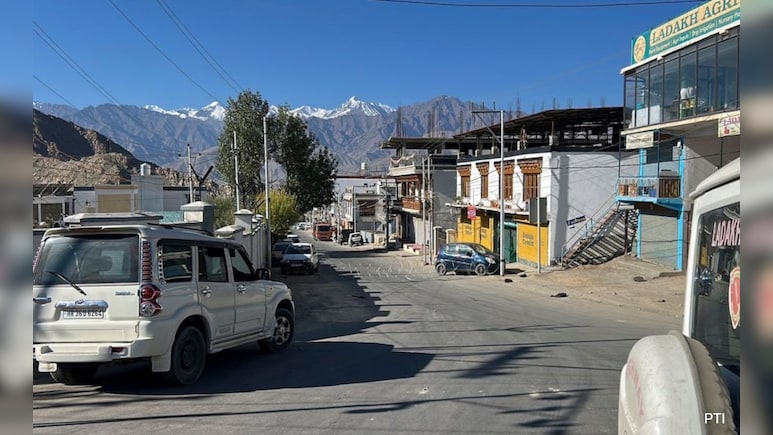
With no fresh elections to the Ladakh Autonomous Hill Development Council (LAHDC) in sight, the end of its five-year term has brought down the curtains on the Union Territory's last surviving democratic space.
LAHDC's term ends at a time the region is fighting for statehood and constitutional safeguards, leaving Ladakh without any political representation for local governance.
The Ladakh Union Territory administration was supposed to issue an election notification in September to hold elections for the Hill Council in October and complete the process by November 1.
Official sources say LAHDC elections may have to wait until the time new districts are formed in Ladakh and a delimitation of council seats is carried out. In August last year, the Union Home Ministry announced the creation of five new districts in Ladakh. Ladakhi leaders claim that the creation of new districts will further disempower the local population.
Before the abrogation of Article 370, when Ladakh was a part of Jammu and Kashmir, the Ladakh Autonomous Hill Council had sweeping powers on key matters in the region. After the region was carved out as a separate union territory, Ladakh leaders say the council has literally lost its authority to bureaucracy.
"I don't know what they (the government) are up to. Hill Council was the last democratic space for people of Ladakh. They are not holding elections on the pretext of new districts," said Tsering Dorjey Lakrook, co-chairman of the Leh apex body.
The last elections for the Autonomous Council were held in 2020. BJP had won the elections on the promise of granting the Sixth Schedule to Ladakh, which grants significant powers to autonomous district councils to self-govern on matters such as land, forests, customs, and civil and criminal justice.
Ladakhi leaders accused the BJP of backtracking on their promise and started an agitation demanding statehood and the Sixth Schedule.
Recently, protests in Ladakh turned violent as protestors burnt down the BJP headquarters in Leh. In the subsequent police action, four protesters were killed. This was followed by a massive clampdown in Leh, with dozens being arrested.
The protests were spearheaded by activist Sonum Wangchuk, who has been booked under the National Security Act and is currently lodged in Rajasthan's Jodhpur jail.
Jammu and Kashmir and Ladakh have been without panchayat and local bodies for the last two years. No fresh elections were held after their term ended between November 2023 and January 2024.
Now as the Autonomous Hill Council ceases to exist in Leh, Ladakhis say it marks the end of democracy.
Ladakh was carved out as a separate Union Territory in August 2019, following the abrogation of Article 370 and the bifurcation of the former state of Jammu and Kashmir. Many in Leh, including Wangchuk, had welcomed the move. But within a year, concerns began to mount over what residents described as a political vacuum under the administration of the lieutenant governor.
Track Latest News Live on NDTV.com and get news updates from India and around the world

