






The Monsoon Session beginning Monday could be historic on several counts.
The government is trying to muster the two-thirds majority in both Houses required for Constitutional Amendments. After the April embarrassment when it failed to push the Delimitation Bill through, the government has gone all out to secure the numbers.
And according to government sources, it appears to be succeeding in its objective.
Sources say the ruling establishment may push some ambitious bills in the upcoming session if it is sure of the numbers.
-

-
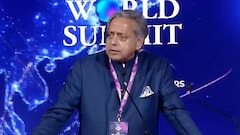 'The Balance Of Global Power Is Shifting': Shashi Tharoor At NDTV World Summit
 -
 NDTV World Summit 2026: India's Push To Become A Global Research Superpower
 -
 Trump's H-1B Curbs Could Be A Big Opportunity For India: Shivkumar Kalyanaraman
 -
 How Far Is India In High-Speed Flight? IISc's Duvvuri Subrahmanyam Answers
 -
 'US Is Weakest Country': Mojtaba Aide's Swipe At Trump Over 'Failed Goals'
 -
 At NDTV World Summit, Palestinian Envoy's Amitabh Bachchan Reference For India Visit
 -
 'When Are We Going To See Flying Ubers?' Dominic Taylor Answers
 -
 At NDTV World Summit, Palestinian Envoy's Amitabh Reference For India Visit
 -
 Why "Healthy" Mojtaba Can't Appear In Public, Reveals Iranian Diplomat
 -
 'Needs Very Rapid New Concept Of Warfare': Ex-CIA Chief's Advice To India
One of the key Constitution Amendment Bills is 'One Nation One Election', the Centre's pet and ambitious project for long.
The Big 'One Election' Push
The Bill was introduced in the Lok Sabha during the Winter Session last year but due to sharp opposition protests, it was referred to a Joint Parliamentary Committee.
The JPC's tenure has now been extended till the first day of the last week of the Monsoon Session, i.e., August 10.
The question now is: If the JPC is able to submit its report by August 10, can the government bring in the revised Bill incorporating the necessary amendments based on the JPC recommendations?
And the bigger question: Can the government get it passed in the last four days of the session?
The JPC is touring various states and seeking views from all stakeholders and civil society.
JPC chairman PP Chaudhary, during a recent visit by the parliamentary panel to Goa, said that elections across the country could be held simultaneously with the 2029 Lok Sabha polls.
However, the bill itself provides that after the formation of the next Lok Sabha in 2029, the President will issue a notification for a fixed date in the first sitting. After that, the term of any state Assembly going to polls will end along with the 2034 Lok Sabha elections.
For instance, if Assembly elections are held in a state in 2031, the tenure of that Assembly will only be till 2034, i.e., just three years.
That means 2034 will be the year when Lok Sabha and Assembly elections can be held simultaneously across the country.
The Numbers Game
Since "One Nation, One Election' is a Constitution Amendment Bill, it requires a special majority in Parliament, which is a two-thirds majority of members present and voting in both Houses.
In the current House, the NDA has a majority but not the magical two-thirds figure of around 360 seats.
The current strength of the Lok Sabha is 540. When the bill was sent to the JPC in December 2024, 269 votes were cast in favour and 198 against. Similarly, on the Constitution amendment bills for women's reservation and delimitation, 298 votes were cast in favour of the government and 230 against.
However, the government's position has improved since the last session.
20 Trinamool MPs and six Shiv Sena (UBT) MPs have switched to the ruling side. It also expects support from eight NCP (SP) MPs, as hinted by MP Supriya Sule on Wednesday. But it will still have to bring the DMK's 22 MPs on board and convince some other Opposition MPs to skip voting.
In the Rajya Sabha, the ruling NDA appears to be close to a two-thirds majority.
Even if the Bill is passed, it will be a long road to implementation. The Constitution amendment will also have to be ratified by at least half of the state Assemblies.
Given the strong presence of the BJP and its allies in the states, crossing this hurdle won't be difficult.
The Opposition Challenge
But mustering a two-thirds majority in Parliament is the first and real challenge. In the current political scenario, the Opposition INDIA bloc has taken a strong stance against this bill. Parties like the Congress, Samajwadi Party, DMK and Aam Aadmi Party are strictly opposed to it.
The Opposition believes this move is against federalism, will sideline regional issues and put the existence of regional parties at risk.
They also argue that if a state government falls mid-term, what will happen to the democratic process there.
Even though the government is putting its entire political might behind rolling out this big electoral reform by 2029, getting it passed in both Houses of the current Parliament without the support or walkout of some Opposition factions will remain a big challenge.
Track Latest News Live on NDTV.com and get news updates from India and around the world

