




India sent out a "no more" message against terror at the government briefing hours after Operation Sindoor, the measured, expansive and swift counterstrike against terrorist sites in Pakistan and Pakistan Occupied Kashmir in retaliation for the Pahalgam terror attack.
Before Foreign Minister Vikram Misri, Colonel Sofiya Qureshi and Wing Commander Vyomika Singh took the podium to share details and visuals of India's unprecedented counterattack against terror, a heart-wrenching video played in the background.
-

-
 Who Is Rajiv Mehta? Lilavati Hospital Trustee To Speak At NDTV World Summit 2026
-
 Ex-CIA Director To Decode 'War In Times Of AI' At NDTV World Summit
-
 From Call Centre To Billion-Dollar Disruptor: Nikhil Kamath At NDTV World Summit
-
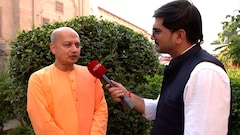 'Every 5 Years, You'll See A New India': Swami Sarvapriyananda Ahead Of NDTV World Summit
-
 AI Can Think, But Can It Be Conscious? Swami Sarvapriyananda Weighs In
-
 Alain Ebobisse, Africa50 CEO, To Attend NDTV World Summit 2026. All About Him
-
 Kriti Sanon At NDTV World Summit: A Look At Her Career And Business Ventures
-
 Ex-CIA Director To Decode 'War In Times Of AI' At NDTV World Summit
-
 Who Is Vikram Rai, CEO, South Asia GE Aerospace, Set To Attend The NDTV World Summit 2026
-
 Rahul Kanwal: The World Is Changing. What Comes Next? | NDTV World Summit 2026
The video showed the heinous terror attacks in India in the past decade. It included the 2001 Parliament attack, the 2002 attack on Gujarat's Aksharadham Temple, the 2008 Mumbai terror attacks, the attacks in Uri and Pulwama and the Pahalgam tragedy.
"More than 350 Indian civilians have succumbed to cross-border terrorism in the past decade and 800 injured in these dastardly acts of violence. Over 600 Security personnel have laid down their lives and more than 1,400 injured while protecting the Nation from this scourge of cross border terrorism," a message said. It then added, "...No More", followed by "Operation Sindoor".
Sources in the government have said 70 terrorists, including mid-level and senior commanders of terrorist groups Lashkar-e-Taiba and Jaish-e-Mohammed, were killed as India carried out 24 missile strikes across nine locations in Pakistan and Pakistan Occupied Kashmir to avenge the Pahalgam attack. "It was a statement of strategic resolve. Through 24 precisely coordinated missile strikes across nine terrorist-linked locations, India demonstrated that it would no longer tolerate cross-border terrorism, nor the complicity of state institutions that enable it," a source said.
The way the operation was carried out, the sources said, underscored India's effort to distinguish between anti-terror operations and full-scale military aggression. "The operational timeline was swift. Within less than an hour, all missiles had struck their designated targets. The strikes were synchronised to avoid detection and maximise the element of surprise. Real-time footage from UAVs confirmed the destruction of target facilities. The decision to target deep into Pakistani-administered territory was a departure from prior doctrine and marked a new level of strategic assertiveness," the source said.
Twenty-five tourists and a Kashmiri pony ride operator was shot dead in cold blood at Baisaran valley in Jammu and Kashmir's Pahalgam on April 22. Foreign secretary Misri said that over the past fortnight, Pakistan has only indulged in denials and allegations instead of cracking down on terror groups behind the Pahalgam attack.
Track Latest News Live on NDTV.com and get news updates from India and around the world

