Luthra Brothers To Be Deported: How Is It Different From Extradition?
India has suspended 'Birch by Romeo Lane' owners Gaurav Luthra and Saurabh Luthra's passports, meaning they cannot leave Thailand even if they were free to do so.
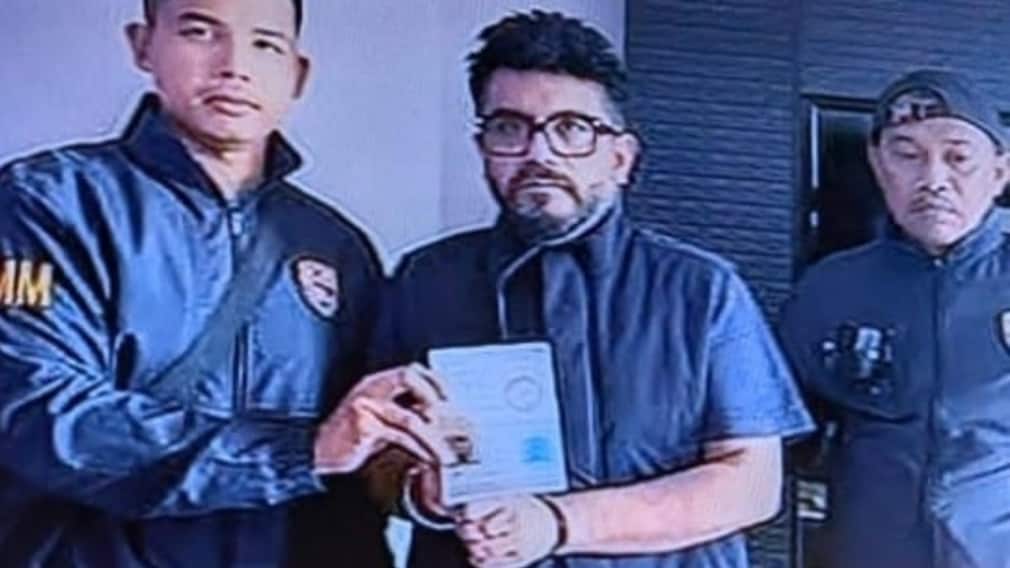
The Luthra brothers - who fled to Thailand while their Goa nightclub, 'Birch by Romeo Lane', burned down last week, killing 25 people - have been detained in that country, sources told NDTV Thursday.
Sources said this morning that a Goa Police team will leave for Thailand in 24-36 hours in anticipation of the Thai government deporting Saurabh and Gaurav Luthra, who should be back in India shortly.
They fled India on a Saturday morning IndiGo flight to Phuket; initial inquiries indicate tickets were bought from aggregator MakeMyTrip at 1.17 am, as firefighters were battling the blaze.
Located swiftly – photographs emerged of Gaurav Luthra at Phuket airport – they have since asked a Delhi court for protection from arrest, arguing they cannot face criminal liability as they were not present when the fire broke. They also sought four weeks' transit anticipatory bail, which was refused.
Meanwhile, the government has also suspended the brothers' passports, meaning they cannot leave Thailand – with whom India has an extradition treaty – even if they were free to do so.
Luthra brothers: deportation or extradition?
India and Thailand signed an extradition treaty in 2013, under the terms of which Bangkok is obliged to send the Luthra brothers back if the charges they face carry a minimum jail term of a year.
The main (at this time) charge Saurabh and Gaurav Luthra face is culpable homicide not amounting to murder, which carries a minimum sentence of five years.
That satisfies the main operational criteria of the 2013 treaty.
Therefore, one option is to activate relevant provisions of the treaty.
But typically this involves a formal request and proving 'double criminality', i.e., present evidence to a Thai court that says the accused is guilty of a crime punishable by both Indian and Thai laws.
And this could take time.
Also, attempts to extradite other wanted individuals - Nirav Modi and Vijay Mallya from the United Kingdom, Mehul Choksi from Belgium, and Dawood Ibrahim from Pakistan - have rumbled on for years.
READ | Goa Nightclub Owners On Interpol List. These Are The Other Indians On It
So, can they be deported?
Yes, and that is most likely what will happen.
Deportation and extradition are not the same thing, though in both cases a state ejects a foreigner.
In the former case a host country, India, for example, can remove foreigners living illegally in its territories. In the latter, as in this case, for instance, India would have to prove to the Thai authorities that its nationals - the Luthra brothers - committed acts viewed as criminal by both governments.
The difference is in the legal minutiae.
Deportation is typically an immigration measure; i.e., a country exercises its sovereign power to remove a foreign national. This typically happens when a foreigner violates the laws of the host country.
And have the Luthra brothers broken Thai laws? Yes, although not by their own actions.
READ | How Centre Used Passport Law To Corner Luthra Brothers In Thailand
Suspension of their passports means Saurabh and Gaurav Luthra are in Phuket without valid travel documents, which is an offence under Thailand's immigration laws. They can, therefore, be removed as 'undocumented foreigners', which will likely be a quicker route back to India to face trial.
Goa nightclub fire
Meanwhile, the investigation so far has uncovered a number of worrying details, including the widespread of use of flammable material, the lack of fire exits, and the absence of fire extinguishers.
READ | Goa Nightclub Where 25 Died Built Like Tinderbox. Crackers Lit Fuse
Also, the club did not have a broad-enough entrance for fire-fighting vehicles to approach the main structure; firefighters said they had to park 400 metres away, which complicated rescue efforts and may have led to some of the deaths. Investigators also found the club did not have a fire safety clearance.
NDTV is now available on WhatsApp channels. Click on the link to get all the latest updates from NDTV on your chat.
-
Opinion | How A Tiny 0.4% UPI Fee Could Change How India Pays

The introduction of a fee can have a psychological effect beyond its immediate financial cost. Businesses that have come to view digital payments as free may begin to look for alternative - split payments, cash, and so on
-
Opinion | Rs 75-Lakh Bounty, New Jaish Base, And The Case Of Pak's Ever-Missing' Terrorist
Pak's yearly act is back: finding Masood Azhar. But there are other questions FATF must be asking next month as it meets
-
For Years, Saudi Saw Houthis As Yemen's Problem. Then, A Knock On The Door
Actual fighting between the Houthis and Saudi Arabia began late in the overall timeline of the conflict that now involves powerful belligerents
-
Lal Topi, Blue T-Shirt: Akhilesh Yadav's 'PDA' For Blue Has A Coded Message
The message is clear: the Samajwadi Party wants to talk to voters beyond its traditional Yadav-Muslim support base, particularly to Dalits.
-
The Day 600 Men Lay Siege To Islam's Holiest Site And How They Were Gassed Out
Nearly 47 years ago, on November 20, 1979, the Grand Mosque itself was seized by an armed group in one of the most extraordinary episodes in modern Saudi history.
-
New UPI Charges: If Digital Payments Save Money, Why Charge For Them Now?
UPI Payments Free For Years: The government has subsidised UPI adoption for years. Official figures show thousands of crores in payouts over years.
-
Opinion | Sydney Sweeney And The Obsession With Asking Sportswomen To 'Take The Clothes Off'
There is a world of difference between an athlete choosing to be sexy and an advertiser deciding that sex is the most interesting thing about her
-
Opinion | The 'AIPC' Was Once Congress' Boldest Idea. What Happened To It?
Tharoor, to Chakravarti, to Yaskhi now, the fate of a Congress 'experiment' that started in 2017 will tell you a lot
-
Woman Biker Hit, Air Force Veteran Attacked: The Lawlessness In Gurugram
What gives confidence to some elements in Gurugram to break the law again and again in full public view and on camera?