





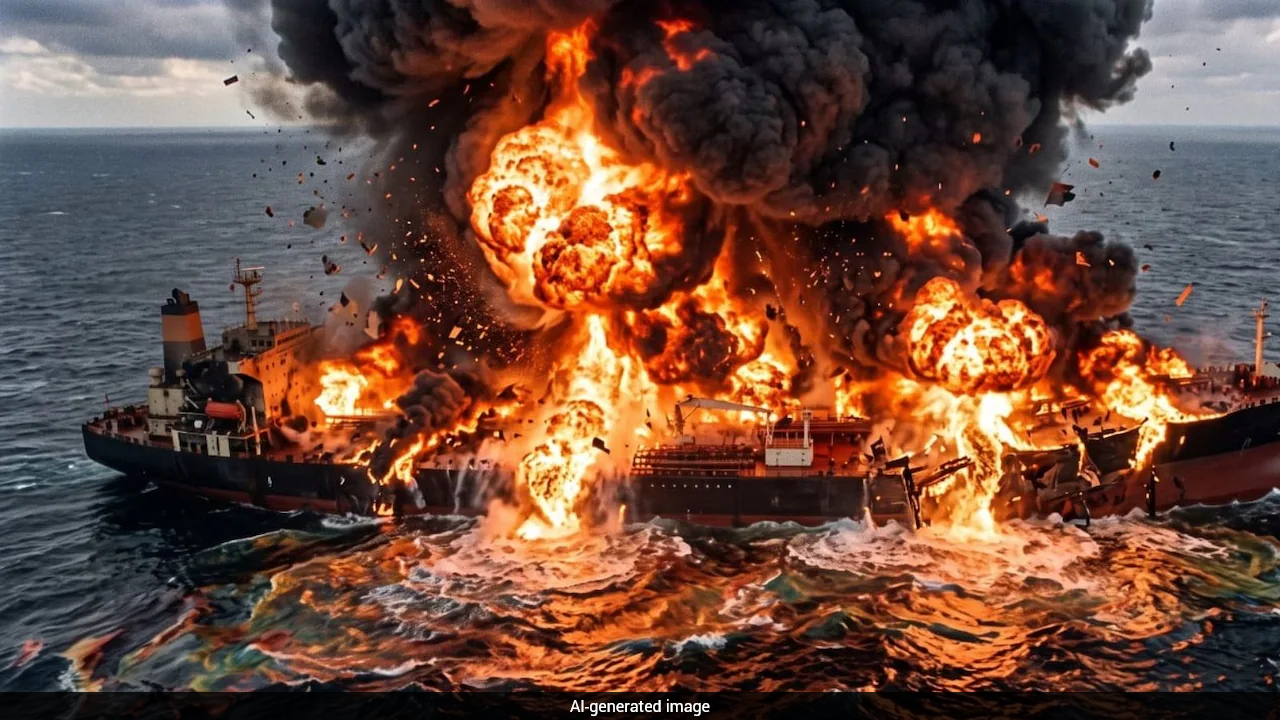
The families of India's merchant sailors who waited for their loved ones' safe return, and those who have steered large commercial vessels themselves have shared with NDTV incredible accounts of survival and grit while navigating dangerous waters amid the US-Iran war.
Unarmed, unprotected and responsible for taking charge of the bridge on some of the world's biggest supertankers three times the displacement of the largest aircraft carriers, carrying two million barrels of crude oil through a narrow, volatile strait, they narrated the challenges of keeping alive the complex system of cargo transport that holds the world together, but at a great cost to their own safety and lives.
-

-
 NDTV World Summit 2026: AI, Chips, Warfare And The Future Of The World | Key Conversations
 -
 Kriti Sanon On Situationships, Open Relationships And Being Old-School
 -
 'AI Scares Me': Kriti Sanon On Personality Rights And Need For Laws
 -
 'This Time I Wanted Gold': Savita Punia Reflects On Historic Asiad Success
 -
 Favourite Bollywood Actor To 5-Year Plan, Kriti Sanon Interviews AI Actor Tilly Norwood
 -
 Neeru Dhanda Carried Homemade Churma To Asiad, Returned With Two Gold Medals
 -
 Inside The Mind Of Archer Kumkum Mohod, Who Dared To Challenge South Korea
 -
 India's Golden Girls: Asian Games Champions On Sacrifice, Success And LA 2028
 -
 RBI Governor Was Asked About Tata Sons' Listing. He Read The Rulebook
 -
 "High Inflation Is Like Tax On Everyone": RBI Governor At NDTV World Summit
The fallout would be unimaginable if a rogue drone or a stray missile slammed into the main storage hold where a tanker stores highly flammable cargo. Merchant vessels are not designed to withstand such strikes, let alone intercept incoming projectiles.
"We are talking, probably an explosion that you could measure in megatons," Captain Singh, an Indian sailor who captained a merchant vessel in these waters, told NDTV. "It would just stay that way and we would probably level Dubai."
One megaton is equal to one million tonnes of TNT; this unit is mainly used to measure the explosive yield and destructive power of nuclear weapons.
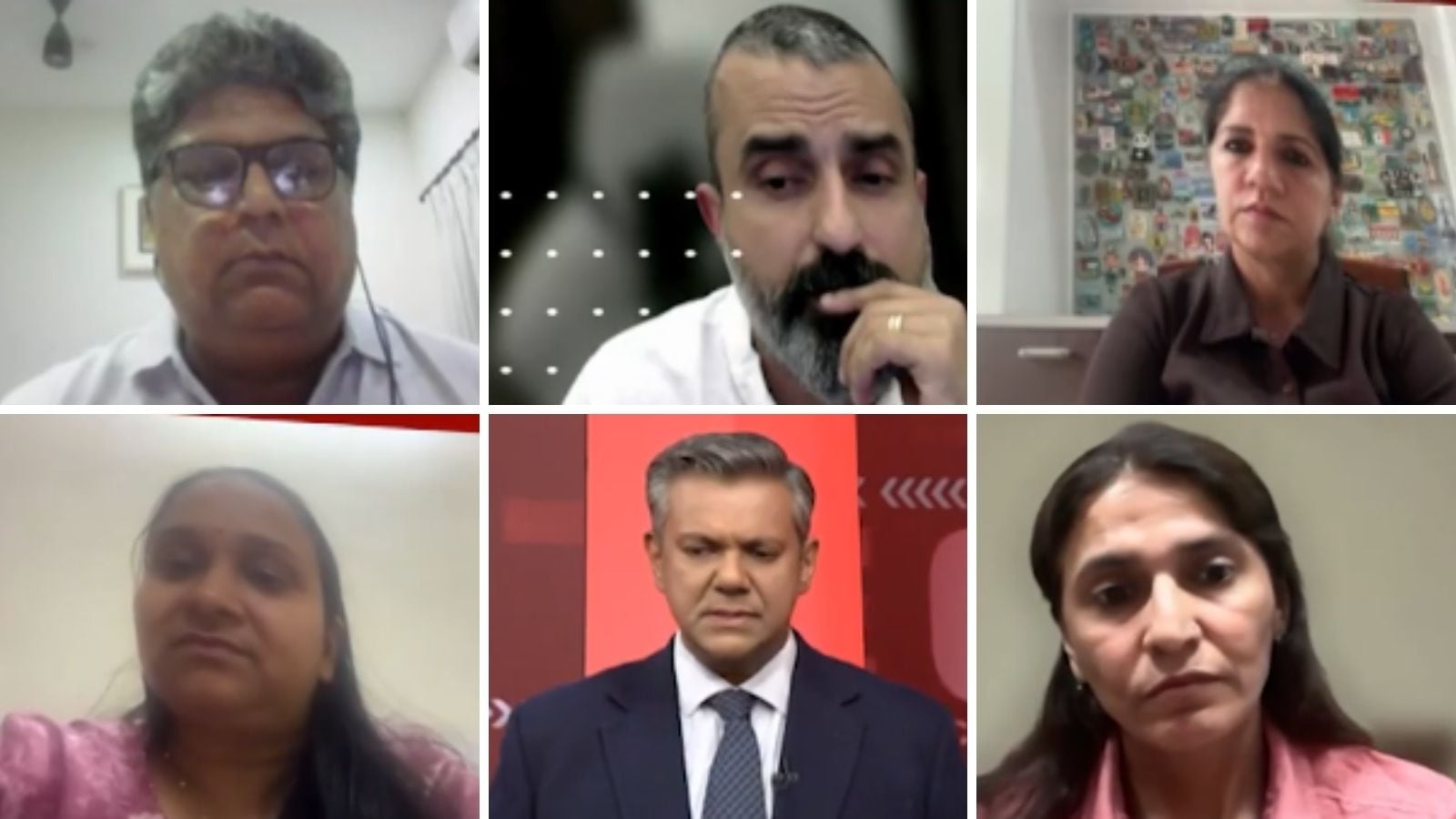
NDTV's Vishnu Som speaks to Indian merchant sailors and their families
Many Indian sailors have died in strikes on their ships in the Strait of Hormuz, the world's most critical energy chokepoint, as American and Iranian forces fight to assert control of the shipping lane.
The switch from a routine maritime commerce to an active combat zone happens in a flash when things heat up, Captain Singh told NDTV. He commanded a Very Large Crude Carrier (VLCC) weighing 3 lakh tonnes.
"It started as a normal morning. I finished loading my ship and we left at around three in the morning," he said of the initial days of the war in the Middle East. 8.30 am, a check of social media revealed that the region was erupting. "I read over there that some kinetic action had happened, somewhere on the shores of Iran."
Hoping to escape the tightening trap, he ordered his chief engineer to push the vessel to maximum speed to save precious time before exiting the Strait of Hormuz. But the international shipping headquarters sent orders to stop when they were off the coast of Dubai.
"It is not like what you see on TV. It was very quiet. It was just a regular morning. I was told to slow down and anchor."
#LeftRightCentre with @VishnuNDTV | Trapped in the crossfire: Indian sailors in Hormuz
— NDTV (@ndtv) July 14, 2026
On the panel: Sonia Mathur, Rajeshwari Chowdhry, Capt. Manish Sood, Capt Siddharth Singh, and Gayatri Singh pic.twitter.com/VobcpM1Smr
He remained stuck in that exact spot from February 22 to May 21, akin to serving a three-month sentence on a floating powder keg.
Despite the stillness, the sky regularly lit up with exploding missiles and drones.
Another sailor, Captain Sood, who endured a grueling two-and-half-month confinement on a fully loaded tanker, described the profound fear that gripped his crew. "Yes, we were frightened. Everybody on board was fearful. We were on a loaded tanker. So, anything that would strike us, any weapon would directly mean an explosion," Captain Sood told NDTV.
"We did see missiles. We could see from the smoke the missiles leave behind. The drones were more prominent at night," he said.
The civilian sailors who never signed up for military combat found themselves facing asymmetric warfare with no means to defend themselves. The psychological strain from this situation broke even the toughest of them.
"I had a situation with a guy who went slightly psychotic. I can't blame them because by day three, we were seeing regular stuff in the sky, the explosions and of course, the news."
A total "electronic blockade" added to anxiety and stress. "There was blanket blocking going on. My sat phones were down and people couldn't get in touch with their families."
He said sailors would often come running with life jackets and emergency gears, expecting an explosion at any second. "Two of my officers lost their cousins in the attacks. They were on ships when it happened."
Back home thousands of kilometres away in India, the families who spoke to NDTV said they lived in a state of suspended animation, reading frantic news updates and praying for a single bar of cellular network.
Gayatri Singh said it was paralyzing to see her husband caught in a lethal geopolitical crossfire. "This was a situation I was never prepared for. He never signed on to be a naval officer. He's a civilian, and yet he finds himself in a war zone. It is very unbelievable."
"He told me in the morning, the very morning the war began, 'I'm stuck'. I didn't know how to react. I just wanted him to be out."
Even for those whose loved ones escaped the initial wave of disruptions, the dread never really went away. Rajeshwari Chaudhary's husband, Captain Anil Chaudhary - a decorated gallantry award winner who once rescued 300 lives at sea - is currently steering his ship back into the eye of the storm.
"Once they are in the war zone, then it is very uncertain. It's a traumatic situation for all of us seafarers' families, children, for our parents, for everybody because any missile, any drone, it's so uncertain," she said.
Track Latest News Live on NDTV.com and get news updates from India and around the world

