





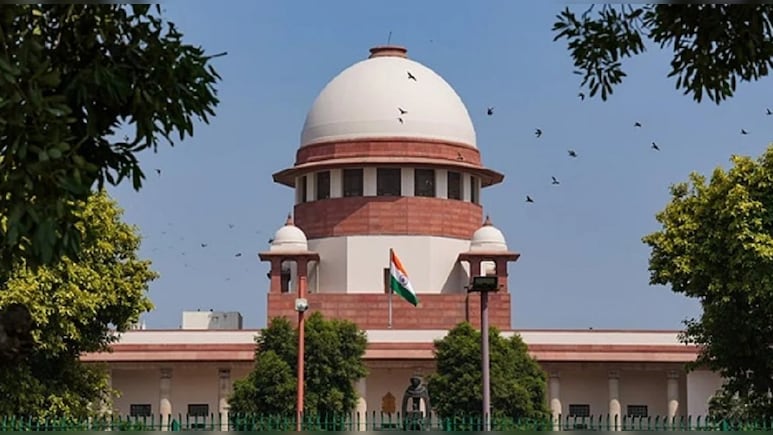
- The Supreme Court questioned the exclusion of CJI from the election commissioner selection panel
- The 2023 law appoints CEC and ECs via a panel without the Chief Justice of India
- The Centre defended the panel's fairness, citing trust in the Prime Minister's role
"Should there be no show of fairness in the procedure", the Supreme Court on Thursday asked the Centre questioning the appointment of the Chief Election Commissioner (CEC) and Election Commissioners (ECs) by a three-member committee comprising the Prime Minister, a Union Minister and the Leader of Opposition.
The top court was hearing a clutch of petitions challenging the constitutional validity of the Chief Election Commissioner and Other Election Commissioners (Appointment, Conditions of Service and Term of Office) Act, 2023, which excludes the Chief Justice of India (CJI) from the selection panel for appointing election commissioners.
The court questioned why Parliament, while framing the law, decided not to include Chief Justice of India in the selection panel, pointing out that the CJI was part of selection panels for CBI director and Lokpal. The court asked what could be the reason for excluding him from the process of selecting CEC and ECs - posts that are among the "most important for a democracy".
Defending the law, the Centre told the Supreme Court that it would be wrong to assume that the Prime Minister and the other ministers would act in "bad faith" and against "democracy" because they have a numerical majority in the selection procedure.
Solicitor General Tushar Mehta submitted before the top court that the office of Prime Minister has a "sanctity attached" to it and doubting the decision of the selection committee would undermine the constitutional trust reposed in elected institutions.
"If his decision is not to be trusted and is to be seen as necessarily a bad-faith exercise, then why not have a provision that even while selecting his Cabinet, he must consult some former judge or outsider?" Mehta told the court.
Mehta said the matter should be referred to a larger bench under Article 145(3) of the Constitution as it involves a substantial question of law on constitutional interpretation.
Elaborating his argument, Mehta contended that the moment the court says the selection committee is not adequate, the wisdom of Parliament is being doubted and the constitutional trust doctrine comes under the dock.
"When the executive wants to participate in the selection of another organ, it becomes a question of independence of another organ. Can it be said to the judiciary then that we will not trust your appointments because there is no outsider? This is not adversarial. I am just saying this as a student of law," Mehta said.
At this juncture, Justice Datta said, "As you said judges select judges, we wonder whether judges select judges nowadays." Mehta said that the executive and the legislature are the only branches which are directly accountable to the people.
Justice Datta also remarked that the issue was not about distrusting the prime minister.
"We would trust the Prime Minister. But this has not happened over the years. I rest at that. Now it's 2:1. Two on the side of the PM and one on the side of the opposition."
"The election commissioner is supposed to be an independent person. Should the committee not have any show of fairness? We are not saying fairness is not being achieved. But it has to be shown," Justice Datta said.
The top court, after hearing the parties, reserved its judgment on whether the pleas challenging the law for regulating appointment procedures of the CEC and the deputies need to be referred to a larger five-judge bench.
Under the 2023 Act, the selection committee consists of the Prime Minister, a Union minister nominated by the Prime Minister and the Leader of Opposition (LoP) or leader of the largest opposition party in the Lok Sabha.
The PILs said the exclusion of the CJI from the panel undermines the independence of the appointment process.
The law, enacted by Parliament in December 2023, came months after a landmark verdict by which the top court directed that election commissioners be appointed by a committee comprising the Prime Minister, the LoP and the CJI.
Track Latest News Live on NDTV.com and get news updates from India and around the world

