- Tongue color changes can indicate dehydration, infections, nutritional deficiencies, or oral cancer risks
- A healthy tongue is typically pink with small bumps and a thin whitish coating in the morning
- White tongue may signal dehydration, poor hygiene, fungal infections, or potentially precancerous leukoplakia
Your tongue does much more than help you taste food or speak clearly. According to doctors, it can also serve as an early warning system for several health conditions ranging from dehydration and nutritional deficiencies to infections and oral cancer. Medical professionals have long used tongue examinations as part of routine health assessments because changes in colour, texture, moisture and coating can reflect what is happening inside the body. A healthy tongue is usually pink with tiny bumps called papillae covering its surface.
However, if the tongue turns pale, bright red, white, yellow, purple or black, it may point toward underlying health concerns that require attention. Experts say most tongue changes are harmless and temporary, often linked to diet, oral hygiene or mild illness. But persistent changes, especially sores, thick patches or unusual discolouration, should never be ignored. According to the World Health Organization (WHO), oral diseases affect nearly 3.5 billion people globally, and oral health is closely connected to overall health.
Here is what different tongue colours may reveal about your health.
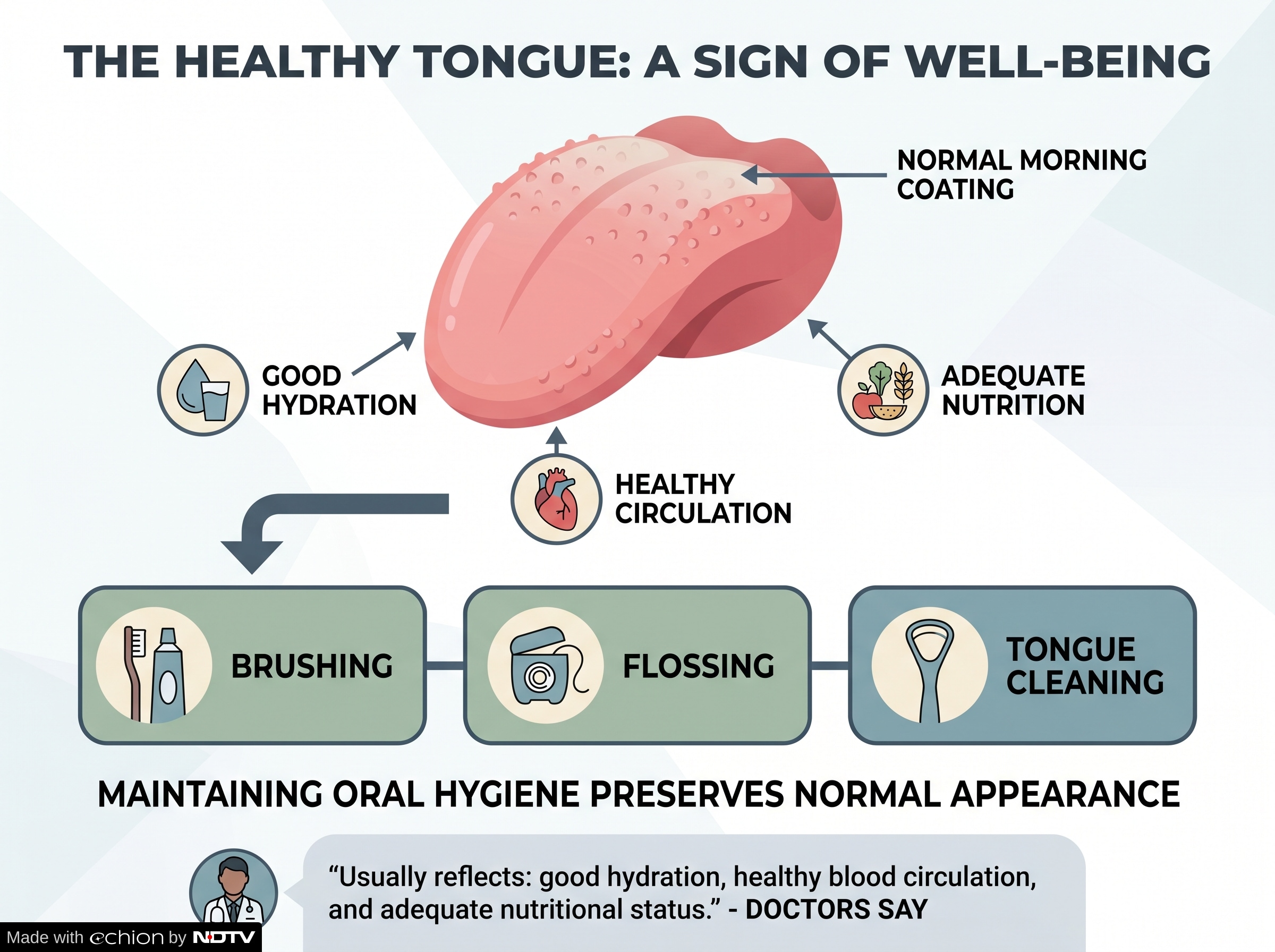
1. Pink Tongue: Usually A Sign Of Good Health
A healthy tongue is generally light to dark pink in colour with small papillae visible across the surface.
Doctors say this usually reflects:
- good hydration,
- healthy blood circulation,
- and adequate nutritional status.
A thin whitish coating can also be normal, particularly in the morning. Maintaining oral hygiene through brushing, flossing and tongue cleaning can help preserve normal tongue appearance.
Also Read: Oral Cancer In India: Early Stage Detection Can Boost Survival Rates To 90%
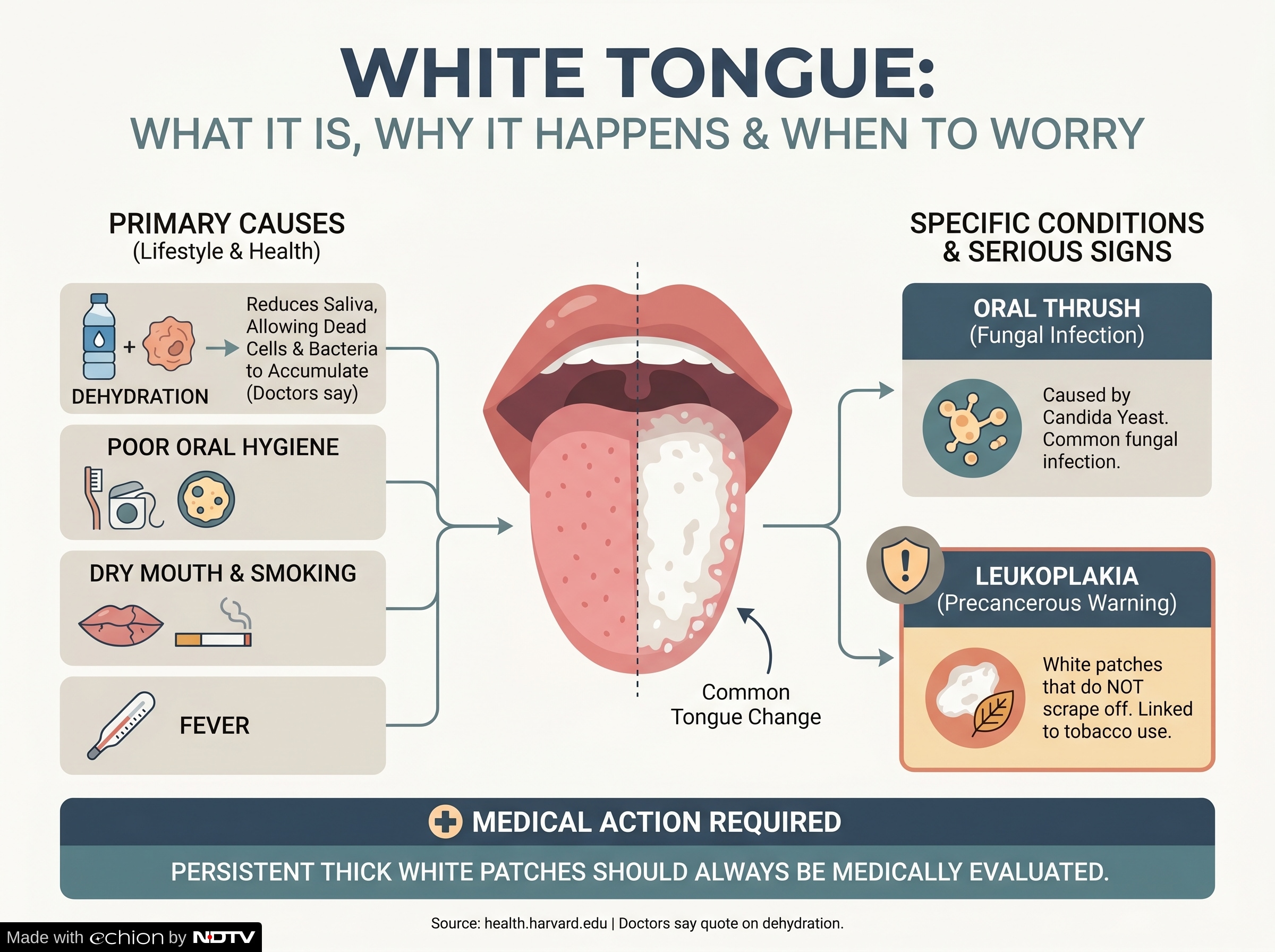
2. White Tongue: Dehydration, Fungal Infection Or Poor Oral Hygiene
A white-coated tongue is among the most common tongue changes.
It may occur due to:
- dehydration,
- dry mouth,
- smoking,
- poor oral hygiene,
- fever,
- or oral thrush, a fungal infection caused by Candida yeast.
White patches that do not scrape off may sometimes indicate leukoplakia, a potentially precancerous condition linked to tobacco use. Doctors say dehydration can reduce saliva production, allowing dead cells and bacteria to accumulate on the tongue surface. Persistent thick white patches should always be medically evaluated.
3. Pale Tongue: Possible Iron Or Vitamin B12 Deficiency
A pale or unusually light-coloured tongue may signal anaemia, particularly iron-deficiency anaemia or vitamin B12 deficiency. Low haemoglobin levels reduce oxygen delivery to tissues, causing the tongue and gums to appear pale.
Some people with anaemia may also experience:
- tongue soreness,
- swelling,
- fatigue,
- dizziness,
- or cracks at the corners of the mouth.
Doctors say glossitis, inflammation causing a smooth, shiny tongue, may also occur in nutritional deficiencies. Women, adolescents, vegetarians and people with chronic illnesses may face higher risk of iron or B12 deficiencies.
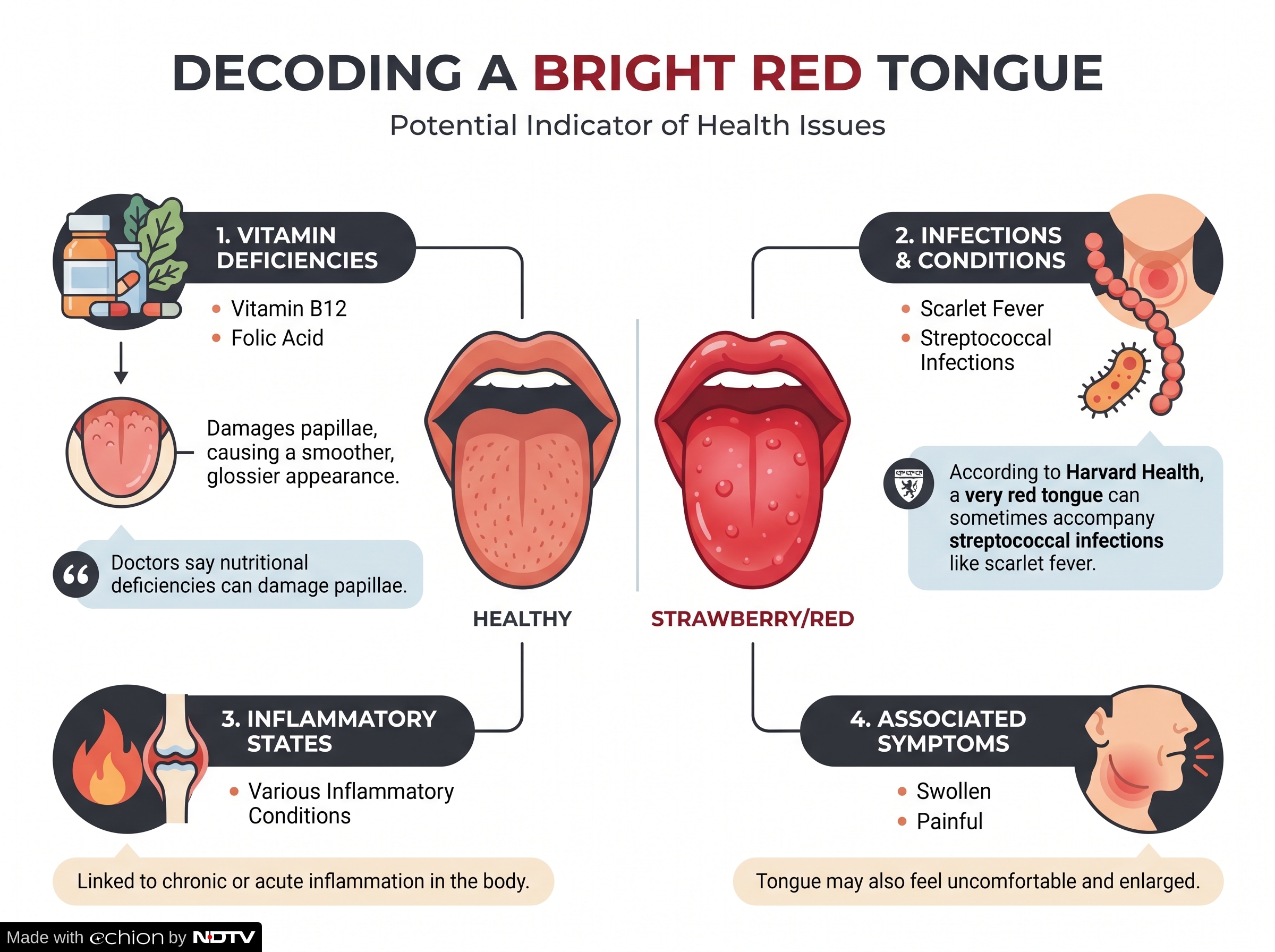
4. Bright Red Tongue: Vitamin Deficiency Or Infection
A bright red or "strawberry tongue" can sometimes indicate:
- vitamin B12 deficiency,
- folic acid deficiency,
- scarlet fever,
- or inflammatory conditions.
In some cases, the tongue may also appear swollen and painful. According to Harvard Health, a very red tongue can sometimes accompany streptococcal infections like scarlet fever. Doctors say nutritional deficiencies can damage papillae, giving the tongue a smoother and glossier appearance.
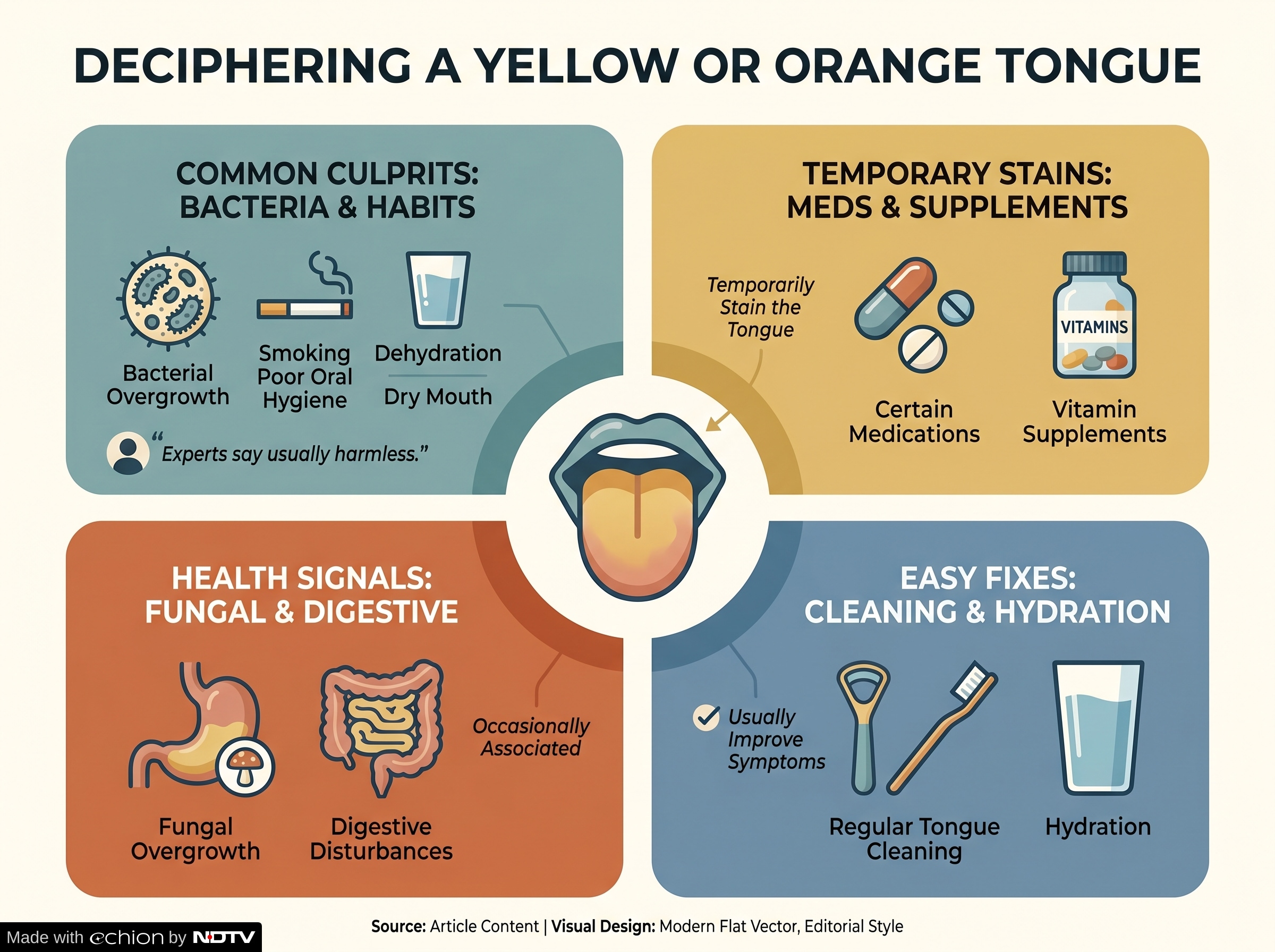
Yellow Or Orange Tongue: Bacteria Build-Up Or Digestive Issues
A yellowish or orange coating often develops due to:
- bacterial overgrowth,
- smoking,
- dehydration,
- poor oral hygiene,
- or dry mouth.
Sometimes, certain medications and vitamin supplements may temporarily stain the tongue. Experts say yellow tongue is usually harmless but can occasionally be associated with fungal overgrowth or digestive disturbances. Regular tongue cleaning and hydration usually improve symptoms.
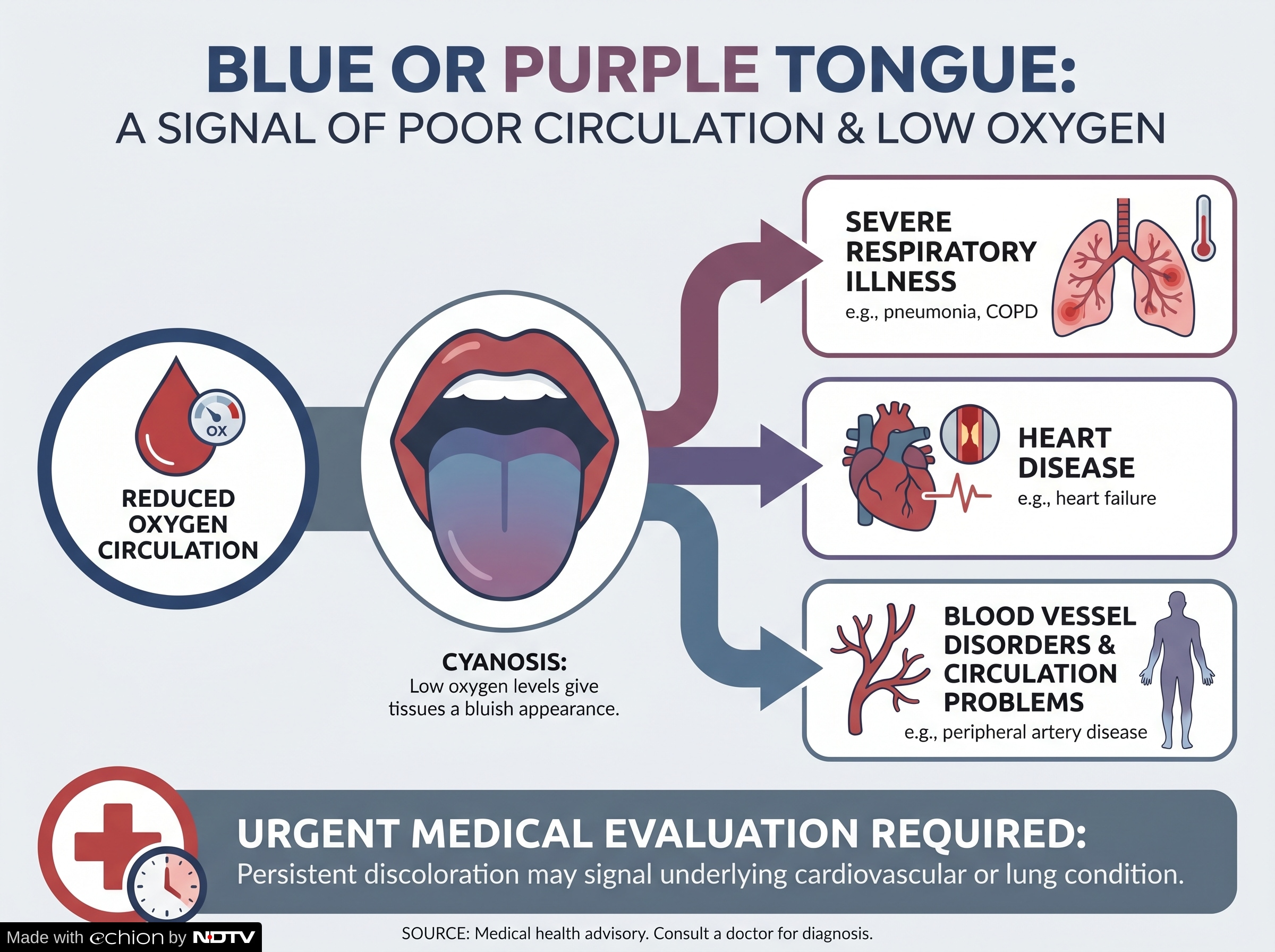
Purple Or Blue Tongue: Poor Circulation Needs Attention
A bluish or purple tongue may indicate reduced oxygen circulation in the blood.
Doctors say this can occasionally occur in:
- severe respiratory illness,
- heart disease,
- blood vessel disorders,
- or circulation problems.
Low oxygen levels may give tissues a bluish appearance, a condition known as cyanosis. Persistent purple or blue discolouration requires urgent medical evaluation because it may signal an underlying cardiovascular or lung condition.
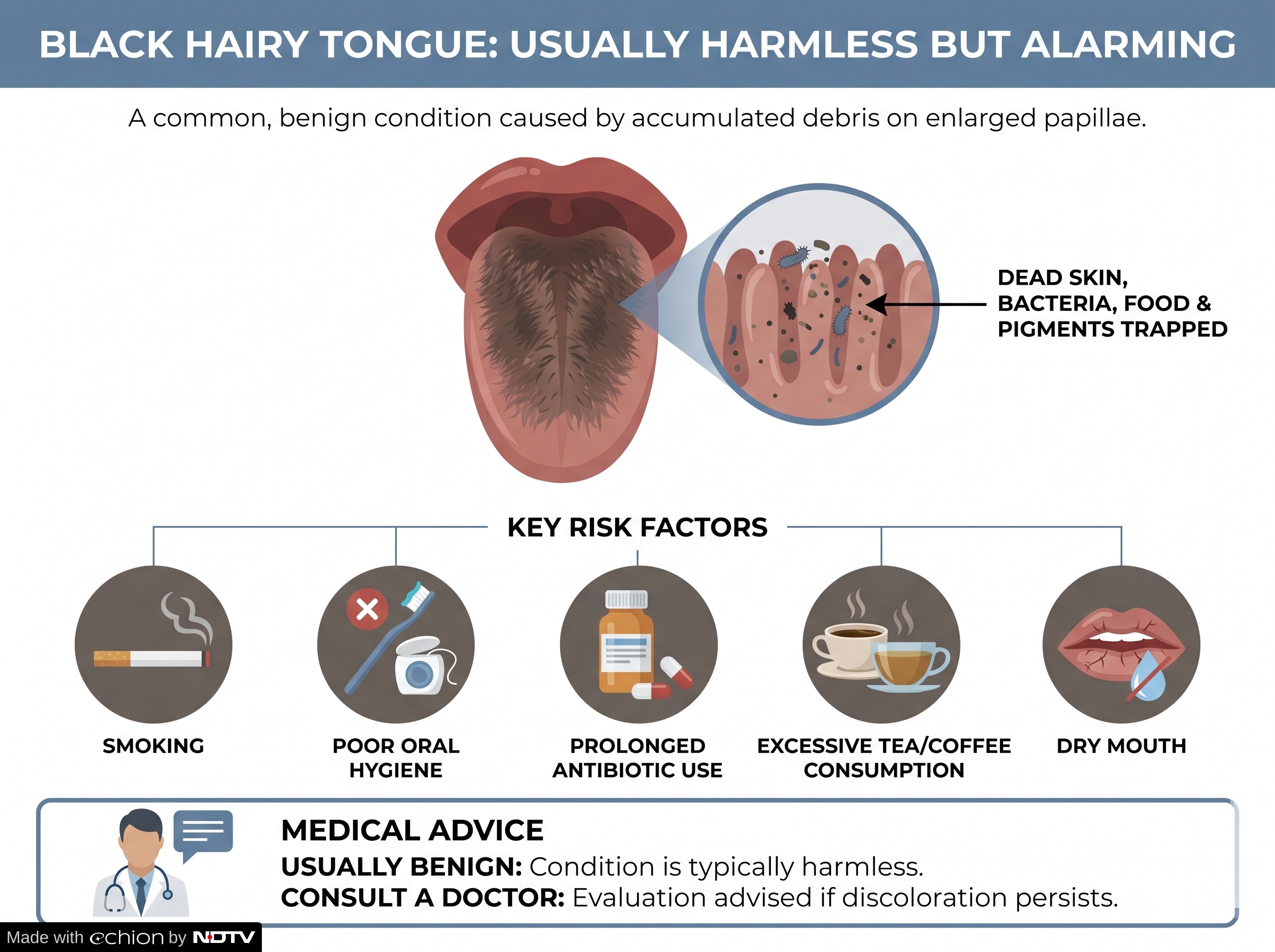
Black Tongue: Usually Harmless But Unusual
A black or dark furry-looking tongue can appear alarming but is often caused by a harmless condition called "black hairy tongue." This occurs when dead skin cells accumulate on enlarged papillae, trapping bacteria, food debris and pigments.
Risk factors include:
- smoking,
- poor oral hygiene,
- prolonged antibiotic use,
- excessive tea or coffee consumption,
- and dry mouth.
Although usually benign, doctors advise evaluation if the discoloration persists.
Also Read: World Oral Health Day: 8 Common Oral Health Myths People Still Believe
Sores, Patches And Lumps Should Never Be Ignored
Doctors warn that persistent sores, ulcers or colour changes lasting more than two weeks require medical attention. These may occasionally signal oral cancer, especially in tobacco users or heavy alcohol consumers.
Symptoms that need prompt evaluation include:
- non-healing ulcers,
- thick white or red patches,
- difficulty swallowing,
- persistent pain,
- numbness,
- or unexplained lumps.
According to WHO, tobacco and alcohol are among the biggest risk factors for oral cancers globally.
How To Keep Your Tongue Healthy
Doctors recommend:
- brushing your tongue daily,
- staying hydrated,
- avoiding tobacco products,
- limiting alcohol,
- eating nutrient-rich foods,
- and scheduling regular dental check-ups.
A balanced diet rich in iron, vitamin B12 and folate may also support tongue and oral health. Experts emphasise that while tongue changes can offer useful clues, they cannot diagnose diseases on their own. Persistent or unusual symptoms should always be assessed by a qualified healthcare professional.
Your tongue can reveal surprisingly important clues about your overall health. While temporary colour changes are often harmless, persistent white patches, redness, ulcers, swelling or unusual discoloration may indicate dehydration, vitamin deficiencies, infections or more serious conditions such as oral cancer.
Doctors say paying attention to tongue changes, alongside maintaining good oral hygiene and regular health check-ups, may help identify health problems earlier and improve long-term wellbeing.
Disclaimer: This content including advice provides generic information only. It is in no way a substitute for a qualified medical opinion. Always consult a specialist or your own doctor for more information. NDTV does not claim responsibility for this information.