

)
Diabetes affects the body in numerous ways due to its impact on insulin production and blood sugar levels. When diabetes is not well managed, it can lead to various complications that might not be immediately noticeable, often referred to as silent symptoms. These silent symptoms can include fatigue, gradual weight changes, or even blurred vision, which may be overlooked in daily life. Several symptoms of diabetes can be particularly visible on the hands. For instance, some may develop dark patches of skin, known as acanthosis nigricans, which can be a sign of insulin resistance.
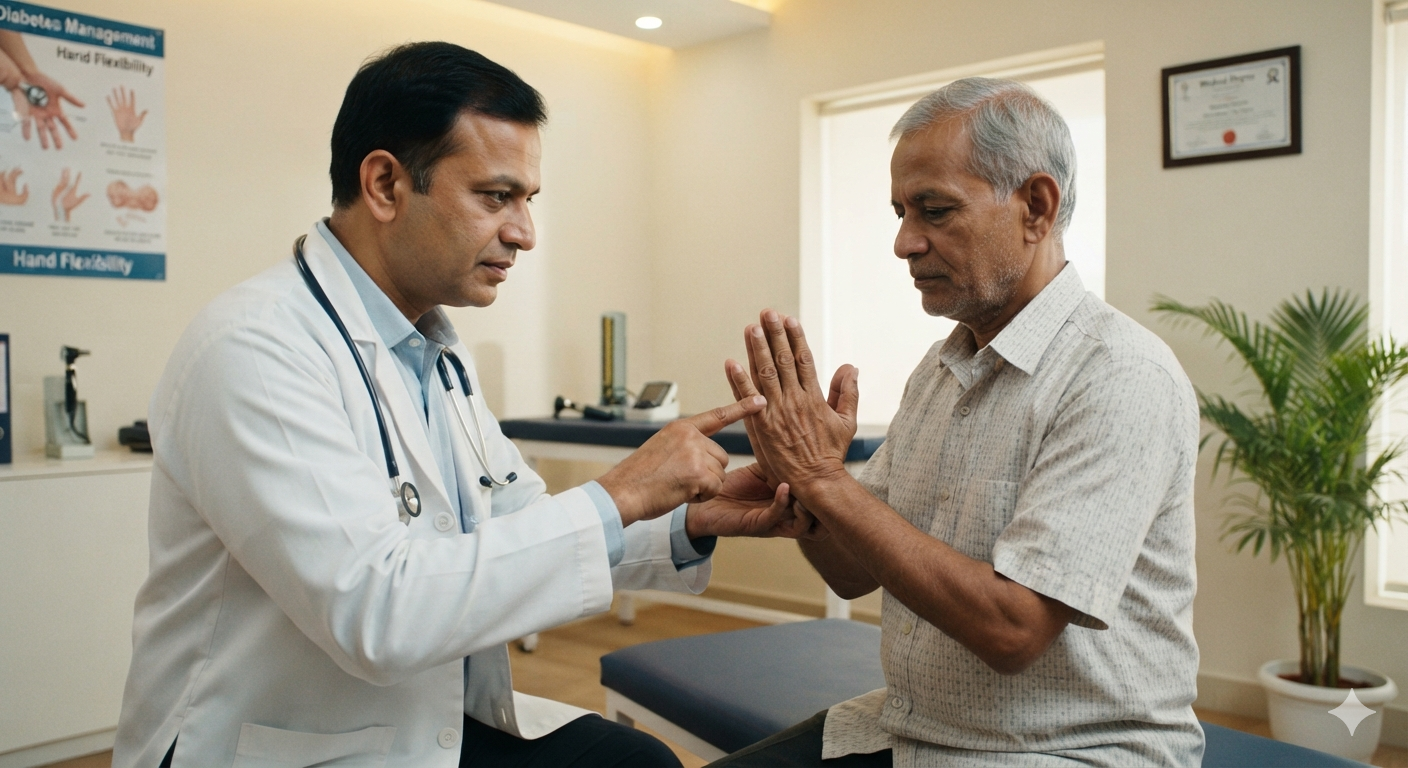
Another physical manifestation that can be observed is the difficulty in performing certain movements, such as bringing the palms together in a prayer-like position.
The prayer sign test for diabetes
The prayer sign test is a simple, non-invasive physical examination used by doctors to screen for limited joint mobility in the hands. It is an indicator of tissue stiffness caused by long-standing, poorly controlled diabetes.
How to perform the test:
- Raise both hands in front of your chest
- Press the palms and fingers of both hands flat together, exactly like the prayer position
- Fan your fingers slightly apart rather than keeping them tightly closed
- Try to maximise contact across the entire palmar surface, ensuring the finger joints are pressed together
Results are normal if your palms, fingers, and joints touch flatly without any space or gaps.
Results are abnormal if your fingertips touch, but you cannot flatten your palms or fingers together, leaving a clear gap despite your best effort.
An inability to join your hands is due to a complication known as diabetic cheiroarthropathy
High blood sugar over time causes excess sugar to stick to collagen and proteins in your tendons and skin. This process, called glycosylation, makes the tissue thick, waxy, and stiff. As a result, the small joints in your hands can lose their normal flexibility.
As a result, a person with long-standing or poorly managed Type 1 or Type 2 diabetes may lose the range of motion required to flatten their hands against each other. This joint stiffness is highly correlated with, and can be a warning sign for, other microvascular complications like diabetic retinopathy or kidney disease.
However, a positive prayer sign does not definitively mean you have diabetes, but it strongly suggests joint and tissue stiffness that warrants medical evaluation.
If you notice this limitation, especially alongside other symptoms of diabetes, including extreme thirst, frequent peeing, constant hunger, tiredness, blurry vision, slow healing of wounds and a waxy texture on skin, you should consult a doctor.
Moreover, diabetes can affect muscles and bones over time. High blood sugar levels can lead to reduced blood flow, affecting muscle health and sometimes resulting in muscle weakness or atrophy. Diabetes may also contribute to bone density loss, increasing the risk of fractures and joint issues.
Improving blood glucose control through medication, diet, and physical therapy can often halt the progression of this stiffness and sometimes even improve joint flexibility over time.
Disclaimer: This content including advice provides generic information only. It is in no way a substitute for a qualified medical opinion. Always consult a specialist or your own doctor for more information. NDTV does not claim responsibility for this information.