- Vitamin B3 (niacin) is vital for energy metabolism but can harm the liver if overdosed
- High doses of niacin supplements can cause liver inflammation, hepatitis, and failure
- Recommended daily niacin intake is 14-16 mg; toxicity occurs above 2,000-3,000 mg/day
A recent case highlighting a man hospitalised with liver damage after taking high doses of vitamin B3 supplements for longevity has sparked renewed concern about the risks of overusing dietary supplements. While vitamins are often perceived as safe and beneficial, experts warn that excessive intake, particularly of niacin (vitamin B3), can have serious consequences. Vitamin B3 plays a vital role in energy metabolism, helping the body convert food into usable energy and supporting skin, nerve and digestive health. It is naturally found in foods like meat, fish, nuts and fortified grains, and deficiency is rare in most populations. However, the rise of biohacking trends and longevity-focused supplementation has led many individuals to consume niacin in doses far exceeding recommended levels.
Health authorities emphasise that while moderate intake is safe, high-dose niacin, especially in supplement form, can overwhelm the liver, the organ responsible for metabolising it. In some cases, this can lead to inflammation, hepatitis and even acute liver failure.
Here's what science says about vitamin B3 toxicity, how it affects the liver, and why more is not always better when it comes to supplements.
Also Read: 8 Supplements You Should Avoid If You Have Kidney And Liver Problems
What Is Vitamin B3 And Why Do People Take It?
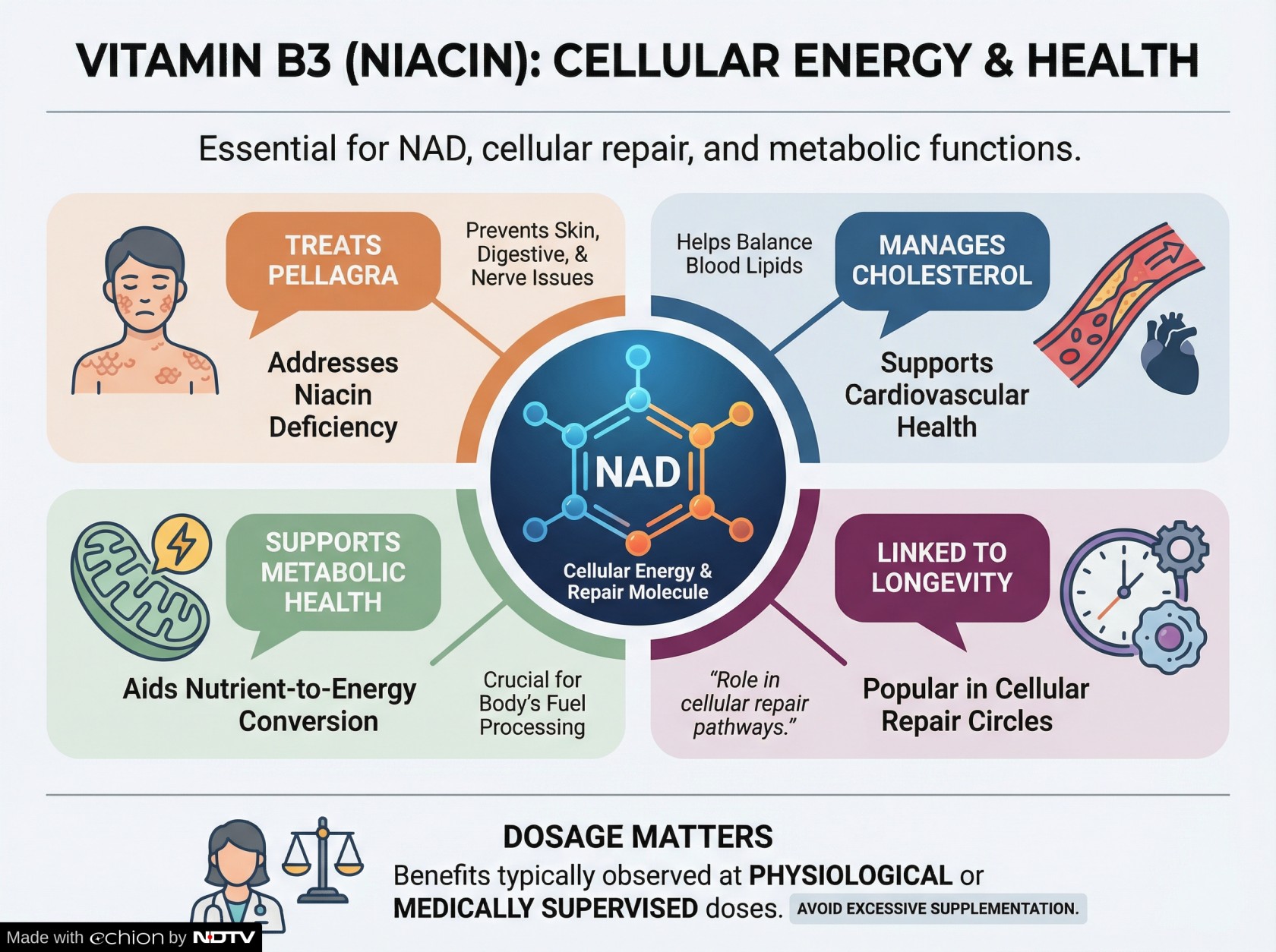
Vitamin B3, also known as niacin, is a water-soluble vitamin essential for producing nicotinamide adenine dinucleotide (NAD), a molecule crucial for cellular energy and repair.
It is commonly used for:
- Treating niacin deficiency (pellagra)
- Managing cholesterol levels
- Supporting metabolic health
In recent years, niacin has also gained popularity in longevity circles due to its role in cellular repair pathways. However, these benefits are typically observed at physiological or medically supervised doses, not excessive supplementation.
How Excess Niacin Damages The Liver
Unlike most B vitamins, niacin is a well-known cause of drug-induced liver injury when taken in high doses.
The liver metabolises niacin through specific biochemical pathways. When intake becomes excessive, these pathways become overwhelmed, leading to toxic byproducts and liver cell injury.
Key scientific findings include:
- High doses of niacin are linked to clinically significant liver injury, which can be severe or even fatal.
- Hepatotoxicity is dose-dependent, meaning risk increases with higher intake.
- Sustained-release formulations carry a higher risk of liver toxicity.
- In extreme cases, niacin toxicity has been associated with acute liver failure requiring transplantation.
What Dose Is Too Much?
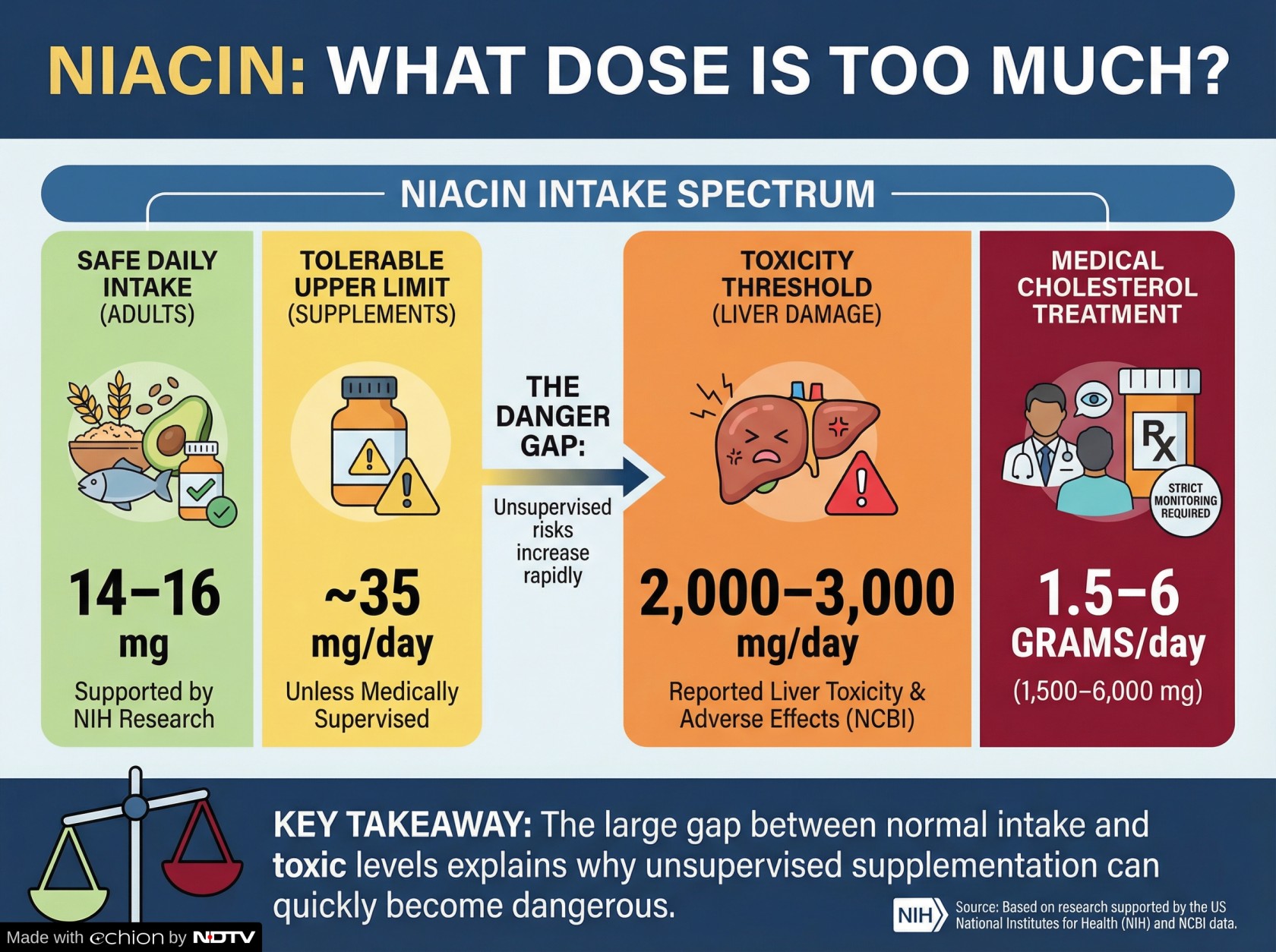
According to research supported by the US National Institutes for Health (NIH), the recommended daily intake of niacin for adults is around 14-16 mg, and the tolerable upper limit for supplements is about 35 mg per day unless medically supervised.
However, toxicity is typically seen at much higher doses:
- Liver toxicity reported at less than or equal to 2,000-3,000 mg/day
- Adverse effects, including liver damage, documented at around 3,000 mg/day
- Clinical doses used for cholesterol treatment range from 1.5-6 grams/day, which require strict monitoring
This gap between normal intake and toxic levels explains why unsupervised supplementation can quickly become dangerous.
Symptoms Of Niacin Toxicity
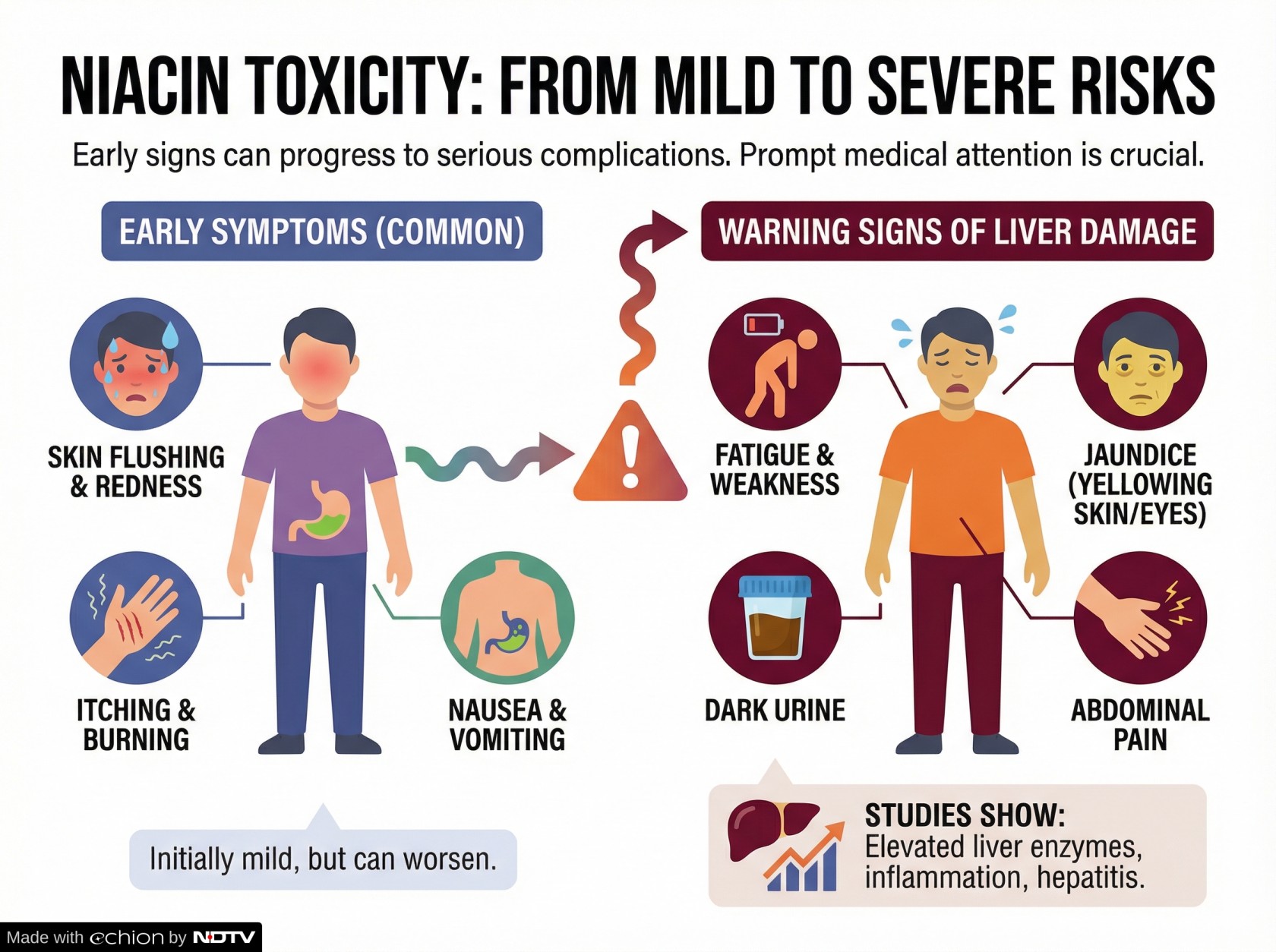
Early signs of excess niacin may appear mild but can progress to serious complications.
Common early symptoms:
- Skin flushing and redness
- Itching or burning sensation
- Nausea and vomiting
Warning signs of liver damage:
- Fatigue and weakness
- Yellowing of skin or eyes (jaundice)
- Dark urine
- Abdominal pain
Studies show that niacin toxicity can cause elevated liver enzymes, inflammation and hepatitis.
Also Read: Supplements After 50: Experts Share What's Optional, What's Essential For Indians
Why Supplements Are Riskier Than Food
Niacin from natural food sources is unlikely to cause toxicity, as intake levels remain within safe limits and are absorbed gradually.
In contrast, supplements:
- Deliver high doses in concentrated form
- May include sustained-release formulations linked to higher risk
- Are often taken without medical supervision
Research shows that while moderate dietary niacin may even offer health benefits, excessive supplemental intake increases the risk of liver toxicity.
Who Is At Higher Risk?
Certain groups are more vulnerable to niacin-induced liver damage:
- People taking high-dose supplements for cholesterol or longevity
- Individuals with pre-existing liver disease
- Those who consume alcohol regularly
- People combining multiple supplements
- Niacin therapy is not recommended in people with chronic alcohol use due to increased hepatotoxic risk.
The Bigger Picture: Supplements Are Not Always Safe
Contrary to popular belief, vitamins are not risk-free. While most vitamins are safe within recommended doses, niacin and vitamin A are notable exceptions that can harm the liver when overused.
Vitamin B3 is essential for health, but excessive intake, especially through supplements, can lead to serious liver damage. Scientific evidence clearly shows that high-dose niacin can cause hepatitis, liver failure and even life-threatening complications.
The key takeaway is simple: More is not better when it comes to vitamins. Always follow recommended daily limits and consult a healthcare professional before taking high-dose supplements, particularly for purposes like longevity or performance enhancement.
Disclaimer: This content including advice provides generic information only. It is in no way a substitute for a qualified medical opinion. Always consult a specialist or your own doctor for more information. NDTV does not claim responsibility for this information.