- About 89.8 million Indian adults struggle with diabetes or blood sugar management
- Some Indian potato varieties may reduce blood sugar spikes by slowing carbohydrate breakdown
- Sweet potatoes have lower glycaemic index and higher fiber than regular potatoes
About 89.8 million adults in India are struggling with diabetes or the inability to manage their blood sugar levels. The jarring figure is as per the findings in the Indian Council of Medical Research (ICMR), with its special initiative on lifestyle diseases, and found this exact number. Through looking at the complete Indian adult population, their dietary and lifestyle habits of people between the ages of 20 and 79 years, the evidence is clear. This exploding caseload has caused India to become the diabetes capital of the world, which has shifted focus to dealing with the basic dietary choices that may be affecting blood sugar levels. As daily food choices play a major role in how your blood sugar spikes and dips, your diet needs to be optimised for better regulation. One such choice is to focus on which type of potato you are eating daily and how it may be impacting your blood sugar levels.
Potatoes Vs Sweet Potatoes: Which One Is Better For Blood Sugar Control?
When it comes to blood sugar control, the exact type of potato that can prove beneficial for you and your unique lifestyle depends on a number of factors. There are multiple varieties of potatoes available in the Indian market, depending on where you reside. And each of these varieties has a different starch level and nutrient profile that may be similar, but its individual nutrient absorption rate varies. Here is what the studies say:
According to the International Journal of Food Science and Technology, which looked at the sweet potato, it was found that it has bioactive compounds, and each of them plays an active role in regulating blood sugar and reducing insulin resistance.
These bioactive compounds are as follows:
- Carotenoids are the natural pigments found in fruits and vegetables that give them their unique shade.
- Anthocyanins are natural plant pigments that give fruits and vegetables their identifiable shade.
- Phenolic acids are natural compounds found in plants that act like tiny protectors for your body.
As per the Indian Journal of Horticulture, the Central Potato Research Institute (Shimla) studied 46 Indian potato varieties. They found that some varieties (e.g., Kufri Anand, Kufri Arun, Kufri Neela) showed glucosidase inhibitory activity up to 52.8%, meaning they could slow down carbohydrate breakdown and reduce blood sugar spikes. This challenges the blanket assumption that all potatoes are harmful for diabetics.
Also Read: Paneer Vs. Tofu: Which Is A Richer Source Of Protein?
Nutritional Profile Of Potato And Sweet Potato
According to the ICMR and NIN, the exact nutrient breakdown of potatoes and sweet potatoes is as follows:
- Carbohydrates: 17 g per 100 g (mainly starch, high glycaemic index)
- Protein: 2 g per 100 g
- Fibre: 2 g per 100 g
- Vitamins: Vitamin C, vitamin B6, niacin, pantothenic acid
- Minerals: Potassium, phosphorus, magnesium, manganese, copper
- Phytochemicals: Phenolic acids, flavonoids, anthocyanins (in coloured varieties)
- Carbohydrates: 20 g per 100 g (lower GI compared to potato)
Sweet Potato's Nutrient Profile
- Protein: 1.6 g per 100 g
- Fibre: 3 g per 100 g (higher than potato, slows sugar absorption)
- Vitamins: Rich in vitamin A (beta-carotene), vitamin B6, vitamin C, and vitamin E
- Minerals: potassium, manganese, iron
- Phytochemicals: anthocyanins (purple varieties), carotenoids, phenolic acids
To draw an effective comparison between potatoes and sweet potatoes, you need to look at their nutrient profiles. According to the ICMR and the National Institute of Nutrition, which established dietary guidelines for Indians, frequent consumption of high-glycaemic index foods like potatoes, especially in fried forms, should be limited. Here are some other findings:
- They also acknowledge that moderation and preparation methods matter; you can boil, cool, and combine them with pulses and/or vegetables, which can be consumed as part of balanced diets.
- When it comes to sweet potatoes, it is considered to be a medicinal food, as per the findings mentioned in the Journal of Medicinal Food. Mainly because it has antidiabetic, anti-inflammatory, and anticancer properties, highlighting its role in stabilising blood sugar and reducing insulin resistance.
- To effectively choose whether aloo or shakarkandi should be on your plate, you need to consider exactly how they are prepared. The form of their consumption will change their impact on your blood sugar levels.
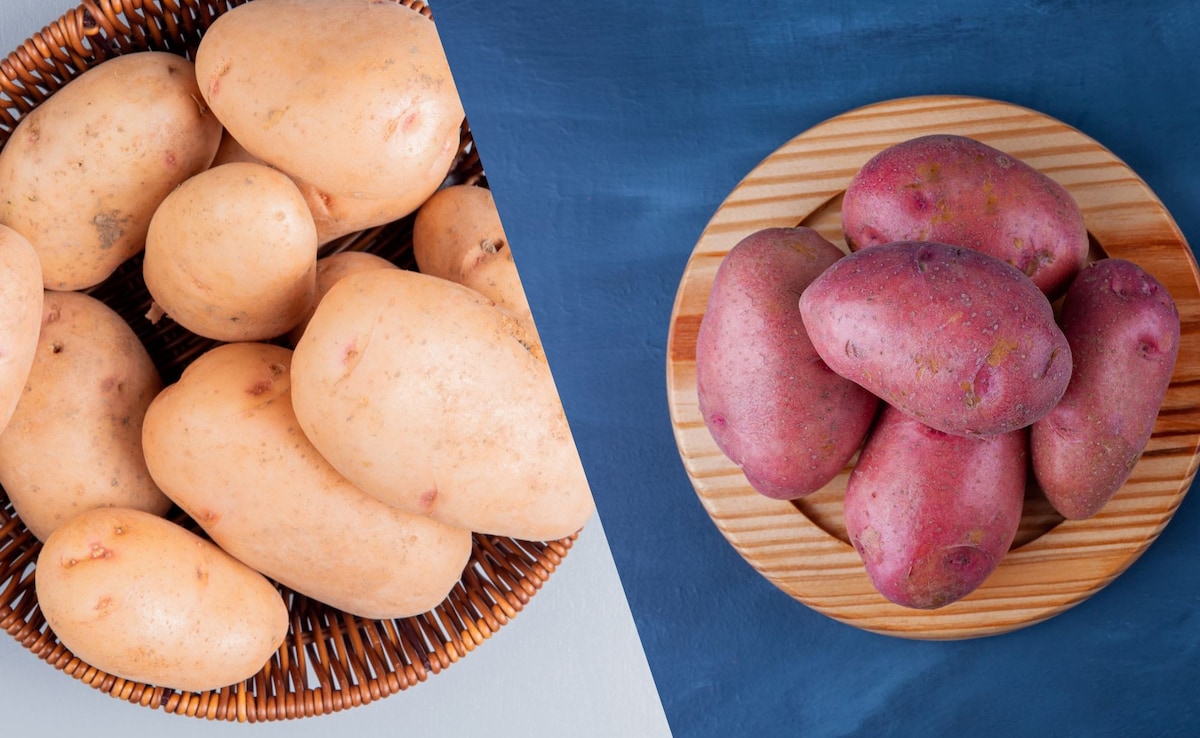
Potatoes and sweet potatoes
Photo Credit: Freepik
Glycaemic Index (GI) Of Potatoes And Sweet Potatoes
The term 'glycaemic index' refers to a measure of the exact level of sugar spikes caused after consuming a food. The exact GI of potatoes and sweet potatoes is as follows, as per the ICMR and NIN Dietary Guidelines:
- Potato: has a higher GI index, causing quicker spikes in blood sugar levels.
- Boiled potato GI: typically 78 to 82 (high GI category).
- Fried potato GI: even higher, due to added fat and rapid starch breakdown.
- Cooled boiled potatoes: GI can drop slightly to 65-70, because starch presence, making it harder to digest.
- Sweet potato GI: lower, usually 44 to 61, depending on preparation.
This is why how you prepare potatoes and sweet potatoes matters for your blood sugar levels.
Also Read: Orange Vs Purple Sweet Potato: Which One Is Healthier?
Practical Tips For Consuming Potatoes And Sweet Potatoes
- Dietary guidelines clearly indicate that portion control is required when consuming both types of potatoes.
- There are various traditional recipes, like the roasted shakarkandi chaat, that are better for you when compared with fried aloo.
- You can even combine potatoes and sweet potatoes with pulses and vegetables for balanced meals.
To effectively say which type of potato is better, sweet potatoes are generally better for blood sugar control. But consumption of potatoes should not be ignored, and they should be eaten in moderation; their preparation matters.
Note: Consulting a medical professional is key, especially if you are a diabetic as every body has a different genetic make-up that may impact what foods may suit you and which won't.
Disclaimer: This content, including advice, provides generic information only. It is in no way a substitute for a qualified medical opinion. Always consult a specialist or your own doctor for more information. NDTV does not claim responsibility for this information.