

)
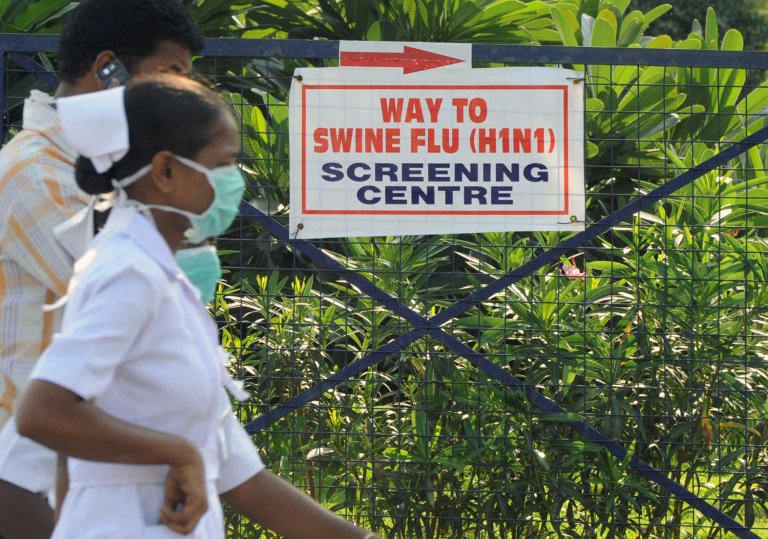
In 2009, the world met a new influenza virus that travelled faster than many public-health systems could track it. First detected in Mexico and the United States in April that year, the novel influenza A(H1N1) virus spread across continents within weeks. On June 11, 2009, the World Health Organization (WHO) declared the first influenza pandemic of the 21st century after sustained transmission was documented in multiple regions. It was popularly called "swine flu", although that name could be misleading: the virus was a novel influenza A (H1N1) strain containing a complex mixture of gene segments from swine, avian and human influenza viruses.
By the time WHO moved the pandemic into its post-pandemic phase on August 10, 2010, more than 214 countries and territories had reported laboratory-confirmed infections and at least 18,500 deaths had been officially reported. Later modelling studies, which accounted for deaths that surveillance systems missed, estimated that the virus may have caused 151,700 to 575,400 respiratory and cardiovascular deaths globally during its first year.
Now, with H1N1 cases rising in Delhi, Bengaluru and other parts of India, the 2009 experience offers something more useful than nostalgia: a reminder of how influenza behaves when a population encounters a new strain, and what public health learned from it.
April 2009: A new flu appears
The outbreak emerged in North America in April 2009. Unlike typical seasonal influenza, which predominantly causes severe disease among older adults, the pandemic H1N1 virus caused substantial illness among children, teenagers and younger adults. Very young children also had high hospitalisation rates.
The virus spread efficiently through respiratory transmission. Because the population had limited pre-existing immunity to this particular strain, infections accumulated rapidly. WHO declared a pandemic on June 11 after confirming sustained community transmission in multiple WHO regions. Importantly, "pandemic" described the geographical spread of the virus, not necessarily how deadly it was.
That distinction remains relevant today. A rise in H1N1 cases does not automatically mean a 2009-style pandemic is unfolding.
What happened in India?
India reported its first laboratory-confirmed H1N1 case on May 16, 2009, in Hyderabad. The virus subsequently spread to multiple states. A retrospective analysis published in the Indian Journal of Medical Research found that India's first pandemic wave peaked in December 2009. Among 33,751 people tested for H1N1 during the study period, 7,943 (about 23.5%) tested positive.
Another review of India's pandemic experience reported 27,236 laboratory-confirmed cases and 981 deaths during 2009. India's response included surveillance, laboratory testing, isolation and clinical management, along with measures at airports and designated healthcare facilities. The government also worked to expand access to the antiviral drug oseltamivir, which was active against the pandemic H1N1 virus.
But the response also exposed challenges that would sound familiar more than a decade later: limited testing capacity, uneven healthcare infrastructure, shortages and delays, public anxiety and the difficulty of communicating risk while scientific knowledge was still evolving.
Also Read: H1N1 Alert: Family Members Falling Sick One-By-One? How To Break The Chain
The race against the virus
One of the biggest weapons available in 2009 was antiviral treatment. The pandemic H1N1 virus was susceptible to neuraminidase inhibitors, including oseltamivir and zanamivir. These medicines could reduce the duration and severity of influenza when used appropriately, particularly when treatment was started early.
But antivirals were not a magic eraser. Timing mattered, and severe disease could progress rapidly, particularly in vulnerable patients. The pandemic also revealed that apparently healthy people could develop severe disease. Certain underlying conditions, including respiratory disease and obesity, were associated with increased risk of severe illness in studies conducted during the pandemic.
Pregnancy was another important risk factor. Studies from the pandemic found that pregnant women were disproportionately affected by severe influenza, reinforcing the importance of vaccination and early treatment in this group.
Then came the vaccine
The vaccine race began while the virus was already spreading. WHO's Strategic Advisory Group of Experts on Immunization held an extraordinary meeting in July 2009 to assess the emerging evidence and advise on pandemic vaccination.
But producing enough vaccine quickly was a major global challenge. Manufacturing capacity, regulatory approvals, distribution and prioritisation all had to be worked out while transmission continued. India eventually introduced pandemic H1N1 vaccines. An imported inactivated monovalent vaccine was made available to healthcare workers in March 2010, while an Indian live-attenuated vaccine was also developed and distributed that year.
The experience highlighted an uncomfortable reality of pandemic preparedness: having a vaccine platform is not the same as having millions of doses ready on day one.
What 2009 taught the world
The biggest lesson was perhaps that speed matters. WHO's retrospective assessment noted that the 2009 pandemic exposed weaknesses in the ability of countries and international agencies to rapidly assess pandemic severity, communicate uncertainty and implement risk-management plans.
It also reinforced the value of surveillance, laboratory networks, genomic and epidemiological monitoring, early access to antivirals, vaccination and clear public communication. And one lesson remains particularly relevant in 2026: influenza does not disappear simply because the world has experienced a different respiratory pandemic. The H1N1 virus that caused the 2009 pandemic did not vanish after 2010. It became part of the viruses that circulate as seasonal influenza A(H1N1).
What does 2009 mean for today's H1N1 rise?
Delhi has reported 1,777 H1N1 infections up to August 20, 2026, compared with 229 during the corresponding period last year, according to NCDC data reported by NDTV. Bengaluru and other cities have also reported increased influenza activity. (NDTV) That is a reason for awareness, not automatic alarm. Today's H1N1 is not the same public-health situation as 2009. Healthcare systems have more experience with the virus, diagnostic capabilities have improved and seasonal influenza vaccines include protection against the pandemic-derived H1N1 lineage.
At the same time, influenza can still cause pneumonia, respiratory failure and other complications, especially among older adults, young children, pregnant women and people with underlying illnesses. The practical lesson from 2009 is therefore surprisingly simple: watch the data, respect the virus and don't wait for panic before taking respiratory infections seriously.
The 2009 H1N1 pandemic was not the apocalypse that some feared, but neither was it a minor flu season. It was a global stress test for modern infectious-disease surveillance, treatment, vaccine development and public-health communication. Fifteen years later, H1N1 remains with us as a seasonal influenza virus. The current rise in cases in Delhi and Bengaluru is a reminder that old viruses can still create new public-health challenges. The best response is neither complacency nor panic. It is the less dramatic, and much more useful, combination of surveillance, vaccination, timely medical care, sensible infection-control measures and evidence-based information.
Read More: H1N1 Cases Surge Further In Delhi, Bengaluru: How Is Swine Flu Different From COVID-19?
Disclaimer: This content including advice provides generic information only. It is in no way a substitute for a qualified medical opinion. Always consult a specialist or your own doctor for more information. NDTV does not claim responsibility for this information.