- The new SPVX02 vaccine remains stable at 30°C for two years, tested in an early Phase I human trial
- Thermostable vaccines could reduce wastage and ease distribution in low-resource and remote areas
- India’s immunisation program could benefit from fridge-free vaccines due to challenging cold chain needs
Vaccines have saved millions of lives, but delivering them safely remains a major logistical challenge. Most vaccines must be stored and transported within a narrow temperature range, usually between 2°C and 8°C, to maintain their effectiveness. This system, known as the "cold chain," requires refrigerators, insulated transport and reliable electricity from the factory to the clinic. Now, scientists are testing a new vaccine technology that could eliminate this requirement altogether. A thermostable vaccine designed to remain effective even at room temperature has shown promising results in an early human trial. Researchers say the innovation could transform how vaccines are distributed, particularly in regions where maintaining refrigeration is difficult.
The vaccine, called SPVX02, targets tetanus and diphtheria and was developed by UK-based biotechnology company Stablepharma with support from the UK Health Security Agency. Early results suggest the vaccine can remain stable at temperatures around 30°C for up to two years, raising the possibility of immunisation programmes that no longer depend on continuous refrigeration.
Public health experts say such technology could significantly improve vaccine access in low- and middle-income countries, reduce wastage and simplify global immunisation efforts.
The Problem With The Global Vaccine Cold Chain
Most modern vaccines are sensitive biological products that degrade if exposed to high temperatures or freezing conditions. To prevent this, a complex temperature-controlled supply chain is required from manufacturing facilities to health clinics.
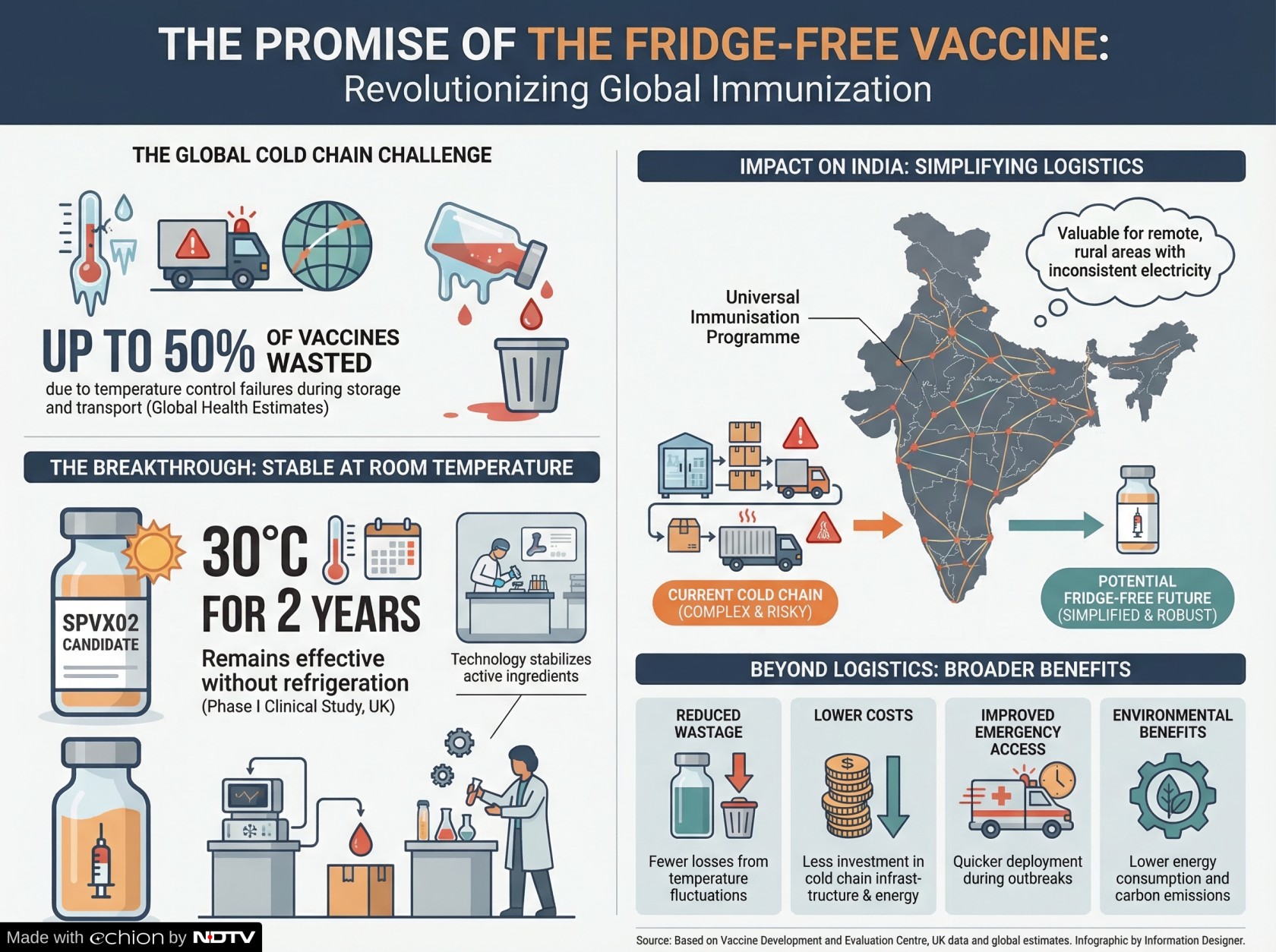
However, maintaining this cold chain is expensive and logistically challenging, especially in remote or low-resource settings. According to estimates cited by global health experts, up to half of vaccines produced worldwide may be wasted due to temperature-control problems during storage and transport.
Cold chain failures can occur at multiple stages, including transport delays, equipment breakdowns or power outages. These challenges are particularly significant in rural regions where infrastructure is limited. Because of these barriers, many health experts have long advocated the development of thermostable vaccines that remain effective even when stored outside refrigerated conditions.
Also Read: New Oral Polio Vaccine Approved By WHO: A Boost For India's Eradication Efforts?
What Makes The New Fridge-Free Vaccine Different
The new vaccine candidate, SPVX02, uses a technology designed to stabilise the vaccine's active ingredients so they can withstand higher temperatures without losing potency. Unlike traditional vaccines that must remain refrigerated, early findings from a Phase I clinical study suggest the vaccine remains effective after being stored at 30°C for two years.
The trial was conducted at the Vaccine Development and Evaluation Centre in the United Kingdom, where researchers tested the vaccine in healthy volunteers to evaluate its safety and immune response.
Phase I trials are the earliest stage of human testing and primarily assess safety, side effects and appropriate dosage levels. If results continue to be positive, larger clinical trials will compare the fridge-free vaccine with currently approved refrigerated vaccines. Scientists say the same technology platform could potentially be applied to many existing vaccines in the future.
Why This Breakthrough Could Matter For India
A fridge-free vaccine could have significant implications for India, which runs one of the largest immunisation programmes in the world. India's Universal Immunisation Programme (UIP) reaches millions of children each year and requires an extensive cold chain network of storage facilities, refrigerated trucks and vaccine carriers to deliver doses across urban and rural areas.
Maintaining these systems across a vast country with varied climates can be difficult. Heat exposure during transport or power outages can lead to vaccine spoilage, resulting in wastage and logistical costs.
A thermostable vaccine could simplify this process by allowing vaccines to be stored and transported at room temperature, reducing reliance on refrigeration equipment. This could be particularly valuable in remote regions where electricity supply is inconsistent or where healthcare facilities lack adequate refrigeration.
Potential Benefits Beyond Logistics
Experts say fridge-free vaccines could offer several additional advantages beyond simplifying distribution.
- Reduced Vaccine Wastage: Thermostable vaccines could help reduce losses caused by temperature fluctuations during transport and storage.
- Lower Costs: Cold chain infrastructure requires significant investment in equipment, maintenance and energy consumption.
- Improved Access In Emergencies: During disease outbreaks or humanitarian crises, vaccines that do not require refrigeration could be deployed more quickly.
- Environmental Benefits: Reducing reliance on refrigeration could lower energy consumption and carbon emissions associated with vaccine storage.
Researchers also note that simplifying vaccine logistics could help improve global vaccination coverage.
Also Read: All About The HPV Vaccine In India: Age, Doses And Who Should Avoid
What Happens Next In The Research
Although early results are encouraging, the vaccine still needs to pass through several stages of clinical testing before it can be widely used. Future trials will involve larger groups of participants to confirm safety, determine effectiveness and compare the immune response with existing vaccines.
If successful, researchers believe the technology could be adapted to stabilise other vaccines as well, including those used in routine immunisation programmes. Scientists are also exploring how similar approaches could improve the stability of biologic medicines and other temperature-sensitive drugs.
The development of a fridge-free vaccine represents a potentially transformative step in global health. By eliminating the need for strict refrigeration during storage and transport, thermostable vaccines could simplify immunisation programmes, reduce costs and expand access to life-saving vaccines.
For countries like India, where large populations live in remote or resource-limited areas, such innovations could play a crucial role in improving vaccine delivery and strengthening public health systems. While further research is needed before the technology becomes widely available, experts say the early findings highlight how scientific innovation could reshape the future of vaccination worldwide.
Disclaimer: This content including advice provides generic information only. It is in no way a substitute for a qualified medical opinion. Always consult a specialist or your own doctor for more information. NDTV does not claim responsibility for this information.