Muli, or radish, is typically consumed whole, pickled, or used in cooking to prepare various dishes. However, did you know that radish leaves, when prepared correctly by washing off the dirt, can offer health benefits? The green leaves are normally thrown away, but this is your cue to soak them in water, salt them or pickle them for a dish. One of the most important health benefits that has shifted the spotlight on consuming radish leaves is their ability to promote overall kidney health.
According to the Lancet Journal, 115 to 120 million people are living with some form of kidney disease, with prevalence rates rising due to diabetes, hypertension, lifestyle factors and environmental pollution. This is why making dietary changes that maintain your kidney health are essential. But also keep in mind that radish leaves can only be helpful to a certain extent. Every vegetable has limitations when it comes to aiding in kidney health; eating it consistently is important to feel a difference. And solely eating healthy foods will not improve kidney health; there is a combination of factors that impact it. You need to exercise daily, have correct posture, and not indulge in alcohol and smoking or any other detrimental lifestyle habits for your kidney health.
Is Consuming Muli Ki Patte Or Radish Leaves At Night Beneficial For Kidney Stones?
The answer to this question is yes, but only for improving overall kidney health; once you are diagnosed with kidney stones, dietary interventions only work for managing symptoms. They are not a replacement for medical treatment. Whether they are suitable for you should be determined by a medical professional after looking at your medical history.
For otherwise healthy individuals who want to avoid getting kidney stones or any other kidney-related issues, radish leaf consumption can be beneficial in specific amounts. This is because, according to the International Journal of Current Science, radish contains vitamins, minerals, fibre content and hydration benefits; all of these aspects may play a major role in nourishing kidney health.
Here is what studies say about effectively using radish leaves to boost your kidney health:
- According to the Journal of Functional Foods (2024), radish leaves, when consumed in moderation as part of a healthy diet, nourish the body with their antioxidant dose.
- In turn, these antioxidants protect the renal tissue in the kidneys from oxidative damage. A major factor that leads to cellular ageing and also affects internal organ functioning.
What They Are Kidney Stones And Why Radish Leaves Help?
To effectively understand the role of radish leaves for kidney stone prevention, the major causes of this health problem, like lack of hydration, overall diet and oxalate intake, need to be looked at. First of all, kidney stones are primarily hard deposits that cause obstruction, made up of minerals and salts. While a mineral and salt intake is necessary for daily functioning, the problem arises when there is too much of it or not enough, which causes kidney issues. The root cause of the problem is the body's inability to process them due to a mixture of factors, such as not drinking enough water or having a high oxalate intake.
The most common issue with kidney stones is the unbearable pain during urination, as they cause obstruction, so making dietary changes can work in your favour.
Note: Radish leaves could interfere with your prescribed medications if you already have kidney issues. Consult a medical professional for the best course of action.
Read More: Can Eating Raspberries Help Prevent Kidney Stones?
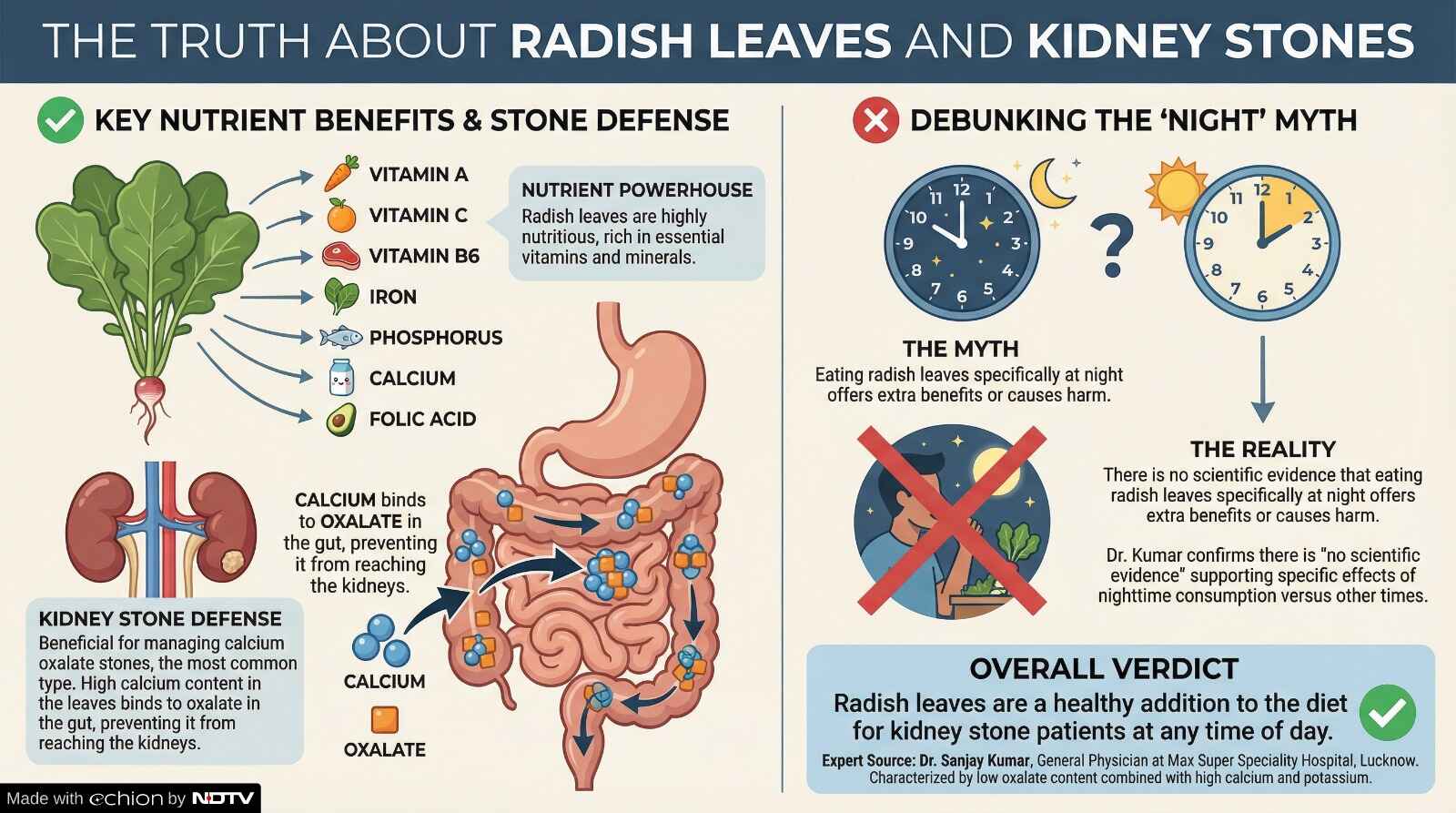
Why Should You Eat Radish Leaves At Night?
Radish leaves can be eaten for dinner, but they can also be consumed as a dinner side dish, making them a part of daily consumption. While there are no peer-reviewed studies on eating radish leaves at night for kidney health, there are studies like the World Journal of Pharmacy and Pharmaceutical Sciences which prove radish is effective for helping prevent crystal formation, common in kidney stones. Here are some other health benefits of eating radish leaves as part of a daily diet:
As per the International Journal of Molecular Sciences, radish leaves were noted for their diuretic and detoxifying properties. This means that they can help flush excess minerals and reduce stone risk.
According to general dietary guidelines, hydration, low oxalate intake, and balanced mineral consumption are key to preventing stones. Radish leaves provide hydration and fibre, but their oxalate content means excessive consumption may worsen stone risk in sensitive individuals.
Ways To Consume Radish Leaves
There are various ways to safely prepare radish leaves for consumption; here is a comparison:
- Raw radish leaves may only be advisable for you if you have a fast metabolism and have been eating radishes for a long time without any issues.
- For sensitive individuals, instead of cooking it, pickling is better, as turning it into a fermented form can increase its health benefits.
- Only consume a small portion, and assess how agreeable it is for you and your digestive system.
- If you eat radish leaves at night, then there are benefits like hydration and fibre intake. But the disadvantages include possible bloating or digestion issues.
Balanced intake is recommended with moderation; consult a doctor if prone to stones to be safe.
Read More: 6 Health Benefits Of Muli Or Radish
Precautions And Who Should Avoid Eating Radish Leaves
Here are the precautions to take with radish leaf consumption:
- People with kidney disease, digestive issues, or high oxalate sensitivity should consult a medical professional and figure out if they can eat radish leaves safely.
- If you have never eaten radishes, then it is advisable to consult a dietician or nutritionist for the right course of action.
Radish leaf consumption may support kidney health, but it is not a proven cure for stones. The key is to practise moderation, eat a balanced diet, and seek medical guidance to be safe.
Disclaimer: This content, including advice, provides generic information only. It is in no way a substitute for a qualified medical opinion. Always consult a specialist or your own doctor for more information. NDTV does not claim responsibility for this information.