- Stressful individuals in social networks may accelerate biological ageing according to new research
- Study of 2,300+ adults linked toxic relationships to 1.5% faster ageing pace per stressor
- Stress hormones like cortisol trigger inflammation and DNA damage affecting cellular ageing
You often hear that stress is bad for health. You might also have heard or even felt in your gut that a particular toxic person around you is making you feel more fatigued, distressed and unhappy. But what if science did actually swing back and reveal that the people around you, especially those who constantly create conflict, could actually make you age faster? A new study published in the journal Proceedings of the National Academy of Sciences suggests that difficult or stressful individuals in one's social network may accelerate biological ageing. Researchers describe such individuals as "hasslers", people who consistently create stress through criticism, conflict or negative behaviour.
The findings highlight how social environments can influence physical health, not just mental wellbeing. Scientists increasingly recognise that chronic stress affects multiple biological systems in the body, from inflammation to immune function. Over time, these effects can contribute to what researchers call accelerated biological ageing, meaning the body ages faster than expected for a person's chronological age.
According to the World Health Organization, chronic stress is linked to numerous health risks including cardiovascular disease, metabolic disorders and weakened immunity. The new research adds to growing evidence that everyday social stress, such as strained relationships, can also leave measurable biological footprints on the ageing process.
In other words, the company you keep may influence not only your mood but also how quickly your body ages.
What The Study Found
The research analysed data from 2,300+ adults aged 18 to 104, examining their social networks and identifying individuals who caused persistent stress or conflict. Participants provided saliva samples that allowed researchers to measure biological ageing using DNA methylation "epigenetic clocks." These tools estimate how quickly the body is ageing at a cellular level rather than simply counting years lived.
The results revealed a clear pattern:
- Each additional stressful or "toxic" person in someone's social network was associated with about a 1.5% faster pace of ageing.
- People with such relationships showed a biological age roughly nine months older than peers of the same chronological age without these stressors.
- Interestingly, stressful friends and extended family members appeared to have stronger effects on ageing than spouses. Researchers suggest that the emotional support often present in marriages may buffer some of the negative effects of conflict.
Also Read: Understanding How Chronic Stress Affects Your Heart And Effective Ways To Manage It
How Stress Can Speed Up Ageing
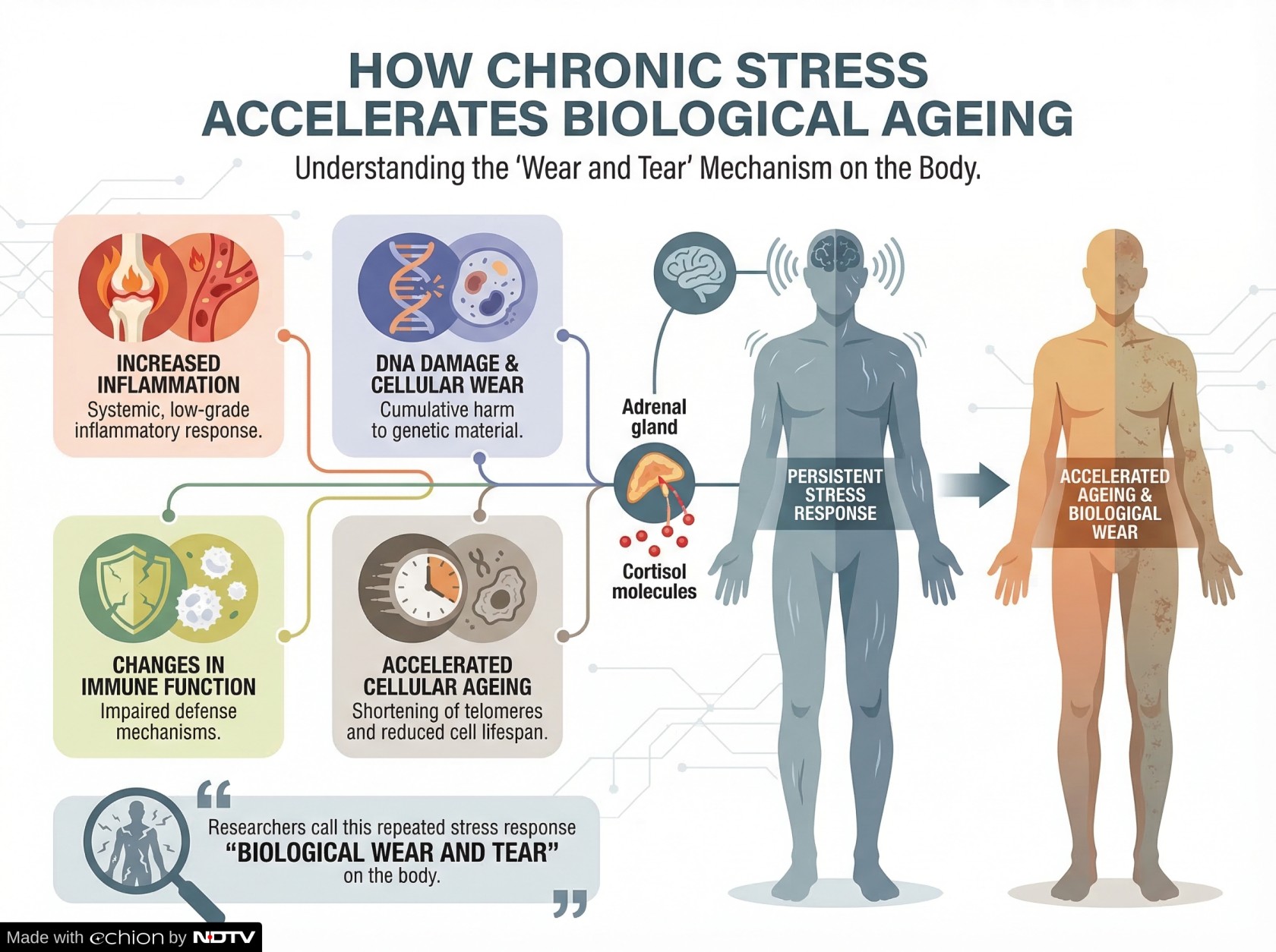
Scientists have long known that chronic stress can affect the body in profound ways. One of the key biological mechanisms involves the stress hormone cortisol, which is released during difficult situations. When stress becomes persistent, cortisol and other stress-related hormones can trigger several harmful processes, including:
- Increased inflammation
- DNA damage and cellular wear
- Changes in immune function
- Accelerated cellular ageing
Studies show that repeated stress responses can lead to what researchers call "biological wear and tear" on the body. At the cellular level, this may affect telomeres, protective DNA structures linked to ageing, as well as epigenetic markers that regulate gene activity. Earlier research has also demonstrated that chronic stress can shorten telomeres, another indicator of accelerated ageing.
In simple terms, long-term exposure to stressful relationships may continuously activate the body's stress response system, gradually influencing how cells age.
Why Social Relationships Matter For Health
Positive social connections are widely recognised as an important factor for longevity and wellbeing. According to the National Institute on Aging, strong relationships with friends and family can improve emotional health, reduce stress and even lower the risk of certain chronic diseases.
However, the new study highlights the flip side of social ties, emphasising that not all relationships are beneficial. Toxic interactions, such as constant criticism, manipulation or conflict, may act as chronic stressors. Over time, these interactions may contribute to inflammation and increased risk of age-related diseases.
Also Read: Stressing Out? 7 Breathing Exercises That Can Lower Your Heart Rate
What You Can Do To Protect Your Health
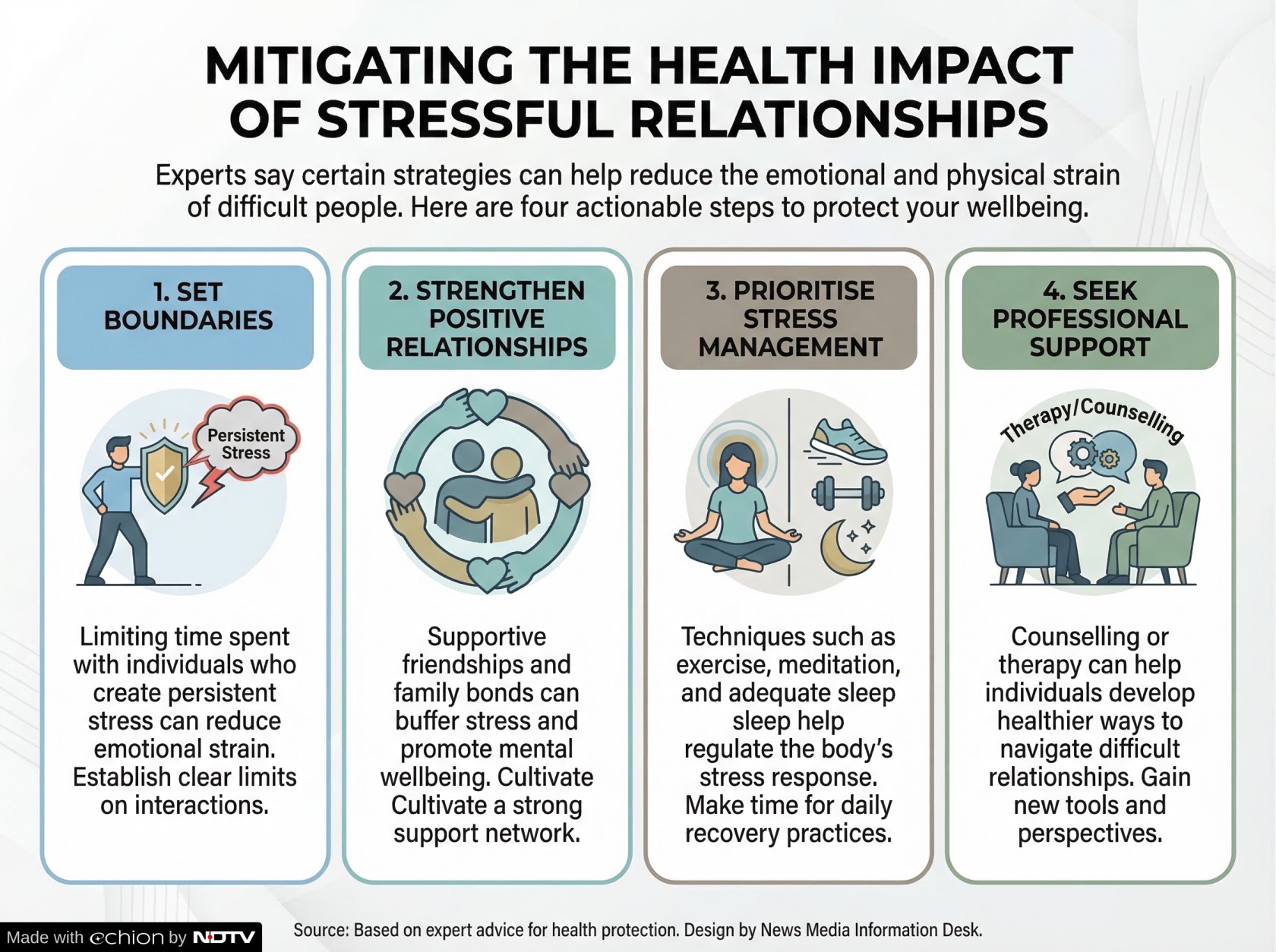
While it may not always be possible to avoid difficult people completely, experts say certain strategies can help reduce the health impact of stressful relationships.
- Set boundaries: Limiting time spent with individuals who create persistent stress can reduce emotional strain.
- Strengthen positive relationships: Supportive friendships and family bonds can buffer stress and promote mental wellbeing.
- Prioritise stress management: Techniques such as exercise, meditation and adequate sleep help regulate the body's stress response.
- Seek professional support: Counselling or therapy can help individuals develop healthier ways to navigate difficult relationships.
The new research adds to growing evidence that our social environments play a crucial role in shaping physical health. Difficult or toxic relationships may not only affect emotional wellbeing but also leave measurable biological effects on the ageing process. While occasional conflict is a normal part of life, persistent stress from negative social ties may gradually accelerate ageing and increase health risks. Nurturing supportive relationships, and setting boundaries with stressful ones, may therefore be an important step toward healthier ageing.
Disclaimer: This content, including advice, provides generic information only. It is in no way a substitute for a qualified medical opinion. Always consult a specialist or your own doctor for more information. NDTV does not claim responsibility for this information.