

)
Ovarian cancer is often called a "silent" disease because its symptoms are vague and easy to dismiss bloating, pelvic discomfort, a change in appetite. But for a significant number of women, the earliest and most important warning sign isn't a symptom at all. It's a family tree. Most ovarian cancers are not inherited. However, up to 25% of cases are linked to hereditary cancer syndromes, most commonly mutations in the BRCA1 and BRCA2 genes and Indian cohort data shows a similar picture, with studies reporting BRCA1/2 mutation prevalence ranging from roughly 24% to 28% among high-risk Indian patients with a family history of breast or ovarian cancer. The difference these mutations make is substantial: while the average lifetime risk of ovarian cancer for the general population is under 2%, a North Indian study found that risk climbs to 26-54% for BRCA1 carriers and 10-23% for BRCA2 carriers. These same mutations also raise the risk of breast, pancreatic, and other cancers, and can be inherited from either the maternal or paternal side of the family.
This is a critical point that deserves more attention in clinical practice and public awareness alike: a family history of cancer isn't confined to one side of the family, and it isn't limited to ovarian cancer alone.
Reading the warning signs in a family history
Certain patterns should prompt a closer look:
- Multiple relatives on either side of the family diagnosed with breast or ovarian cancer
- Breast cancer diagnosed at a young age, typically before 50
- A male relative with breast cancer
- A family member diagnosed with both breast and ovarian cancer, or cancer in both breasts
A first- or second-degree relative a parent, sibling, child, grandparent, aunt, uncle, niece, or nephew diagnosed with ovarian cancer at any age is reason enough to raise the topic with a physician.
When a conversation with a doctor becomes essential
Beyond family history, there are clear clinical triggers for seeking genetic counseling: Anyone diagnosed with epithelial ovarian, fallopian tube, or primary peritoneal cancer should be offered genetic counseling and testing, regardless of age or family history this is now standard guidance from leading gynecologic oncology bodies.
Persistent symptoms abdominal bloating, pelvic pain, early satiety, or urinary urgency that represent a change from normal and don't resolve warrant prompt medical evaluation, irrespective of family history.
Women who underwent genetic testing before 2014 may benefit from retesting, as testing panels have expanded significantly to include additional genes beyond BRCA1/2.
Why early conversations matter
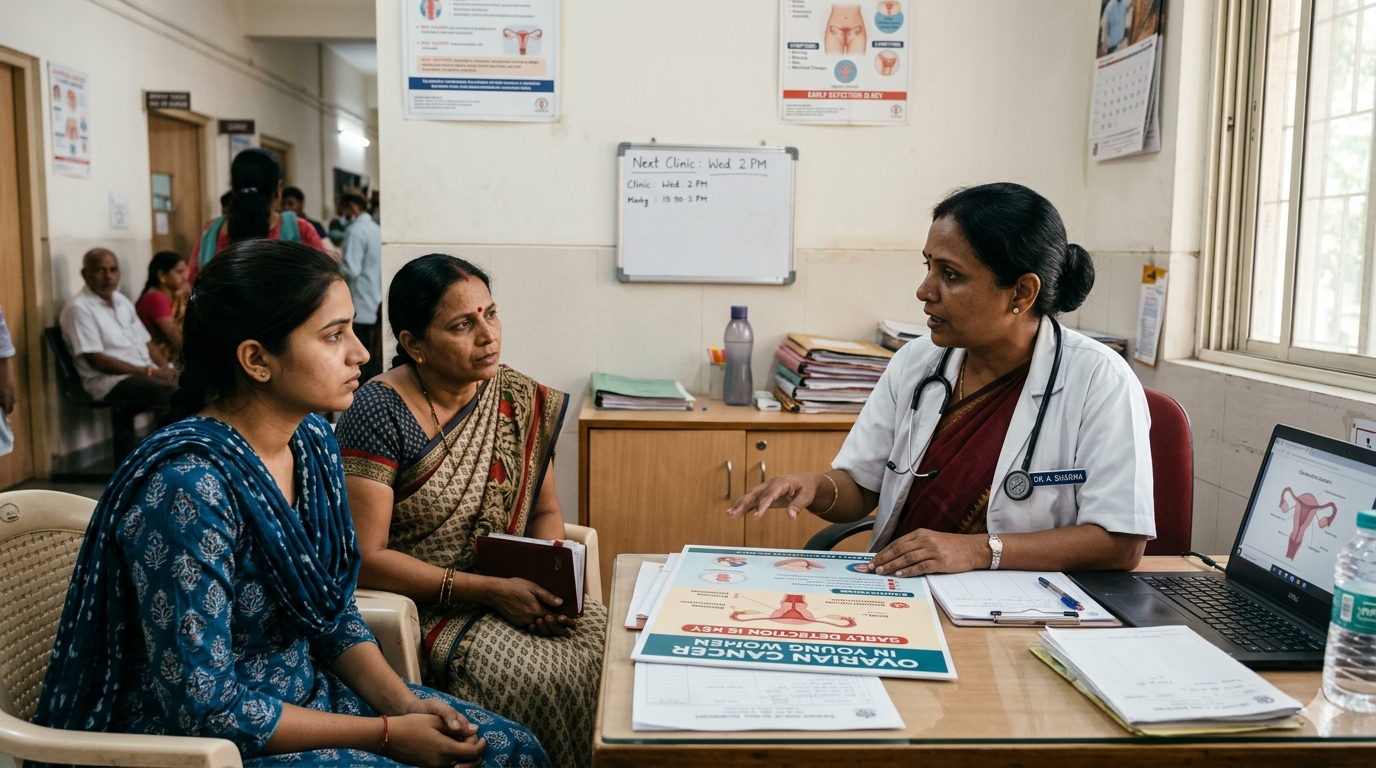
Genetic counseling is not limited to simply a blood test. It involves building a detailed family history, understanding inherited risk, and discussing what a result positive or negative means not just for the individual, but for siblings, children, and extended family. For those who test positive, options range from enhanced screening protocols to risk-reducing surgery and, where a cancer has already developed, targeted therapies that have changed outcomes for BRCA-mutated ovarian cancers.
Advances in oncology continue to expand access to these therapies, but early identification of high-risk individuals remains the most powerful tool available and that identification often starts with a simple, honest conversation about family history.
A call to action, not alarm
Family history is not a diagnosis. It's a signal one that deserves a conversation, not anxiety. Women with a concerning family pattern should not wait for symptoms to appear. Raising the topic with a primary care physician or gynecologist is the first step toward a referral for genetic counseling, and potentially, toward catching a hereditary risk long before it becomes a hereditary cancer.
(By Dr Mukesh Rulania, Consultant Medical Oncologist, Dhruv Oncology Clinic, Jaipur & Asst. Professor in Dept. of Medical Oncology, SMS Hospital, Jaipur)
Disclaimer: This content including advice provides generic information only. It is in no way a substitute for a qualified medical opinion. Always consult a specialist or your own doctor for more information. NDTV does not claim responsibility for this information.