- Wrapping a wet cloth around the head cools skin by evaporation, offering temporary relief
- This method is less effective in high humidity as evaporation slows down significantly
- A wet cloth does not prevent heatstroke and may create false security risks
As heatwaves intensify across India, people are turning to simple, accessible ways to cope with extreme temperatures. One widely seen practice is wrapping a wet dupatta, scarf, cotton gamchha or any cloth around the head to stay cool outdoors. From street vendors to daily commuters, this method is often used as quick relief against scorching heat. The logic seems intuitive. Water cools, and when applied to the body, it should reduce heat. But does this method actually protect against heat-related illnesses like heat exhaustion or heatstroke? Or is it just a temporary fix that offers limited benefit?
With rising temperatures driven by climate change, health experts warn that relying solely on such measures can be risky. Heatwaves are not just uncomfortable; they can disrupt the body's temperature regulation and lead to serious medical emergencies if precautions are inadequate.
To separate fact from myth, we asked a paediatrician and neonatologist to explain whether using a wet cloth or dupatta is effective, who it is safe for, and what precautions people should follow to stay protected in extreme heat.
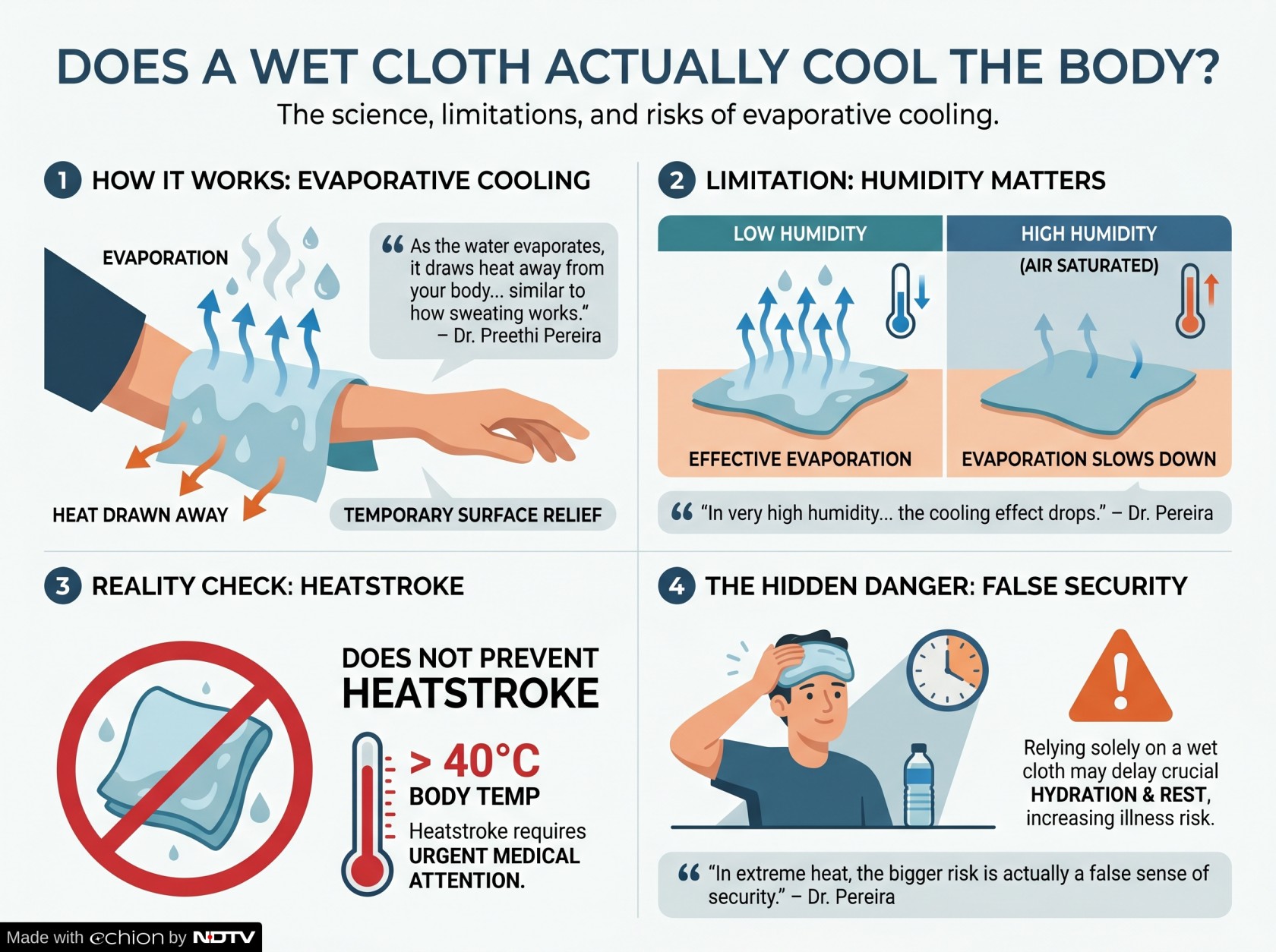
Does a wet cloth actually cool the body?
The science behind using a wet cloth is valid, but only to a limited extent, says Dr. Preethi Pereira, Consultant - Paediatrician & Neonatologist, Manipal Hospital, Goa. "A wet cloth cools the skin through evaporation. As the water evaporates, it draws heat away from your body, which can lower surface temperature and give a temporary sense of relief. It's similar to how sweating works," he explains.
This process, known as evaporative cooling, is also how the body naturally regulates temperature. However, environmental conditions matter. "It's not a complete safeguard against heat-related illness. In very high humidity, evaporation slows down, so the cooling effect drops," Dr. Pereira adds. In humid regions, where the air is already saturated with moisture, sweat and water evaporate more slowly, reducing the effectiveness of this method.
Also Read: Wet-Bulb Temperature: How Humidity Can Turn India's Heatwaves Deadlier
Can it prevent heatstroke?
The short answer is no. While a wet dupatta may offer temporary relief, it does not protect against heatstroke. Health agencies across the world define heatstroke as a condition where the body temperature rises above 40 degrees Celsius and the body can no longer regulate heat effectively. This requires urgent medical attention.
Dr. Pereira cautions: "In extreme heat, the bigger risk is actually a false sense of security, delaying proper hydration or rest." This is a critical point. Relying solely on a wet cloth without addressing hydration, rest, and sun exposure can increase the risk of serious illness.
Does it cause cold or flu?
A common concern is whether staying in wet fabric can lead to cold or flu. Medical science says otherwise. "This practice doesn't cause infections like cold or flu, since those are viral," Dr. Pereira clarifies.
Colds and flu are caused by viruses, not by exposure to water or dampness. However, there are some downsides to prolonged use. "Staying in wet fabric for long periods can lead to discomfort, headaches, or sinus irritation in some people," he explains further. "If the cloth isn't clean, it may also cause skin irritation or scalp issues."
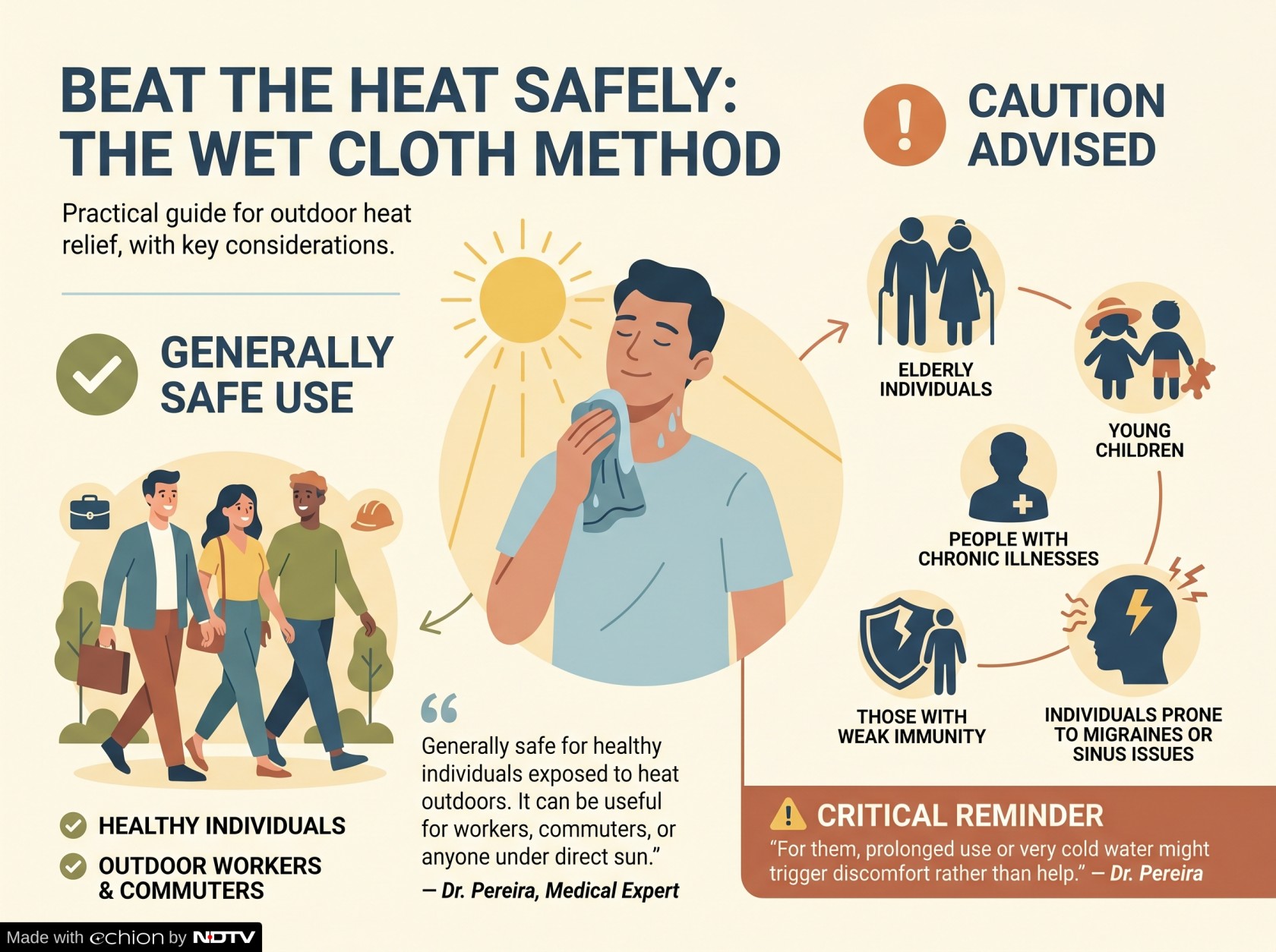
Who can use this method safely?
For many people, using a wet cloth can be a practical way to cope with outdoor heat, if used correctly. "Generally safe for healthy individuals exposed to heat outdoors. It can be useful for workers, commuters, or anyone under direct sun," says Dr. Pereira.
However, certain groups need extra caution:
- Elderly individuals
- Young children
- People with chronic illnesses
- Those with weak immunity
- Individuals prone to migraines or sinus issues
"For them, prolonged use or very cold water might trigger discomfort rather than help," she adds.
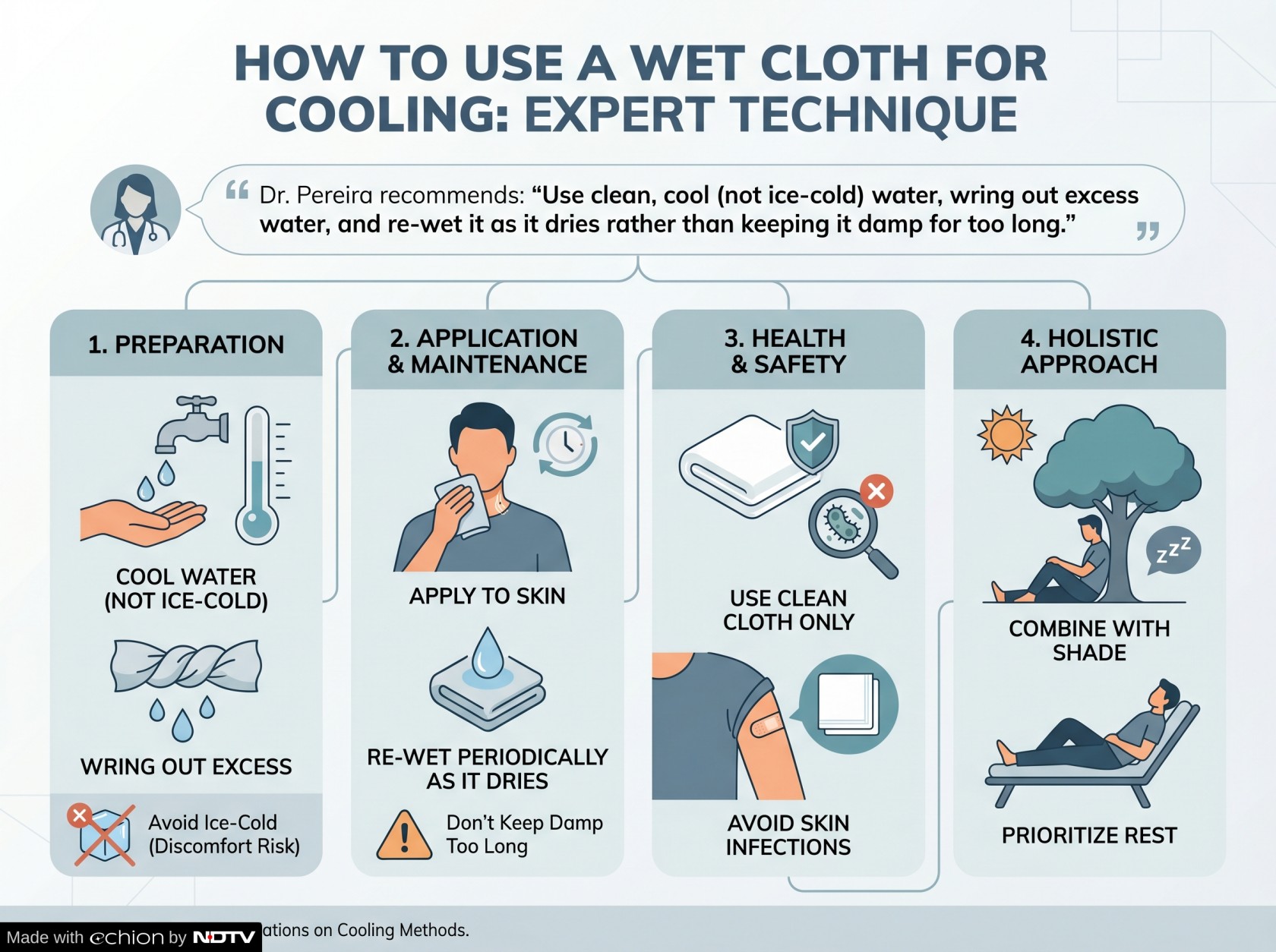
What is the right way to use a wet cloth?
If you choose to use this method, proper technique matters. Dr. Pereira recommends: "Use clean, cool (not ice-cold) water, wring out excess water, and re-wet it as it dries rather than keeping it damp for too long."
Best practices include:
- Use a clean cloth to avoid skin infections
- Avoid ice-cold water, which may cause discomfort
- Re-wet periodically instead of staying in damp fabric
- Combine with shade and rest
Also Read: Heatwave Alert: How To Protect Children's Health, See Tips
What works better in a heatwave?
Health experts agree that while a wet dupatta can help, it should only be a supplementary measure. Dr. Pereira emphasises: "A wet cloth can help, but it works best as a small part of a broader heat-safety approach, not the main solution."
According to WHO and NDMA guidelines, the most effective strategies include:
- Staying hydrated: Drink water frequently and include oral rehydration solutions if needed.
- Avoiding peak heat hours: Limit outdoor exposure between 12 pm and 4 pm.
- Wearing appropriate clothing: Loose, light-coloured, breathable fabrics improve air circulation.
- Seeking cool environments: Stay indoors, use fans, coolers, or air conditioning where possible.
- Taking frequent breaks: Especially important for outdoor workers.
Wrapping a wet dupatta or cloth around your head can provide temporary relief in hot weather by cooling the skin through evaporation. However, it is not a reliable method to prevent heat-related illnesses like heatstroke. Doctors stress that the real protection lies in hydration, limiting sun exposure, and maintaining overall cooling strategies. Used correctly, a wet cloth can be helpful, but only as part of a larger, science-backed approach to staying safe during heatwaves.
Disclaimer: This content, including advice, provides generic information only. It is in no way a substitute for a qualified medical opinion. Always consult a specialist or your own doctor for more information. NDTV does not claim responsibility for this information.