- Black rain reported in Iran after oil facility fires, raising health and environmental concerns
- WHO warns black rain contains toxic pollutants posing respiratory and skin risks
- Precautions include staying indoors, avoiding rain contact, and using protective masks
A rare and alarming environmental phenomenon known as "black rain" has been reported in parts of Iran, prompting a public health warning from the World Health Organization (WHO). The unusual rainfall, darkened by pollutants and oil residues, has raised concerns about air quality, respiratory health and long-term environmental damage. According to reports, the black rain emerged after fires and explosions at oil facilities released large amounts of soot and toxic compounds into the atmosphere. As these pollutants mixed with moisture in the air, they were carried down with rainfall, creating dark, oily precipitation in affected areas.
A WHO spokesperson warned that such rain poses a direct risk to public health. The agency confirmed receiving reports of oil-laden rainfall and said the phenomenon could cause respiratory problems, supporting local advisories urging residents to remain indoors.
While the phenomenon may sound unusual, environmental scientists say black rain has been recorded during major industrial disasters, large fires and even wartime events in the past. Understanding what black rain is, and how it affects health, is crucial as communities deal with the environmental consequences of large-scale pollution events.
What Is Black Rain?
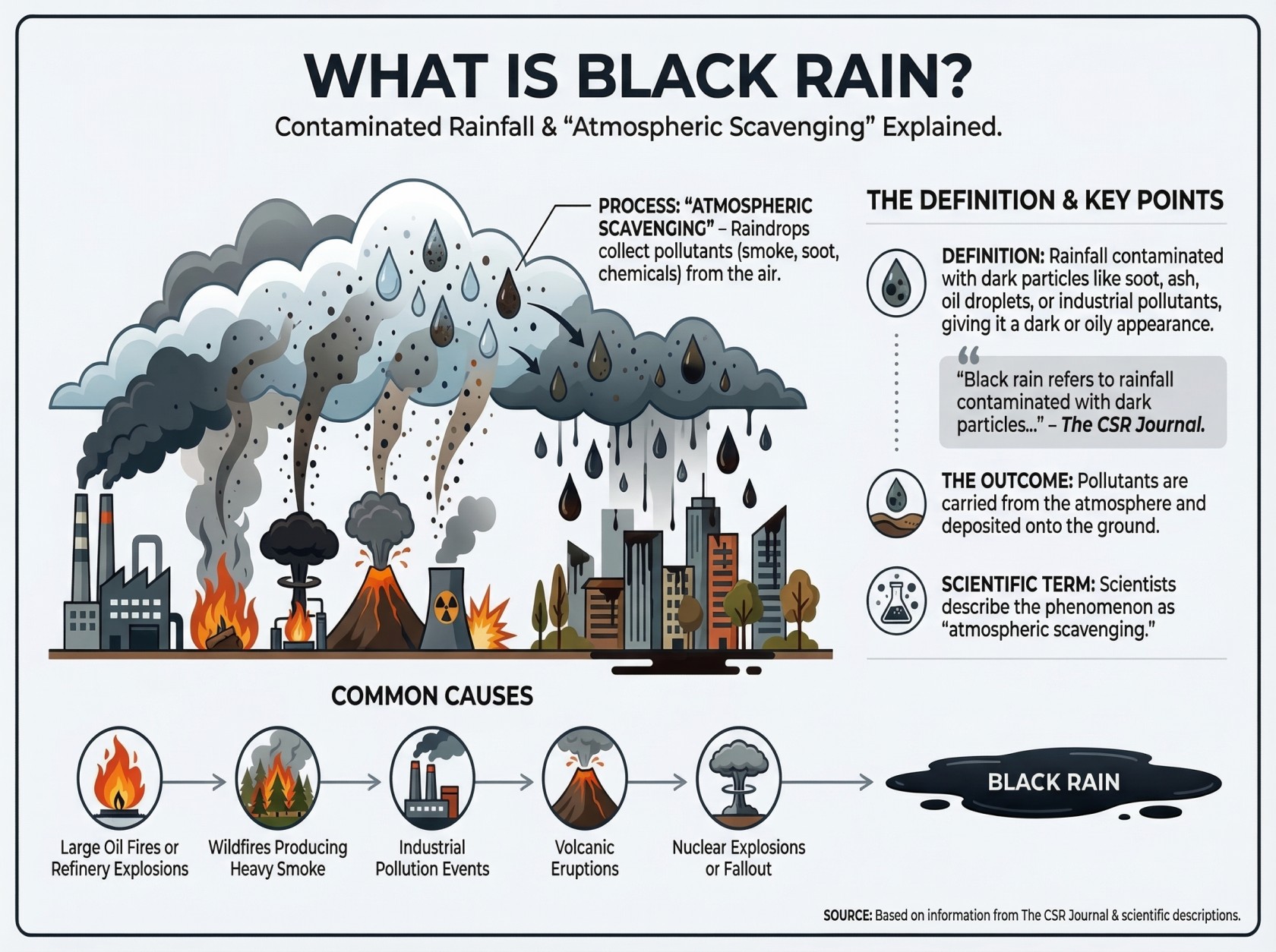
Black rain refers to rainfall contaminated with dark particles such as soot, ash, oil droplets or industrial pollutants. These particles mix with raindrops as they fall through polluted air, giving the rain a dark colour or oily appearance.
Scientists describe the process as "atmospheric scavenging." When large amounts of smoke, soot or chemicals are present in the atmosphere, raindrops collect these pollutants and carry them to the ground.
This phenomenon can occur after:
- Large oil fires or refinery explosions
- Wildfires producing heavy smoke
- Industrial pollution events
- Volcanic eruptions
- Nuclear explosions or fallout
In the current case, burning oil infrastructure reportedly released hydrocarbons, sulphur compounds and other pollutants into the air, which later combined with rainfall to form the black precipitation observed in some areas.
Why The WHO Issued A Warning
The WHO has cautioned that the oil-tainted rain could have immediate and long-term health consequences. "The black rain and the acidic rain coming with it is indeed a danger for the population, respiratory mainly," WHO spokesperson Christian Lindmeier said during a briefing.
Health risks may arise both from breathing polluted air and from direct contact with contaminated rainwater. Scientists say particles from oil fires often contain black carbon, a fine soot that can penetrate deep into the lungs. These particles may also carry toxic compounds such as polycyclic aromatic hydrocarbons (PAHs) and trace metals like nickel and vanadium.
Exposure to these substances can trigger inflammation and respiratory problems, particularly among children, the elderly and people with asthma.
How Black Rain Can Affect Human Health
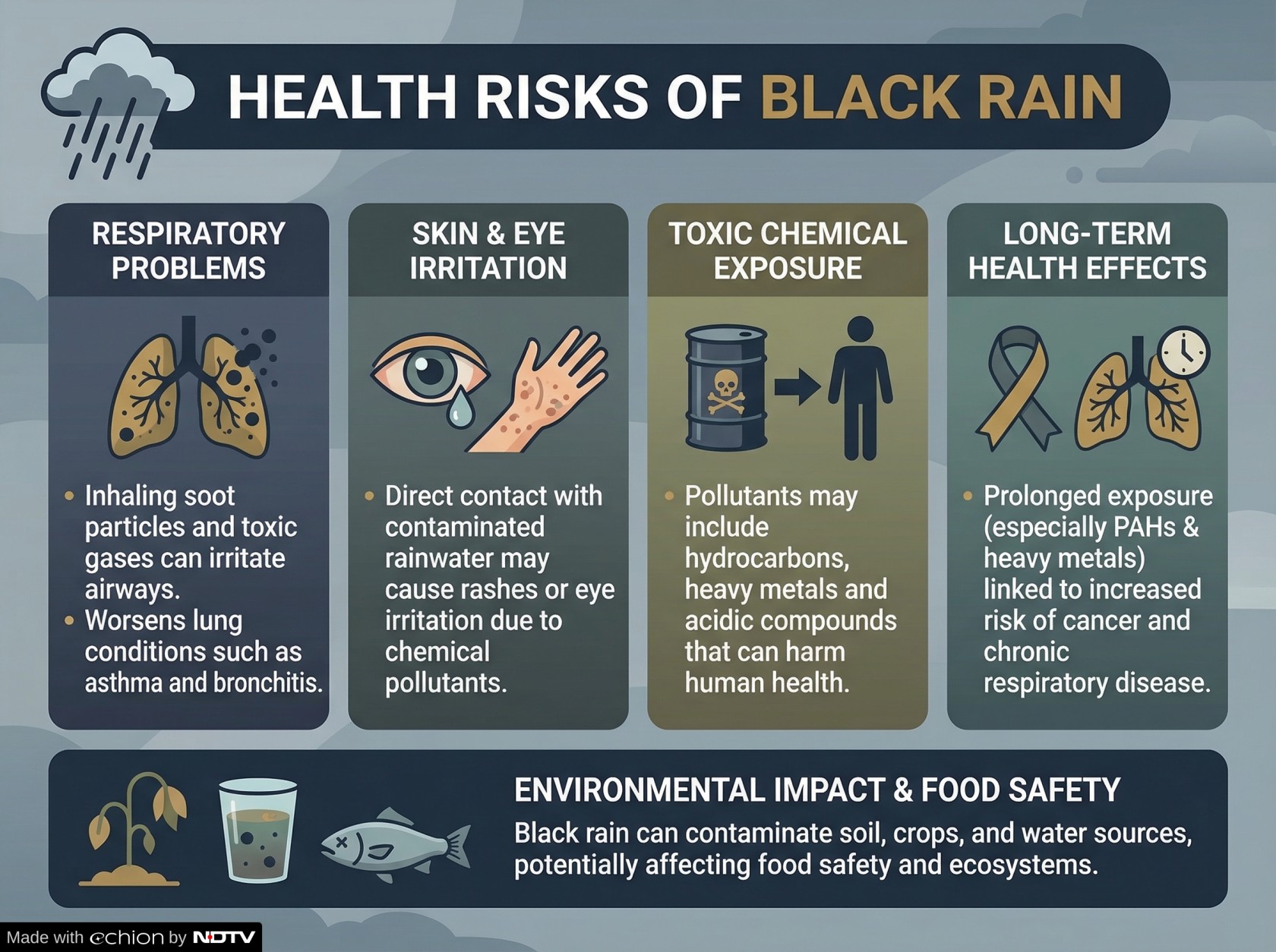
Black rain may pose several health risks depending on the pollutants present in the atmosphere.
- Respiratory Problems: Inhaling soot particles and toxic gases can irritate the airways and worsen lung conditions such as asthma and bronchitis.
- Skin And Eye Irritation: Direct contact with contaminated rainwater may cause skin rashes or eye irritation due to chemical pollutants.
- Toxic Chemical Exposure: Pollutants in black rain may include hydrocarbons, heavy metals and acidic compounds that can harm human health.
- Long-Term Health Effects: Prolonged exposure to certain pollutants, especially PAHs and heavy metals, has been linked to increased risk of cancer and chronic respiratory disease. Black rain can also contaminate soil, crops and water sources, potentially affecting food safety and ecosystems.
Also Read: How Iran's Conflict With US And Israel Impacts Healthcare Systems And Public Health
Historical Examples Of Black Rain
Although rare, black rain has been documented during several major historical events.
- Hiroshima, 1945: One of the most well-known instances occurred after the atomic bombing of Hiroshima in Japan. Ash, debris and radioactive particles were lifted into the atmosphere and later fell as dark rain over large areas. Many people exposed to the rain experienced radiation-related illnesses in subsequent years.
- Gulf War Oil Fires, 1991: During the Gulf War, hundreds of oil wells were set ablaze in Kuwait. Massive smoke plumes filled the atmosphere, and oil-contaminated precipitation was reported in nearby regions.
- Industrial And Wildfire Events: Similar dark rainfall events have also been recorded in heavily polluted industrial regions and during major wildfire outbreaks.
Precautions People Should Take
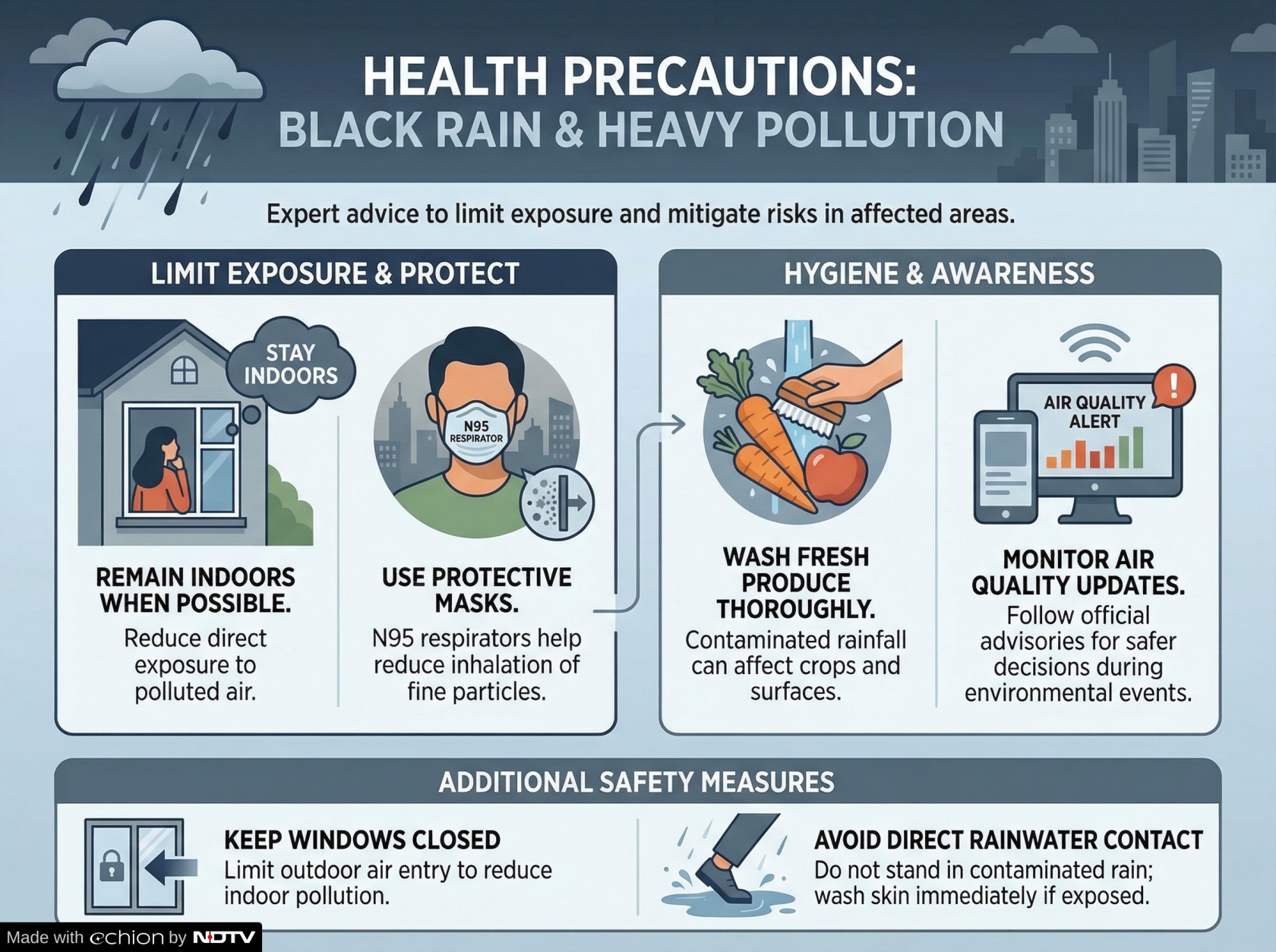
Health experts recommend several precautions in areas experiencing black rain or heavy pollution.
- Stay Indoors When Possible: Authorities in affected regions have advised residents to remain indoors to limit exposure to polluted air.
- Avoid Direct Contact With Rainwater: Do not walk or stand in contaminated rain, and wash skin immediately if exposed.
- Use Protective Masks: Masks such as N95 respirators can help reduce inhalation of fine particles.
- Keep Windows Closed: Limiting outdoor air entry can reduce indoor pollution levels.
- Wash Fruits And Vegetables Thoroughly: Rainfall contaminated with pollutants may affect crops and surfaces.
- Monitor Air Quality Updates: Following official advisories can help residents make safer decisions during environmental pollution events.
The reports of black rain in Iran highlight the complex health risks that can emerge during environmental disasters and conflicts. When large amounts of smoke, soot and chemical pollutants enter the atmosphere, rainfall can become contaminated, creating a potentially hazardous form of precipitation.
While black rain remains relatively rare, past events, from nuclear fallout to massive oil fires, demonstrate how such environmental conditions can affect both human health and ecosystems. The WHO's warning underscores the importance of monitoring air pollution during large industrial fires and taking precautionary measures to protect communities. As environmental and geopolitical crises continue to intersect, understanding phenomena like black rain becomes increasingly important for global public health preparedness.
Disclaimer: This content including advice provides generic information only. It is in no way a substitute for a qualified medical opinion. Always consult a specialist or your own doctor for more information. NDTV does not claim responsibility for this information.