





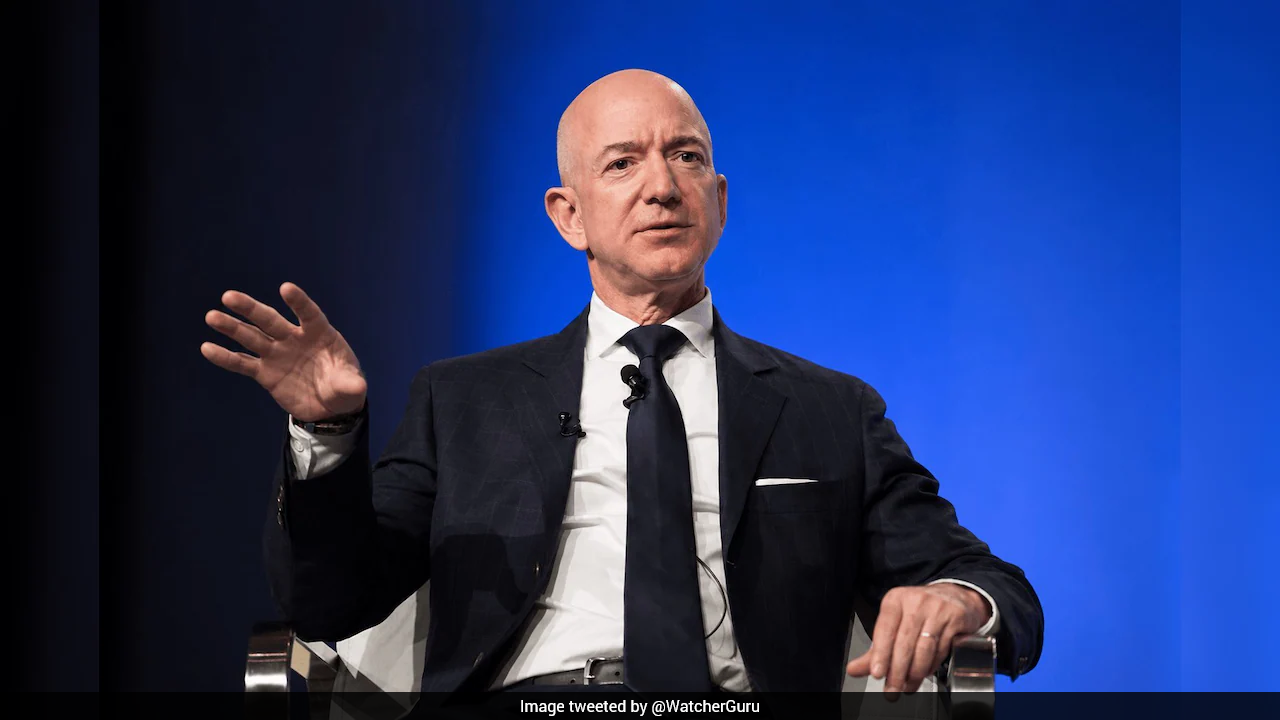
Amazon founder Jeff Bezos believes millions of people could be living in space by 2045, with robots and artificial intelligence (AI) handling much of the work on the Moon and other locations beyond Earth. Speaking at Italian Tech Week, Bezos said rapid advances in AI, robotics and space technology could make life beyond Earth a reality in the coming decades, Fortune reported. He believes these developments could make space exploration easier and safer, allowing robots to take on dangerous and physically demanding tasks.
"I don't see how anybody can be discouraged who is alive right now," he said.
Bezos also sees AI as a tool that could help humanity grow rather than a threat to jobs and livelihoods. He argued that technological inventions have historically improved living standards by creating new opportunities and expanding resources. "In the next kind of couple of decades, I believe there will be millions of people living in space. That's how fast this is going to accelerate. They'll mostly be living there because they want to. We don't need people to live in space. If you need to do some work on the surface of the moon or anywhere else, we will be able to send robots to do that work, and that will be much more cost-effective than sending humans," he said.
He compared the potential of AI to the invention of the plough thousands of years ago, which helped improve agricultural productivity and increase prosperity. Bezos believes this pattern will continue as technology advances, allowing humanity to achieve more than it can today.
What do other tech leaders think?
He is not alone in predicting a future where people live and work beyond Earth. OpenAI CEO Sam Altman and Tesla chief Elon Musk have also shared ambitious visions for space exploration and employment. Altman has suggested that young people entering the workforce could find exciting and well-paid jobs in space within the next decade. He has also said that future career opportunities could look very different from the jobs available to earlier generations.
Musk, meanwhile, has long advocated making space travel more accessible through his company SpaceX. He has outlined plans to establish a human presence on Mars, with the company working on rockets and spacecraft designed to support future missions.
Voyager Technologies founder and CEO Dylan Taylor has also predicted that living and working in space could become a reality sooner than many people expect. "Humans will definitely be living and working in space. That'll happen in the 2030s, probably the early 2030s," he told Fortune.
However, not everyone believes that humanity should focus on expanding beyond Earth. Microsoft co-founder Bill Gates has argued that billionaires and world leaders should also prioritise addressing problems on our planet. "Space? We have a lot to do here on Earth," he previously said in an interview with comedian James Corden.
Gates has expressed both optimism and concern about AI's future impact on humanity. He has suggested that advances in the technology could eventually reduce the amount of time people spend working, allowing machines to handle more tasks and giving humans greater freedom to pursue other interests.
Track Latest News Live on NDTV.com and get news updates from India and around the world

