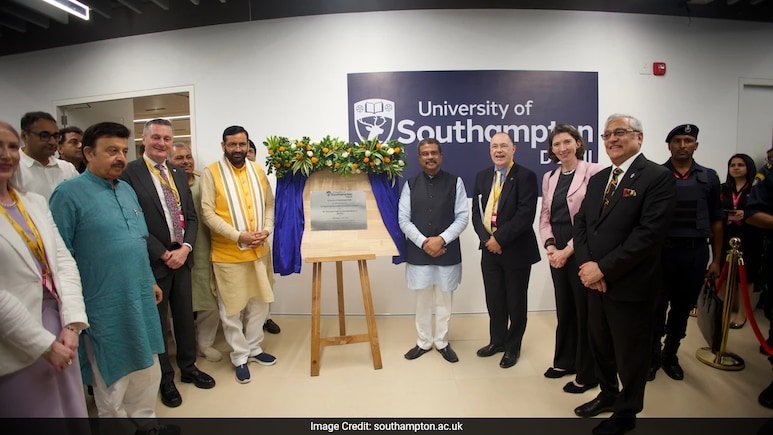

India's higher education landscape is undergoing a significant shift, with several UK universities setting up campuses across key Indian cities. Enabled by regulatory reforms and strengthened India-UK ties under the Vision 2035 roadmap, these campuses are expected to expand access to global learning opportunities within the country, reducing the need for students to study abroad.
The British Council has outlined how these international campuses could reshape higher education in India:
1. Access to global-standard education in India
Students will be able to pursue UK degrees without leaving the country. Updated UGC regulations allow only top-ranked global universities to open branch campuses, ensuring quality and parity with overseas institutions. Learners can expect international-standard teaching, research exposure, and academic infrastructure while studying in their own city and cultural environment.
Also Read | Six UK Universities To Open Campuses In India: PM Narendra Modi
2. Globally recognised qualifications and career mobility
Financial constraints, visa hurdles, and relocation challenges often limit overseas study. UK branch campuses in India offer students globally recognised degrees that meet international benchmarks, improving employability and career mobility while studying closer to home.
Also Read | Southampton University Opens First Foreign Campus In Gurugram
3. Wider choice of future-ready programmes
These campuses are expected to offer industry-aligned courses tailored to global trends and India's growing digital economy. Key focus areas include computing, artificial intelligence, data science, biomedical sciences, business management, finance, engineering, applied sciences, economics, and innovation-led programmes.
4. Diverse international student community and global networks
As India emerges as an international education hub, UK campuses are likely to attract students from across the world. Universities such as Southampton have already admitted international students in their first cohort. Exposure to a diverse peer group will help students build global networks and graduate as globally oriented professionals.
5. Expanded scholarships and financial support
UK universities setting up campuses in India are expected to offer a broader range of scholarships, merit-based aid, and financial support. These initiatives aim to make global education more accessible, inclusive, and affordable for students from diverse socio-economic backgrounds.
