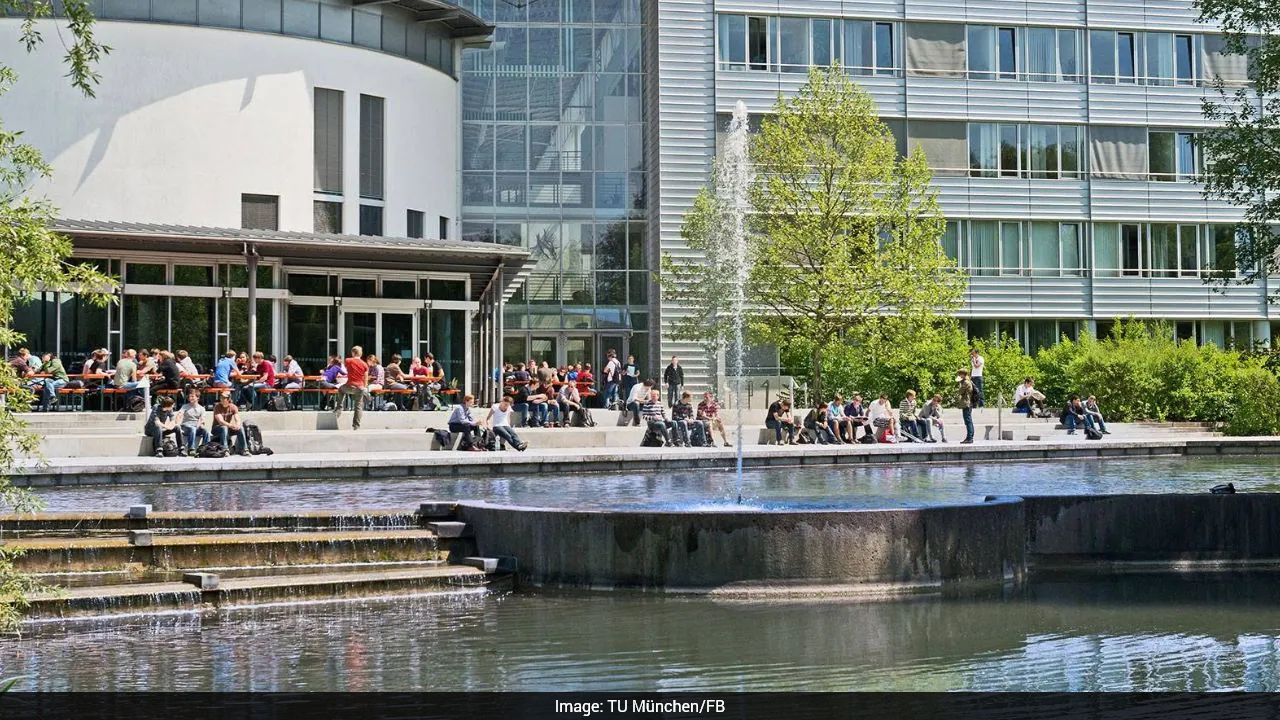

Study In Germany: Several Indian students choose to study in Germany because of its relatively low tuition costs, extensive personal and academic support, post-graduation job prospects, and quality of life. Germany is one of the most sought-after study-abroad destinations among international students. Three of the country's major cities have been featured in the QS Best Student Cities rankings.
Munich ranked highest among the three, followed by the country's capital, Berlin, and Stuttgart. Munich scored well on the student view, student mix, and desirability indicators, reflecting its vibrant student community.
These cities offer students a sociable culture and opportunities to spend quality time with friends and family. Students from across the world come to Germany to study at its top universities.
The quality of education at German universities is another key factor attracting prospective international students.
German universities offer practical teaching, real-world skills, and opportunities for students to apply these skills in workplace settings.
Moreover, several German universities charge relatively low tuition fees compared with institutions in other countries, with some public universities offering tuition-free education to international students.
Students holding a valid German visa can travel within the Schengen Area, which includes most European countries.
Thinking about studying in Germany? 🇩🇪
— QS World University Rankings (@worlduniranking) September 21, 2026
Save this easy guide to look back on.
IMPORTANT: exact visa requirements may vary. Check details with official government sources.
Explore Germany: https://t.co/PRygEIvQhU#StudyAbroad #Germany #Visa #Travel #StudentVisa pic.twitter.com/QUv9lmzPjK
QS Quacquarelli Symonds, a global higher education organisation, has shared key details on obtaining a student visa for Germany, including document, language, and financial requirements, the application process, what students can and cannot do, and a list of top universities in Germany.
Know How To Get A Student Visa In Germany
Types Of German Visas
- Standard student visa: This visa allows people living outside the European Union to apply to study for a bachelor's, master's or research programme at a German university.
- Visa to seek university placement: This visa is for those who intend to study in Germany but have not yet been offered a university placement.
- Language study programme visa: This visa is specifically for students enrolled in a German language immersion course.
- Post-study job-seeking residence permit: This allows graduates of German universities to stay in the country for up to 18 months to look for a job.
Documents Required
To apply for these visas, students will need:
- A valid passport
- An admission letter from a recognised university
- Proof of finances of at least 11,904 pounds (Rs 15,20,715) per year through bank statements, scholarship details or sponsor information
- Health insurance
- Proof of language proficiency in German and/or English
- Biometric passport photographs
- Proof of accommodation
- Visa processing fee of 75 pounds (Rs 9,581)
Language Requirements
There is no set language requirement for visa applications, although the German government recommends that students have at least a B1-level understanding of German to navigate daily life.
The educational institution may require proof of proficiency in German or English.
Standardised German language tests include the Goethe-Zertifikat and TestDaF.
How Much Money Do You Need?
The main expenses for students in Germany include tuition fees and living costs.
Many public universities in Germany offer tuition-free education to German, European Union, and international students, although tuition policies vary by university and state.
According to the German Academic Exchange Service, the average monthly expenses for a student in Germany range between 900 (Rs 1,14,954) and 1,200 pounds (Rs 1,53,284). This includes rent, groceries, health insurance, transport, phone and internet, study materials, and leisure expenses.
Application Process
- First, choose and apply to a German university.
- Accept the offer of a place to study and receive a letter of acceptance.
- Collect proof of financial resources. This can include: A blocked bank account with a balance of 11,904 pounds (Rs 15,20,968) to cover one year of study, proof of a scholarship, a declaration of commitment from someone in Germany
- Collect the documents mentioned above. Exact requirements may vary from country to country, so students are advised to check with their local German consulate.
- Submit an application through the Consular Services Portal or at the local German embassy.
- Attend the visa appointment at the German embassy, where applicants may be asked about their studies, finances and plans after graduation.
- Wait for the visa decision.
- Travel to Germany once the visa has been approved.
- Register your new German address
- Activate your health insurance
- Open a German bank account
- Apply for a residence permit at the local foreigners' office before the entry visa expires
What You Can And Cannot Do
Can:
- Work up to 20 hours per week during the semester and full-time during breaks
- Travel within the Schengen Area and to your home country
Cannot:
- Work more than the permitted number of hours
- Stop actively pursuing your studies
- Access benefits or services restricted to permanent residents or citizens
Visa rules can change and may depend on individual circumstances. Students should always check official German government sources before applying.
Top Universities In Germany
- 25| Technical University of Munich
- 61| Ludwig-Maximilians-Universität München
- 86| Universität Heidelberg
- 98| Freie Universität Berlin
- 104| RWTH Aachen University
- 110| KIT, Karlsruhe Institute of Technology
- 140| Humboldt-Universität zu Berlin
- 158| Technische Universität Berlin (TU Berlin)
- 185| Technische Universität Dresden
- 209| Rheinische Friedrich-Wilhelms-Universität Bonn
